Hip Arthritis Treatment in Chennai Reduce Pain. Improve Walking. Choose the Right Time for Treatment.
Hip arthritis — also called hip osteoarthritis — can begin as deep groin pain, morning stiffness, difficulty walking, trouble sitting cross-legged, or pain while climbing stairs. This guide helps you understand hip arthritis symptoms, X-ray findings, stage-based care, physiotherapy, image-guided injection options, and hip replacement when daily life is significantly limited. Dr. Soma Sundar S focuses on clear diagnosis first, non-surgical care when safe, and surgery only when it is the most reliable option.

 15+ Years of Experience
Dr. Soma Sundar S
Spine & Orthopaedic Surgeon, Chennai
Kauvery Hospital, Alwarpet
Mon–Sat · 8:30 AM – 5:30 PM Get DirectionsShens Hospital, Ashok Nagar
Mon–Sat · 6:00 PM – 8:30 PM Get DirectionsHip Pain Conditions Linked to This Page
Hip arthritis is one common cause of groin pain and walking difficulty, but similar symptoms can come from AVN, trochanteric bursitis or fracture. These linked pages help patients move through the right hip-care pathway. 👇
 Hip PainGroin pain, side hip pain, thigh pain or limp — start here if you are unsure of the exact diagnosis.Open hip pain hub →
🩻 MRI diagnosis
Hip PainGroin pain, side hip pain, thigh pain or limp — start here if you are unsure of the exact diagnosis.Open hip pain hub →
🩻 MRI diagnosis Avascular Necrosis HipDeep groin pain in younger adults or after steroids/alcohol exposure — MRI staging matters early.Read AVN guide →
🦴 Wear & tear
Avascular Necrosis HipDeep groin pain in younger adults or after steroids/alcohol exposure — MRI staging matters early.Read AVN guide →
🦴 Wear & tear Hip ArthritisGroin stiffness, reduced hip rotation and difficulty walking or climbing stairs — the focus of this guide.You are here →
🌙 Side pain
Hip ArthritisGroin stiffness, reduced hip rotation and difficulty walking or climbing stairs — the focus of this guide.You are here →
🌙 Side pain Trochanteric BursitisPain on the outside of the hip, worse lying on that side — often mistaken for arthritis.Read bursitis guide →
What Is Hip Arthritis?
Hip arthritis means the smooth cartilage inside the ball-and-socket hip joint has worn down or become damaged. As the joint surface becomes rough, the hip can feel stiff, painful and restricted — especially during walking, standing from a chair, climbing stairs or sitting cross-legged.
The pain is usually felt deep in the groin, but it may also spread to the front of the thigh, buttock or knee. Many patients think it is a muscle pull or back pain at first, because hip arthritis pain can be misleading. 🙂
The important question is simple: how much cartilage is left, how much function is affected, and is the pain really coming from the hip joint? That answer decides whether you need exercises, weight and activity changes, injection-based pain relief, or hip replacement.
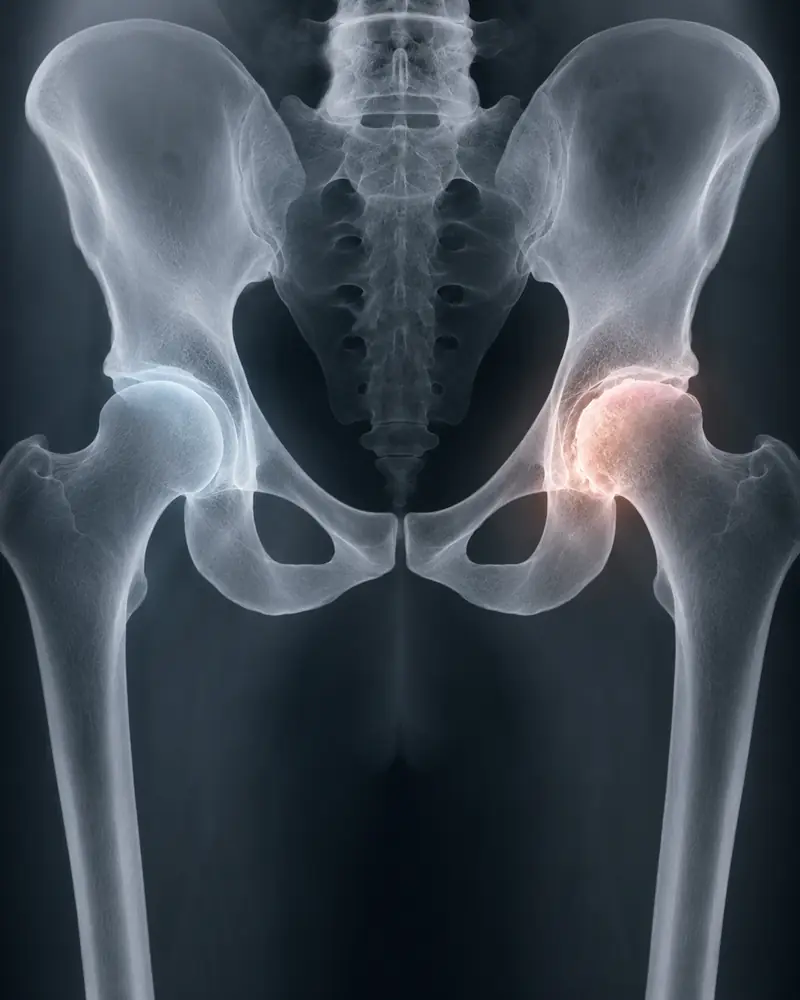
X-rays show joint-space narrowing, bone spurs and deformity — but treatment depends on symptoms, not X-ray alone.
Common Causes & Risk Factors for Hip Arthritis
Hip arthritis usually develops slowly, but certain hip shapes, previous injuries and AVN can accelerate joint damage. A careful diagnosis helps separate age-related arthritis from other hip conditions. 👇
Age-Related Wear
Cartilage can thin gradually over years, causing stiffness and pain that slowly increases with walking and daily activity.
Body Weight & Load
Extra load and prolonged standing can increase stress across the hip joint and worsen pain during flares.
Hip Shape Problems
Developmental dysplasia or impingement-type hip shapes can overload cartilage earlier than expected.
Previous Injury
Old fractures, dislocations or childhood hip problems may lead to secondary arthritis later in life.
AVN Hip
Femoral head collapse from avascular necrosis can progress into secondary hip arthritis.
🦴Hip Fracture Sequelae
Some hip injuries can leave the joint uneven or stiff, leading to long-term pain and arthritis.
Inflammatory Arthritis
Rheumatoid arthritis and other inflammatory conditions can affect the hip and need medical control too.
Referred Pain Check
Back pain, SI joint pain and knee problems can mimic hip arthritis — examination confirms the true source.
🚶 Walking difficulty
Hip arthritis often first shows up as shorter walking distance and a limp.
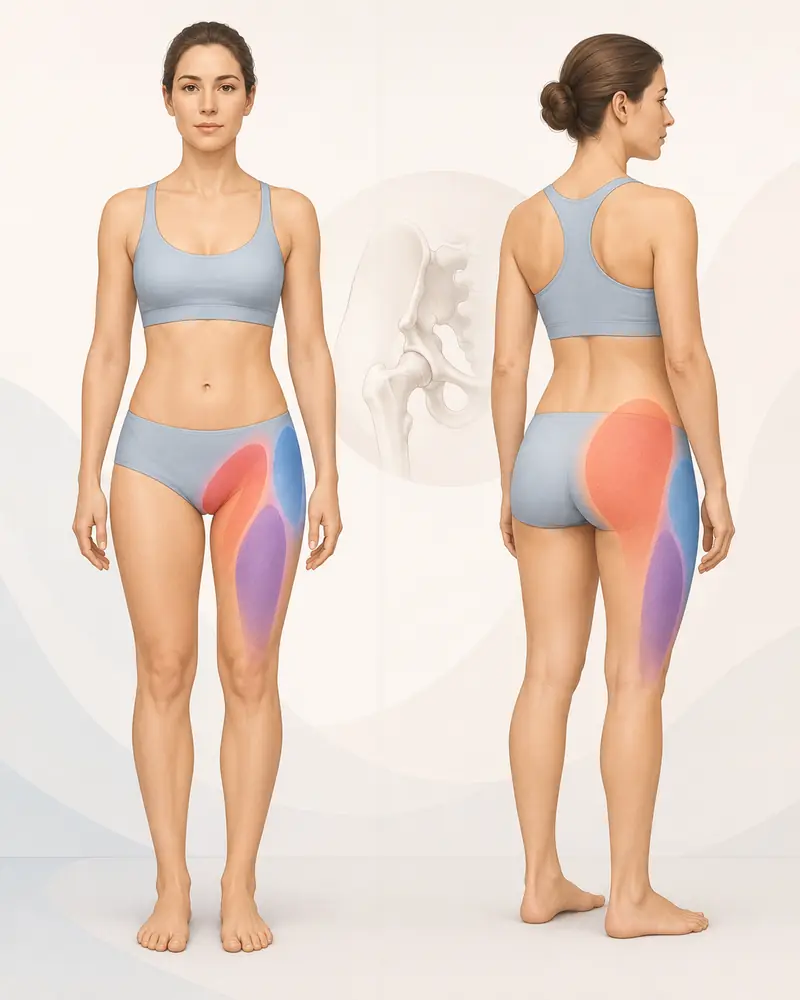
📍 Pain location
Groin pain is classic, but hip problems can refer pain to the thigh or knee.
🩻 X-ray review
The stage is judged by joint-space loss, bone spurs, deformity and patient symptoms.
Hip Arthritis Symptoms — What Is Yours Telling You?
Hip arthritis pain is not always felt only at the side of the hip. These patterns help decide whether the hip joint is the real pain generator. 👇
Deep Groin Pain
The most typical hip-joint pain pattern — worse with walking, standing or turning in bed.
Classic signMorning Stiffness
Stiffness after waking or after sitting for a while, then easing slightly once you move.
Common patternLimp or Short Walking Distance
You walk slower, lean to one side, or need frequent rests because the hip catches or aches.
Function signDifficulty Sitting Cross-Legged
Reduced hip rotation makes sitting on the floor, tying shoes or getting into a car difficult.
Rotation lossThigh or Knee Pain
Hip arthritis can refer pain to the front of the thigh or knee, even when the knee X-ray is normal.
Often missedSide Hip Pain at Night
Pain mainly over the outer hip while lying on that side may be trochanteric bursitis rather than joint arthritis.
Different diagnosis💡 Tip: hip arthritis often reduces internal rotation first — that is why turning the leg in, sitting cross-legged and getting into a car become painful early.
When to See a Hip Arthritis Specialist in Chennai
Mild hip stiffness can be managed early, but persistent groin pain or walking limitation should be assessed before the joint becomes severely restricted. ⏱️
Limp or reduced walking distance
Deep groin pain lasting more than 2–3 weeks
Difficulty sitting cross-legged, tying shoes or getting into a car
Night pain or pain at rest
Need for stick support or frequent painkillers
Hip pain after fall, injury or sudden inability to walk
⏰ Do not ignore progressive walking difficulty
Hip arthritis treatment works best when the stage and pain source are clear. If pain is limiting walking, sleep, work or daily activities, an early review helps decide whether physiotherapy, injection or joint replacement is the sensible next step. 📞 Call +91 90809 68066 for an appointment.
Why Chennai Trusts Dr. Soma Sundar
Experienced hands, international training, and a philosophy that always starts with the least invasive treatment that can genuinely help you. View doctor profile.

15+ Years of Experience
Over fifteen years dedicated to spine and orthopaedic care, from everyday back pain to complex spinal conditions.
Internationally Trained
Fellowship training in Germany, Switzerland and the UK — FESS, FMISS, FAOS and the AO Spine Fellowship.
4.9 · 500+ Google Reviews
Consistently rated 4.9 by more than five hundred patients across both Chennai clinics.
FRCS & Gold Medallist
FRCS (Glasgow, UK) certified, MS Orthopaedics Gold Medallist, DNB and MNAMS qualified.
Non-Surgical First
Advanced pain management, injections and physiotherapy are always explored before surgery is considered.
Two Chennai Locations
Kauvery Hospital, Alwarpet (mornings) and Shens Hospital, Ashok Nagar (evenings) — six days a week.
How Hip Arthritis Is Diagnosed and Graded
Good hip arthritis treatment starts by confirming that the pain is truly from the hip joint — and then grading how much cartilage loss and stiffness are present.
Pain Pattern Review 🗺️
Groin pain, stiffness, limp, night pain, sitting cross-legged difficulty and walking distance are mapped clearly.
Focused Hip Examination 🔦
Hip rotation, gait, leg length, spine referral and knee referral are checked because hip pain can be misleading.
X-ray First, MRI if Needed 🩻
X-rays show joint-space narrowing, bone spurs and deformity. MRI is added when AVN or another hidden cause is suspected.
Stage-Based Treatment Plan 🪜
You leave knowing whether the hip is early, moderate or advanced arthritis — and what the sensible next step is.
In hip arthritis, X-ray severity must be matched with pain, stiffness, gait and daily limitation.
Hip Arthritis Treatment Options — Stepwise Roadmap
Dr. Soma Sundar follows a practical plan: reduce painful load, improve hip support, use injection-based pain relief for selected patients, and consider hip replacement when pain and stiffness significantly affect life. ✅
Reduce Load & Pain 🦯
Activity changes + medicines when suitableCalm flares and reduce painful overloading while staying safely active.
- Walking distance guidance
- Weight and activity advice
- Safe pain-relief plan

Rebuild Hip Support 🤸
Physiotherapy + home exercisesImprove glute strength, hip mobility and gait without forcing painful movements.
- Glute strengthening
- Gait correction
- Home programme

Target Persistent Pain 💉
Image-guided injections when suitableSelected injections can reduce pain and help confirm the hip joint as the pain source.
- Image-guided accuracy
- Day-care procedure
- Useful in selected stages
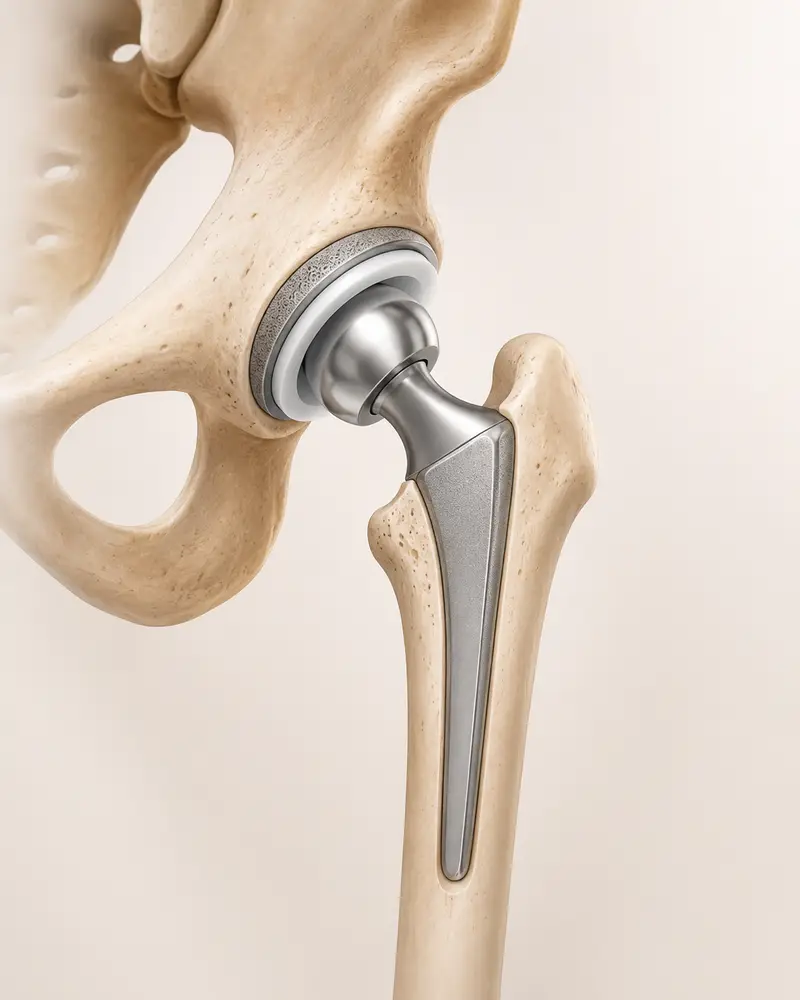
Replace When Advanced 🔬
Hip replacement for severe arthritisWhen cartilage loss, stiffness and daily pain are advanced, replacement may provide the most predictable recovery.
- Advanced joint-space loss
- Night pain or rest pain
- Major walking limitation
Physiotherapy & Exercises for Hip Arthritis
Exercise for hip arthritis should be joint-friendly — enough to build support and movement, but not so aggressive that it triggers flares. Tap any card to open that programme. 👇
Hip Pain Physiotherapy
Therapist-guided gait correction, mobility work and hip strengthening for arthritis-related walking difficulty.
🏠Hip Exercises at Home
Simple home routines for mobility, glute strength and safer daily activity.
🧭Hip Pain Diagnosis
Make sure groin, thigh or knee pain is truly coming from the hip joint before choosing treatment.
💉Injection Options
Image-guided treatment for selected patients with persistent hip-joint pain.
🔬Replacement Planning
Understand when hip replacement becomes more reliable than repeated temporary measures.
 🌉 Hip bridges
 🐚 Clamshells↔️ Standing abduction
 🚶 March in place
 🧘 Hip flexor stretch
 💪 Side leg raise
🏠 Can’t travel for physiotherapy? Home-visit physiotherapy is available across Chennai.Guided sessions at your home for hip, knee, spine and joint rehabilitation.
📞 Physio Home Visits · +91 98403 45335Injection Treatment for Hip Arthritis
Hip injections work best when the joint is confirmed as the pain generator and expectations are realistic.
For selected hip arthritis patients, a precisely placed image-guided hip joint injection can reduce pain and improve walking enough to allow physiotherapy and daily activity. It may also help confirm that the pain is truly coming from the hip joint. 🎯
The option depends on X-ray stage, pain severity, age, activity needs and medical background. Steroid-based, PRP or other injection choices should be personalised — not used as a one-size-fits-all solution.
When Is Hip Replacement Needed for Arthritis?
Hip replacement is considered when arthritis is advanced and daily life is limited by persistent pain, night pain, severe stiffness, reduced walking distance, or failure of appropriate non-surgical care.
The goal is simple: remove the painful worn-out joint surface and restore a smoother, more reliable hip movement. The timing is individual — based on X-ray grade, walking ability, pain level, overall health and personal goals. 🤝
Reserved for clearly selected cases where arthritis is advanced and function is significantly affected.
⚖️ Balanced treatment principle
Hip arthritis on an X-ray does not automatically mean hip replacement. Good treatment means matching the X-ray with your symptoms, starting conservatively when safe, and choosing surgery when it offers the most dependable improvement.
Hip Arthritis — Frequently Asked Questions
What Hip Arthritis Patients Say
My groin pain and limp were explained clearly with the X-ray. I was not pushed into surgery immediately — we started with walking advice and physiotherapy.
★★★★★I thought it was knee pain, but the problem was actually my hip. The doctor showed why the pain was coming down to the thigh and knee.
★★★★★The image-guided hip injection helped me walk better and start exercises. The plan was practical and stage-wise.
★★★★★I had difficulty sitting cross-legged and climbing stairs. The exercises were explained gently without forcing painful stretches.
★★★★★My mother could not travel often, so home physiotherapy helped a lot. Her walking confidence improved over a few weeks.
★★★★★The hip replacement discussion was balanced and not frightening. I understood when surgery helps and when it can wait.
★★★★★I consulted online with my X-ray. The doctor explained the grade of arthritis and gave a clear next-step plan.
★★★★★My pain was from the side of the hip, not arthritis. The diagnosis was trochanteric bursitis and treatment changed completely.
★★★★★The best part was that the X-ray was matched with my walking and examination. I finally understood why I was limping.
★★★★★Explore More Hip & Orthopaedic Care
Expert Orthopaedic Advice, From Wherever You Are
Can’t travel to Chennai, or want a specialist opinion before deciding your next step? Consult Dr. Soma Sundar over a secure video call for knee, shoulder, hip, sports injury, fracture, joint pain and orthopaedic concerns — and let your whole family join and ask questions.

-
Consult from anywhere
Connect from home, another city, or abroad — no travel needed for an expert orthopaedic opinion.
-
X-rays, MRI & reports — optional
You can share scans or reports in advance on WhatsApp if you have them, or simply talk first. Both work.
-
Clear next steps
Leave the call knowing what the likely problem is, what to try first, and when a clinic visit or procedure is truly needed.
Book an Ortho Video Consultation
Message us on WhatsApp with your name and a short note about your joint, bone, muscle or injury-related problem — our team will confirm a convenient slot.
Especially useful for- Outstation and overseas patients — and their families
- Knee, shoulder, hip, ankle, elbow or wrist pain
- A second opinion before orthopaedic surgery
- Understanding an X-ray, MRI or scan report in plain language
- Follow-up reviews after injections, procedures or surgery
- Elderly patients who find travelling difficult
📎 Sending X-rays, MRI or reports in advance is optional — many patients simply describe their problem and share reports later if needed.
Explore Orthopaedic Care
Patient-friendly guides for knee, shoulder, hip, foot and ankle problems — organised into simple boxes for conditions, treatments, physiotherapy, home exercises and one compact spine segment.