Patellofemoral Pain Syndrome Treatment in Chennai Fix Tracking. Strengthen the Hip & Knee. Climb Stairs Without Pain.
Patellofemoral pain syndrome treatment in Chennai by Dr. Soma Sundar S. Understand runner’s knee, kneecap tracking, chondromalacia and front knee pain — physiotherapy, taping, exercises, injections for selected cases and surgery only rarely. This patient guide explains symptoms, warning signs, diagnosis, physiotherapy, home exercises, injection options and when surgery is genuinely needed.
 15+ Years of Experience
Dr. Soma Sundar S
Spine & Orthopaedic Surgeon, Chennai
Kauvery Hospital, Alwarpet
Mon–Sat · 8:30 AM – 5:30 PM Get DirectionsShens Hospital, Ashok Nagar
Mon–Sat · 6:00 PM – 8:30 PM Get DirectionsPatellofemoral Pain Patterns We Treat
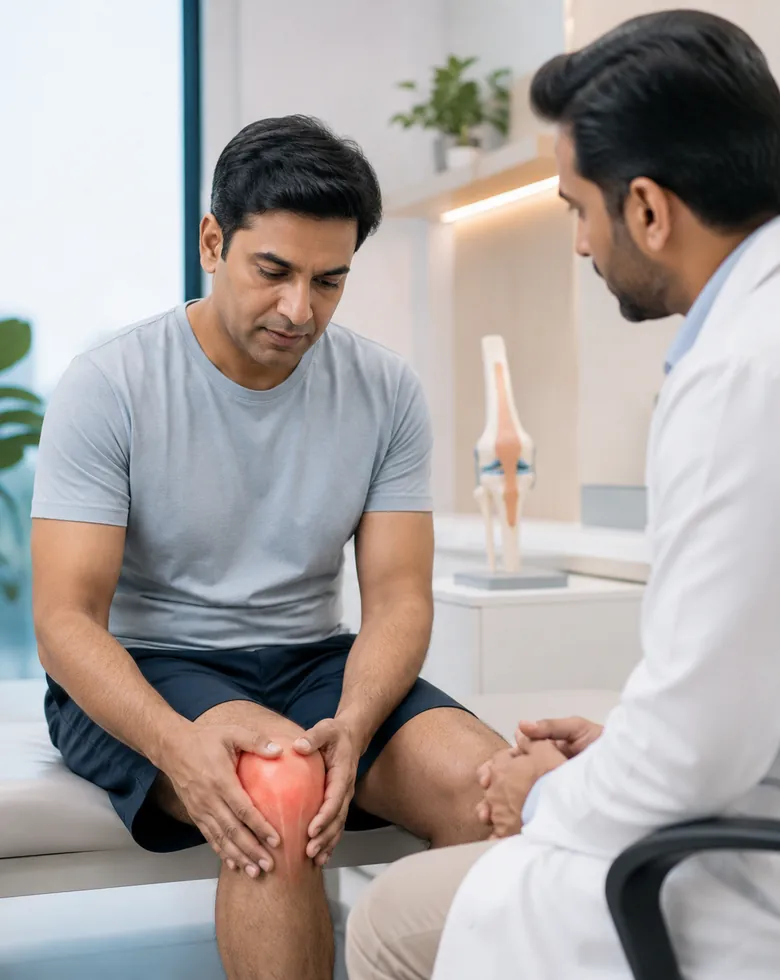
Patellofemoral pain usually comes from overload between the kneecap and thigh bone. The pattern often shows up during stairs, squats, running or sitting long. 👇
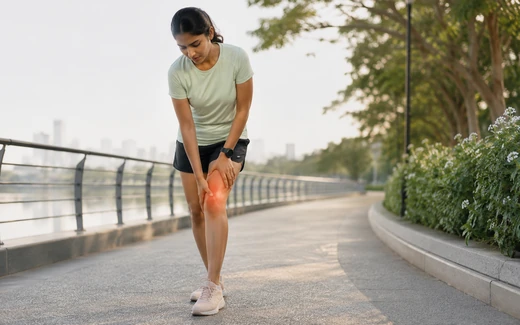 Exercise-Related Front Knee Pain
Pain during running, squats or gym workouts — often from sudden training load and tracking imbalance.
Read more →
🪜 Stair pain
Exercise-Related Front Knee Pain
Pain during running, squats or gym workouts — often from sudden training load and tracking imbalance.
Read more →
🪜 Stair pain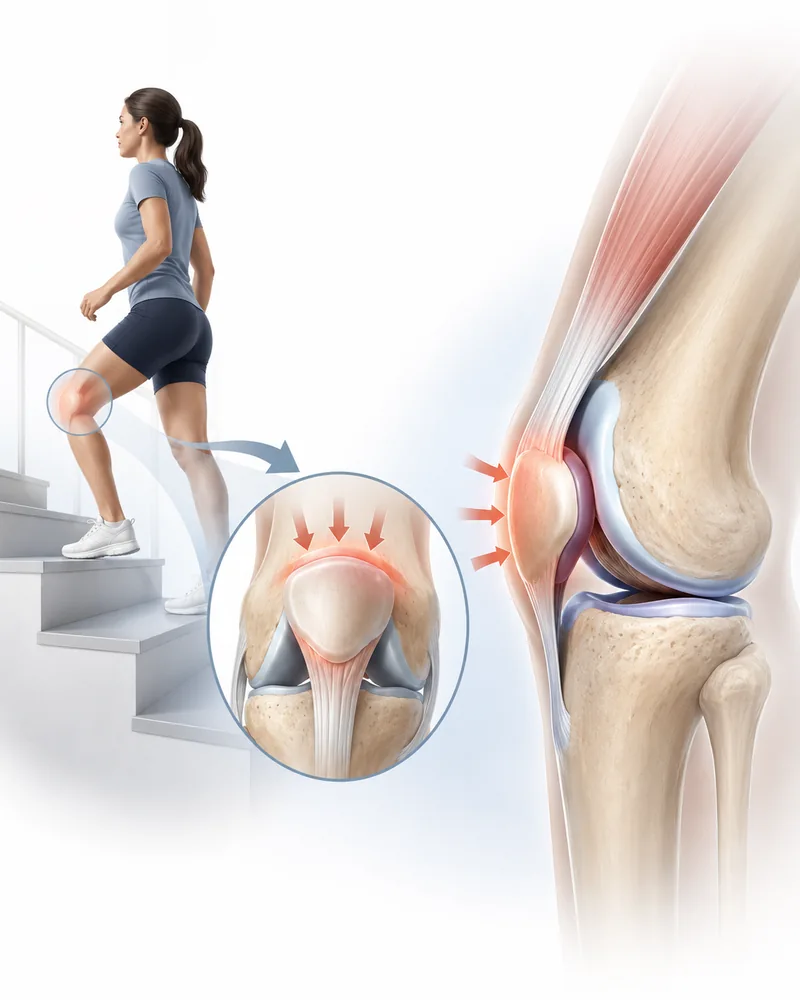 Kneecap Load Pain
Pain while climbing or coming down stairs, especially after prolonged sitting or repeated bending.
Read more →
🎯 Tracking issue
Kneecap Load Pain
Pain while climbing or coming down stairs, especially after prolonged sitting or repeated bending.
Read more →
🎯 Tracking issue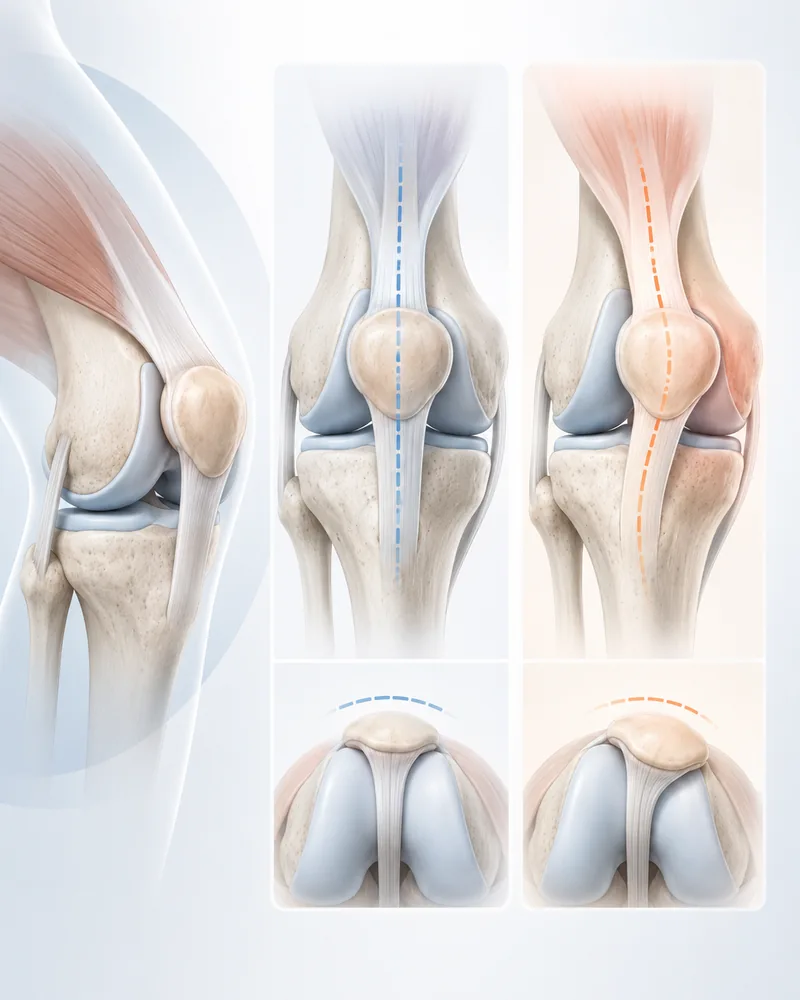 Patellar Maltracking
The kneecap does not glide smoothly in its groove, causing overload and clicking or grinding.
Read more →
🦴 Cartilage irritation
Patellar Maltracking
The kneecap does not glide smoothly in its groove, causing overload and clicking or grinding.
Read more →
🦴 Cartilage irritation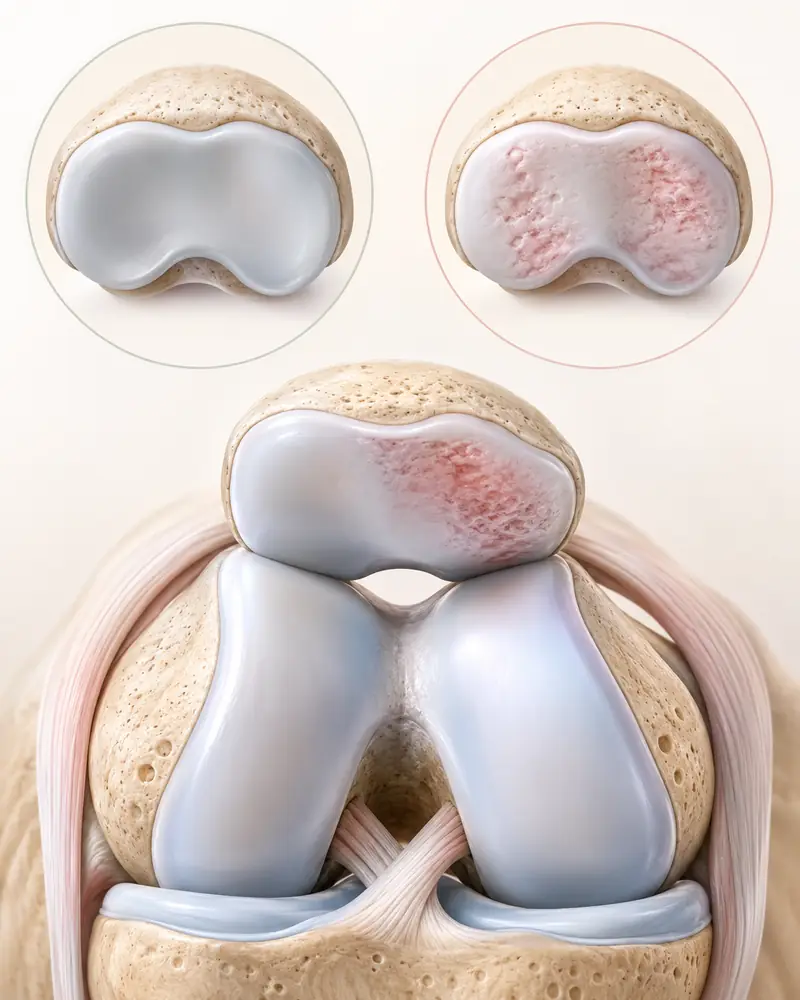 Chondromalacia Patella
Softening or irritation of cartilage behind the kneecap can cause deep front knee pain.
Read more →
Chondromalacia Patella
Softening or irritation of cartilage behind the kneecap can cause deep front knee pain.
Read more →
What Is Patellofemoral Pain Syndrome?
Patellofemoral pain syndrome means pain from the joint between the kneecap (patella) and the thigh bone (femur). Patients usually feel pain in front of the knee or behind the kneecap.
It is common in runners, gym-goers, people who climb stairs often, and patients who suddenly increase walking, squats or exercise. The kneecap may be overloaded because of weak hip control, quadriceps imbalance, tight tissues or training errors.
The key question is simple: is the kneecap overloaded because of tracking, strength, flexibility or cartilage irritation? The answer guides physiotherapy, taping, footwear advice, injections for selected inflamed cases, and rarely surgery.
Front knee pain usually improves when kneecap load and tracking are corrected step by step.
Common Causes of Patellofemoral Pain Syndrome
Patellofemoral pain is usually a load-and-control problem — the kneecap is asked to do more than the muscles can guide comfortably. 👇
Sudden Training Increase
Running, squats or gym load increased too quickly can overload the kneecap joint.
Weak Quadriceps Control
Poor quadriceps timing changes how the kneecap tracks in its groove.
Weak Hip Muscles
Weak glute muscles allow the knee to collapse inward during stairs, squats and running.
Tight IT Band / Hamstrings
Tight tissues around the thigh change kneecap mechanics and increase pressure.
Stair & Squat Overload
Repeated deep bending compresses the kneecap against the thigh bone.
Footwear / Flat Feet
Poor foot control can rotate the leg inward and increase kneecap stress.
Chondromalacia
Cartilage irritation behind the kneecap can cause deep aching and grinding.
Incomplete Rehab
Pain returns when exercises stop before strength, balance and movement control are restored.
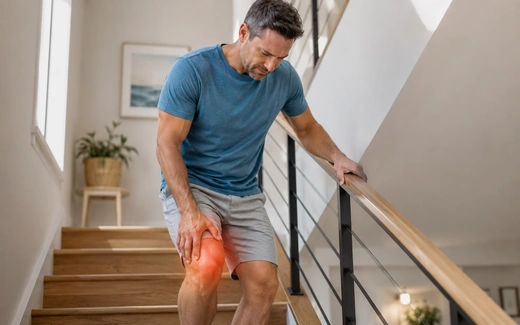
🪜 Stair pain
Stairs and squats place high load through the patellofemoral joint.
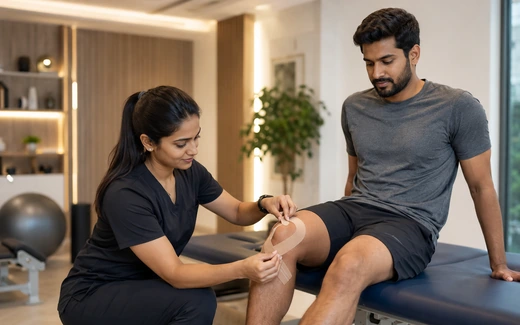
🎯 Tracking support
Taping and guided physio can reduce pain while strength is rebuilt.
🧭 Tracking mechanics
The plan focuses on how the kneecap moves, not just where it hurts.
Patellofemoral Pain Symptoms — What Is Yours Telling You?
Front knee pain has a recognisable pattern. Matching your symptom pattern guides treatment. 👇
Pain on Stairs
Pain while climbing or descending stairs is the classic patellofemoral load symptom.
Classic patternPain After Sitting
A deep ache after sitting long — movie-theatre sign — suggests kneecap joint irritation.
Movie signPain With Squats
Squats, lunges or leg press can trigger pain when kneecap load is too high.
Load sensitivityRunning Pain
Pain during or after running often reflects training load, hip control or tracking issues.
Runner’s kneeClicking or Grinding
Clicking can be harmless, but painful grinding suggests kneecap overload or cartilage irritation.
Track carefullyPain Around Kneecap
Diffuse pain around or behind the kneecap is more typical than one sharply localised spot.
Front knee pain💡 Tip: do not push through painful squats hoping the knee will ‘warm up’. Adjusting load early prevents chronic irritation.
When to See a Specialist for Patellofemoral Pain
Most patellofemoral pain improves with proper rehab, but these signs need assessment. ⏱️
Visible swelling or recurrent fluid in the knee
Locking, catching or inability to straighten
Knee giving way or repeated buckling
Unable to bear weight after injury
Pain after fall, twist or road accident
Night pain, fever, redness or unexplained weight loss
⏰ Front knee pain should be load-managed early
Persistent stair pain, squat pain, painful grinding or swelling should be assessed before it becomes a long-term cycle. Call +91 90809 68066 for a knee evaluation.
Why Chennai Trusts Dr. Soma Sundar
Experienced hands, international training, and a philosophy that always starts with the least invasive treatment that can genuinely help you. View doctor profile.

15+ Years of Experience
Over fifteen years dedicated to spine and orthopaedic care, from everyday back pain to complex spinal conditions.
Internationally Trained
Fellowship training in Germany, Switzerland and the UK — FESS, FMISS, FAOS and the AO Spine Fellowship.
4.9 · 500+ Google Reviews
Consistently rated 4.9 by more than five hundred patients across both Chennai clinics.
FRCS & Gold Medallist
FRCS (Glasgow, UK) certified, MS Orthopaedics Gold Medallist, DNB and MNAMS qualified.
Non-Surgical First
Advanced pain management, injections and physiotherapy are always explored before surgery is considered.
Two Chennai Locations
Kauvery Hospital, Alwarpet (mornings) and Shens Hospital, Ashok Nagar (evenings) — six days a week.
How Patellofemoral Pain Syndrome Is Diagnosed
Diagnosis is mainly clinical — the aim is to identify the load, tracking and strength factors causing kneecap overload.
Symptom Pattern Review 🗺️
Stair pain, sitting pain, running load, squats and training changes point toward patellofemoral overload.
Movement & Tracking Examination 🔦
Squat, step-down, hip control, patellar tracking, flexibility and tenderness are checked carefully.
X-ray or MRI When Needed 🩻
Imaging is used when swelling, trauma, locking, cartilage concern or persistent pain suggests another problem.
Exercise-Based Plan 🪜
You leave with a clear load-modification and rehab plan, not just rest advice.
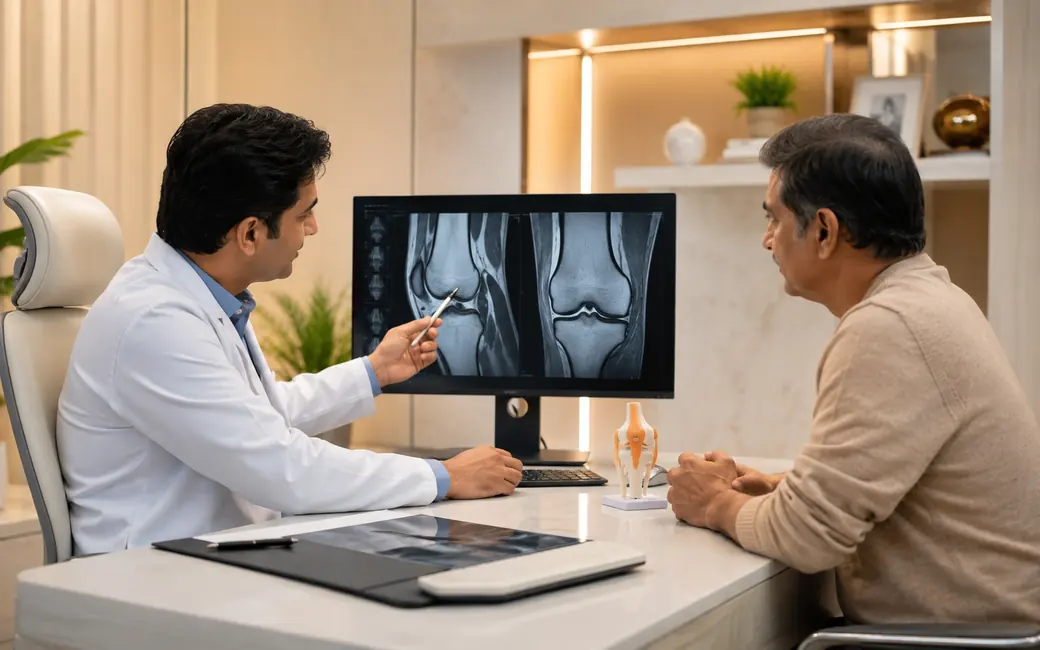
Imaging is matched with examination — scan findings alone never decide treatment.
Patellofemoral Pain Treatment — Correct Load & Tracking
Treatment works best when it combines temporary load reduction, targeted strengthening, movement retraining and selected procedures only when needed. ✅
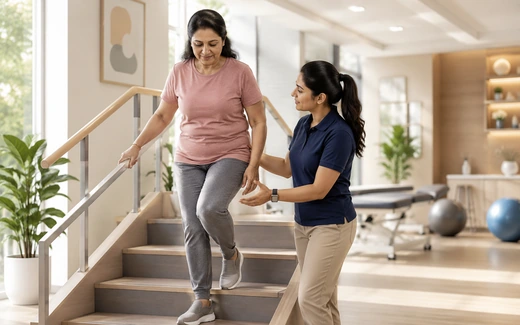
Reduce Kneecap Load 🪜
Activity modificationTemporarily adjust stairs, squats, running and sitting habits to calm irritation.
- Avoid painful deep squats
- Modify running load
- Stair technique guidance
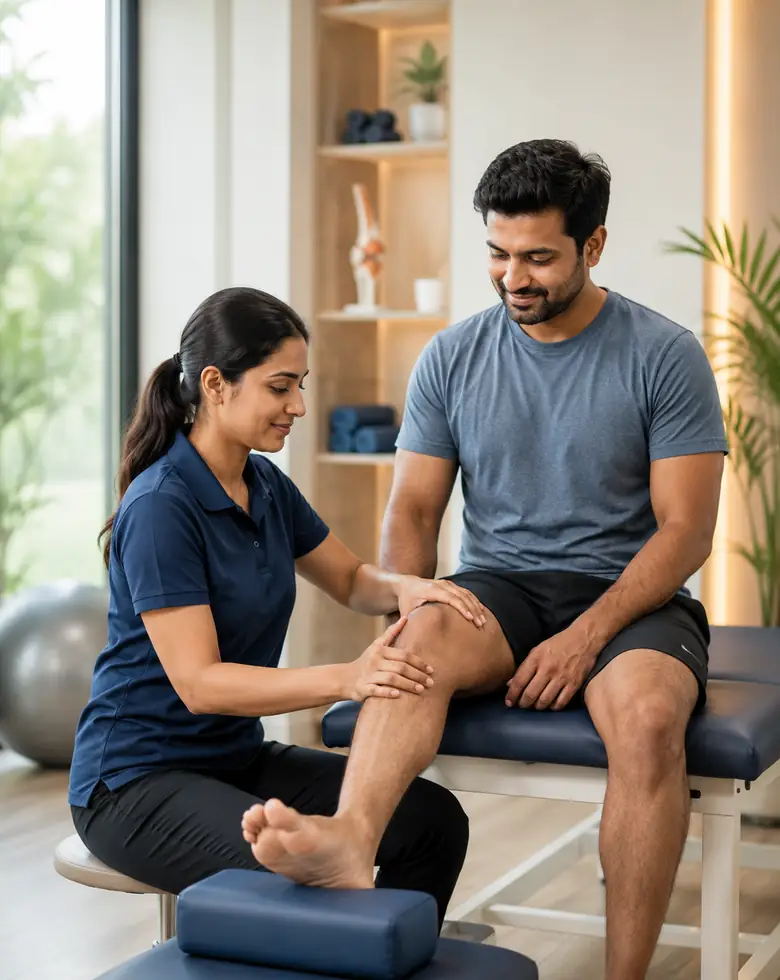
Strengthen Hip & Quads 🤸
Physiotherapy + home exercisesHip, quadriceps and movement-control rehab improves kneecap tracking and load tolerance.
- Hip abductor strengthening
- Quadriceps control
- Step-down retraining
Support Tracking 🎯
Taping / brace / selected injectionTaping, footwear advice or selected injections may help when inflammation limits rehab progress.
- Pain-control support
- Kneecap tracking aid
- Rehab remains central
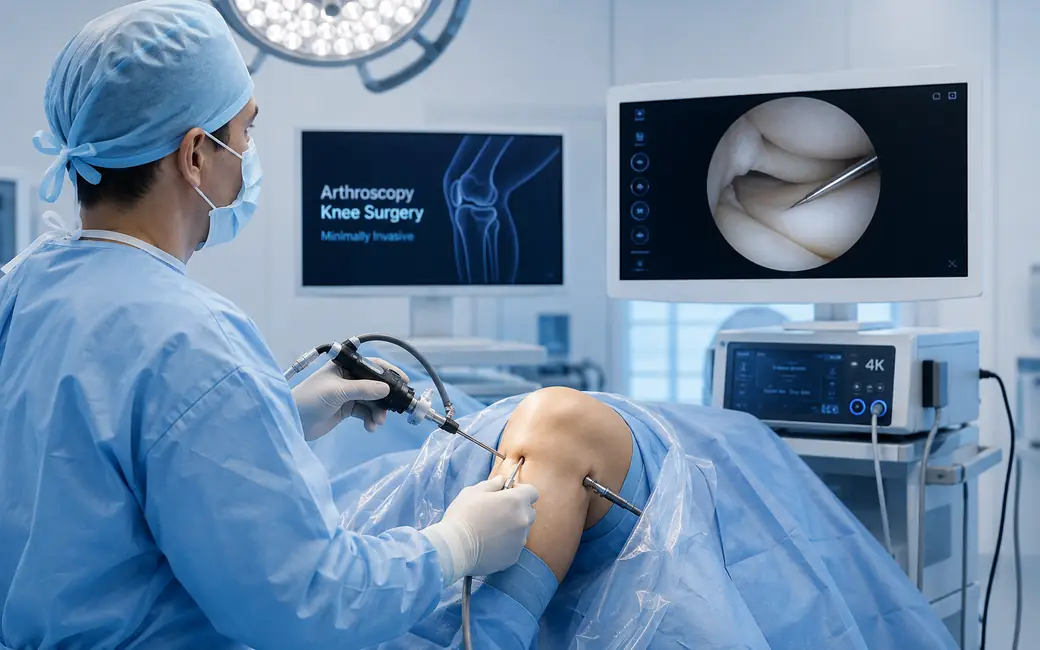
Surgery Rarely Needed 🔬
Only selected structural casesSurgery is uncommon and reserved for specific structural maltracking or cartilage problems after full assessment.
- Persistent mechanical problem
- Cartilage lesion
- Failed structured care
Physiotherapy & Exercises for Patellofemoral Pain
Exercise-based treatment is the mainstay — especially hip control, quadriceps strengthening and step/squat retraining. 👇
Knee Pain Physiotherapy
Therapist-guided patellofemoral rehab for tracking, load tolerance and pain-free function.
🏠Knee Exercises at Home
Quad sets, straight leg raises, controlled step-ups and hip strengthening with progression.
🎯Kneecap Taping & Tracking
Taping may reduce pain while the muscles are being retrained.
👟Footwear & Load Advice
Running shoes, flat feet, training spikes and squat depth are reviewed where relevant.
📥Exercise Guide Download
A printable knee exercise guide for daily practice and consistency.
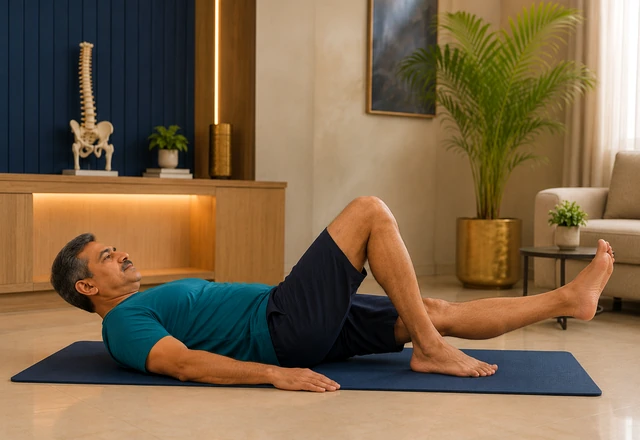 🦵 Quad sets
 ⬆️ Straight leg raise
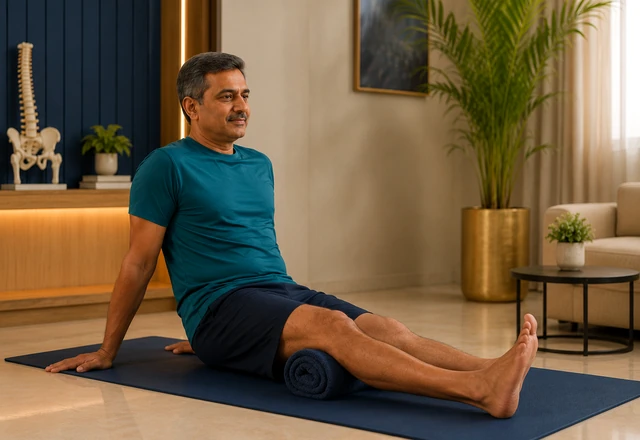 💪 Short arc quads
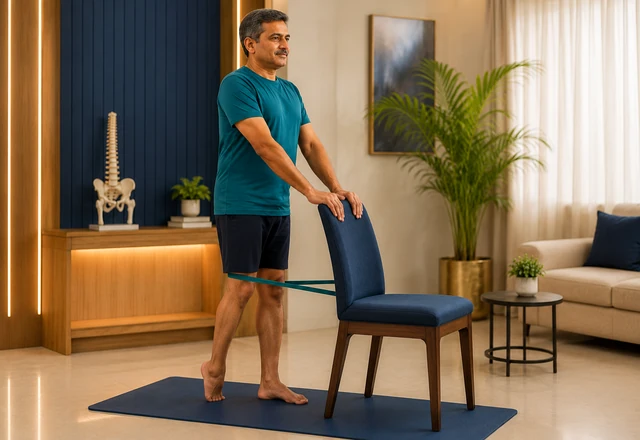 🎯 Terminal extension
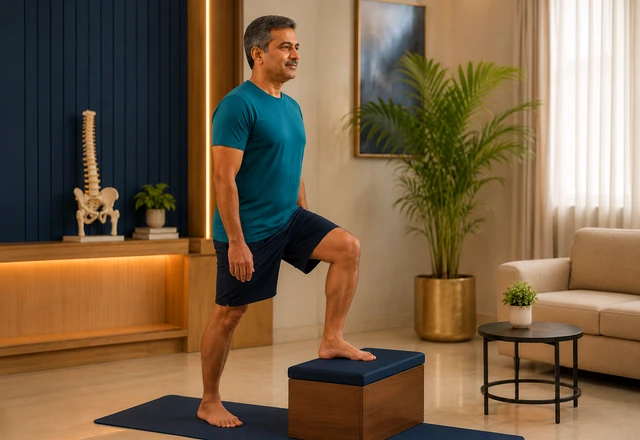 🪜 Step-ups
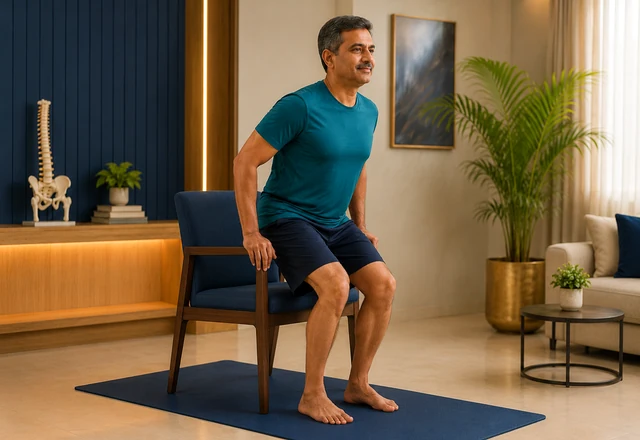 🪑 Sit-to-stand
🏠 Can’t travel for physiotherapy? Home-visit physiotherapy is available across Chennai. Guided sessions at your home for knee, spine and joint rehabilitation.
📞 Physio Home Visits · +91 98403 45335Injection Options for Patellofemoral Pain
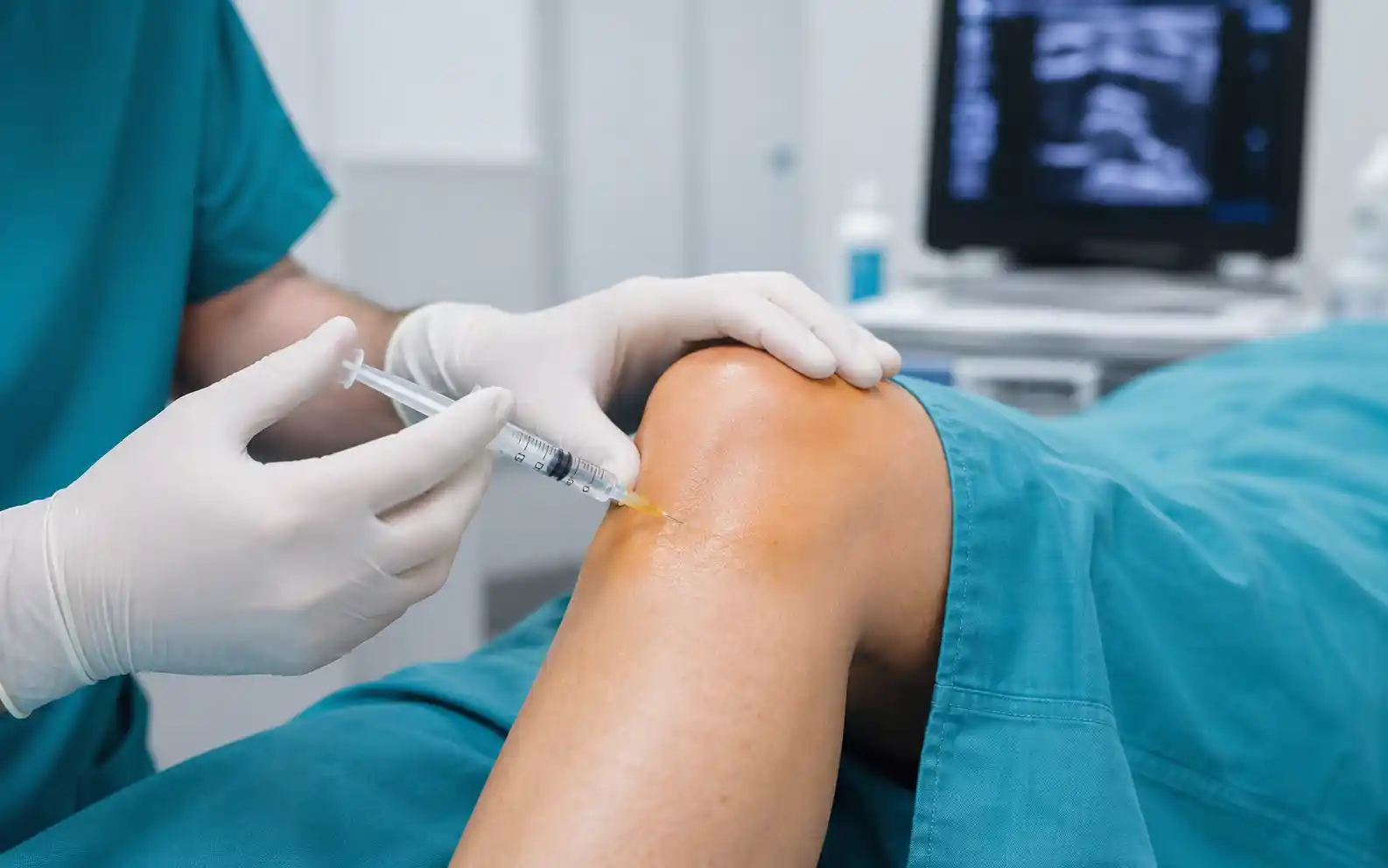
For patellofemoral pain, injections are supportive in selected cases — exercise correction remains the foundation.
Most patellofemoral pain improves with physiotherapy, load modification and taping. In selected patients with persistent inflammation, cartilage irritation or associated early arthritis, image-guided injection options may be considered to calm pain so rehab can progress.
The choice may include PRP or other knee injection options depending on the examination, imaging and pain source. The goal is not to replace exercise, but to make correct rehabilitation possible when pain is blocking progress. 🎯
When Is Surgery Needed for Patellofemoral Pain?
Surgery is rarely needed for routine patellofemoral pain syndrome. It is considered only when there is a clear structural problem such as recurrent patellar instability, significant maltracking, cartilage lesion or mechanical symptoms that do not improve after structured treatment.
Most patients improve without surgery when the plan addresses hip strength, quadriceps control, flexibility, footwear, running load and squat/stair mechanics. Any surgical decision is made only after careful clinical and imaging correlation. 🤝
Surgery is reserved for selected cases where structure, stability or mechanical symptoms require it.
⚖️ Rehab-first principle
Patellofemoral pain is usually a movement-and-load problem. A good rehab plan is more important than chasing scan words alone.
Patellofemoral Pain Syndrome — Frequently Asked Questions
What Patellofemoral Pain Patients Say
My knee pain was worst on stairs and after sitting. The explanation of kneecap tracking made the problem easy to understand.
★★★★★I was told to stop running completely elsewhere. Here I got a graded return-to-running plan with strengthening.
★★★★★Kneecap taping gave quick confidence, and the exercises built long-term improvement.
★★★★★The doctor checked my squat and step-down movement, not just the X-ray. That was very useful.
★★★★★I had pain after climbing stairs at work. Physiotherapy and small technique changes helped a lot.
★★★★★My MRI words sounded scary, but the treatment was simple and exercise-focused. No unnecessary surgery advice.
★★★★★The home exercise guide made it easy to continue rehab between visits.
★★★★★PRP was discussed only as an option because I also had cartilage irritation. The balanced advice helped me decide.
★★★★★I consulted online from Coimbatore and understood what to avoid in gym until the pain settled.
★★★★★Expert Orthopaedic Advice, From Wherever You Are
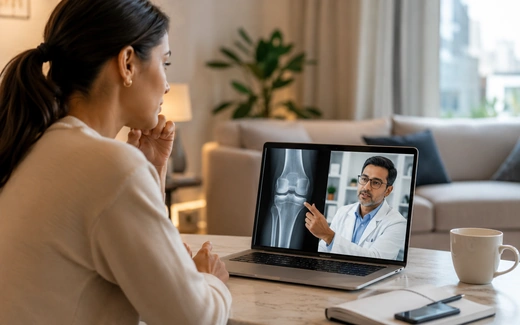
Can’t travel to Chennai, or want a specialist opinion before deciding your next step? Consult Dr. Soma Sundar over a secure video call for knee, shoulder, hip, sports injury, fracture, joint pain and orthopaedic concerns — and let your whole family join and ask questions.
-
Consult from anywhere
Connect from home, another city, or abroad — no travel needed for an expert orthopaedic opinion.
-
X-rays, MRI & reports — optional
You can share scans or reports in advance on WhatsApp if you have them, or simply talk first. Both work.
-
Clear next steps
Leave the call knowing what the likely problem is, what to try first, and when a clinic visit or procedure is truly needed.
Book an Ortho Video Consultation
Message us on WhatsApp with your name and a short note about your joint, bone, muscle or injury-related problem — our team will confirm a convenient slot.
Especially useful for- Outstation and overseas patients — and their families
- Knee, shoulder, hip, ankle, elbow or wrist pain
- A second opinion before orthopaedic surgery
- Understanding an X-ray, MRI or scan report in plain language
- Follow-up reviews after injections, procedures or surgery
- Elderly patients who find travelling difficult
📎 Sending X-rays, MRI or reports in advance is optional — many patients simply describe their problem and share reports later if needed.
Explore Orthopaedic Care
Patient-friendly guides for knee, shoulder, hip, foot and ankle problems — organised into simple boxes for conditions, treatments, physiotherapy, home exercises and one compact spine segment.