Shoulder Impingement Treatment in ChennaiPainful arc, overhead pain and rotator cuff irritation
Shoulder impingement causes pain when the rotator cuff tendon or bursa gets irritated under the shoulder bone during lifting or overhead activity. Most patients improve with the right physiotherapy, posture correction and targeted pain-relief options.
📞 Call Us Now
💬 WhatsApp
💉 Injection Options

Create image: shoulder-impingement-hero.webpPatient with painful arc while lifting arm.
Persistent painful arc needs diagnosis-focused care, not random shoulder exercises.
Dr. Soma Sundar S
MBBS, MS (Ortho), DNB (Ortho), FRCS (UK), FISS (Spine Surgery), FESS (Germany), FMISS (Switzerland), FAOS (Nottingham, UK)
🎓 AO Spine Fellowship (Nottingham, UK)
🏅 Gold Medalist
💉 Advanced Pain Management Specialist
🔬 Minimally Invasive Specialist
Dr. Soma Sundar treats shoulder impingement, rotator cuff tendinitis, bursitis and related shoulder pain. The goal is to reduce pain, correct shoulder mechanics and avoid unnecessary surgery whenever possible.
📞 Call Clinic
💬 WhatsApp

4.9★Google Rating
🏥Kauvery Hospital, Alwarpet🕗 Mon – Sat | 8:30 AM – 5:00 PM📍 Get Directions
🏥Shens Hospital, Ashok Nagar🕔 Mon – Sat | 5:30 PM – 8:00 PM📍 Get Directions
💡 Quick Answer: What Is Shoulder Impingement?
Shoulder impingement happens when the rotator cuff tendon or subacromial bursa becomes pinched and inflamed under the acromion during arm lifting. It commonly causes a painful arc, night pain and pain with overhead activity. Treatment usually starts with activity modification and physiotherapy; a subacromial bursa injection can be a simple pain-relief option when pain is prolonged or blocks rehab.
⚡ Shoulder Impingement Is Tendon and Bursa Irritation
The rotator cuff tendons pass through a narrow space below the acromion. When the tendon or bursa is irritated, swollen or repeatedly compressed, lifting the arm becomes painful.
Impingement is often linked with rotator cuff tendinitis and subacromial bursitis. It can also coexist with a rotator cuff tear, especially when pain is persistent or weakness is present.
The common mistake is doing heavy strengthening too early. The shoulder usually needs pain reduction, scapular control, rotator cuff activation and gradual return to overhead work.

Create image: shoulder-impingement-diagram.webpDiagram showing tendon pinching under acromion.
Impingement pain usually comes from irritated rotator cuff tendon and subacromial bursa.
👀 Shoulder Impingement Symptoms
The classic symptom is pain while lifting the arm sideways or overhead, often called a painful arc.
⚡ Painful arc
Pain is felt during the middle range of lifting the arm, especially sideways.
🙆 Overhead pain
Reaching shelves, washing hair, throwing or overhead gym work can hurt.
🌙 Night pain
Pain while lying on the affected shoulder may indicate bursitis or tendon inflammation.
🏋️ Gym-related pain
Bench press, shoulder press, lateral raises or poor form can aggravate symptoms.
 Create image: shoulder-pain-overhead-activity.webpPatient having pain while reaching overhead.
Overhead activity pain
Overhead pain is one of the most common reasons patients seek care.
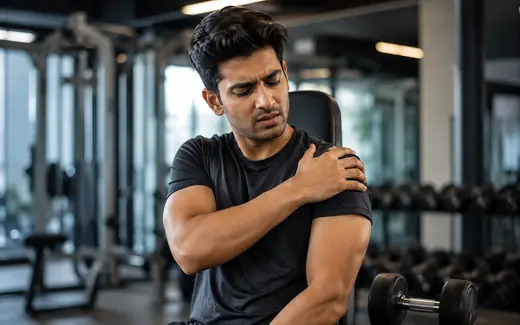 Create image: shoulder-gym-pain.webpYoung adult with shoulder pain during gym workout.
Gym-triggered impingement
Repeated pressing or overhead lifting can irritate the rotator cuff and bursa.
 Create image: shoulder-clinic-examination.webpDoctor examining shoulder movement gently.
Clinical examination
Movement, strength and impingement tests guide whether imaging is needed.
🧬 What Causes Shoulder Impingement — and What It Can Mimic
Clickable cards connect related shoulder pages and help patients understand when impingement is not the full diagnosis.
🦴 Shoulder pain
Main hub for painful shoulder conditions, diagnosis and treatment options.
🔥 Rotator cuff tendinitis
Inflamed tendon is a common driver of impingement pain.
💧 Shoulder bursitis
Inflamed subacromial bursa can cause night pain and painful arc.
💪 Rotator cuff tear
Persistent pain with weakness needs assessment for tendon tear.
🧊 Frozen shoulder
Marked stiffness and restricted passive movement suggest frozen shoulder.
🧱 Calcific tendinitis
Calcium deposit can cause sudden severe pain and mimic impingement.
🚩 Shoulder Impingement Red Flags
Most impingement is not an emergency, but these features need earlier review.
⚠️
Sudden weakness after fall, accident or heavy lifting injury.
⚠️
Severe night pain, fever, swelling, redness or unexplained weight loss.
⚠️
Pain not improving after a few weeks of sensible rest and physiotherapy.
🔎 Painful arc plus weakness may not be simple impingement
Weakness, traumatic onset or persistent night pain may need MRI or ultrasound to rule out rotator cuff tear.
🩻 How Shoulder Impingement Is Diagnosed
A clinical examination identifies the pain pattern, while imaging is used when symptoms persist or another diagnosis is suspected.
1
🗣️ Pain pattern and activity review
Overhead work, sports, gym routine, sleep pain and duration are checked.
2
🙆 Painful arc and impingement tests
Arm elevation, rotation and special tests help localise tendon or bursa irritation.
3
💪 Rotator cuff strength testing
Weakness suggests tendon tear or advanced rotator cuff disease.
4
🧲 X-ray, ultrasound or MRI when needed
Used for calcific tendinitis, arthritis, bony spur, bursitis or rotator cuff tear.
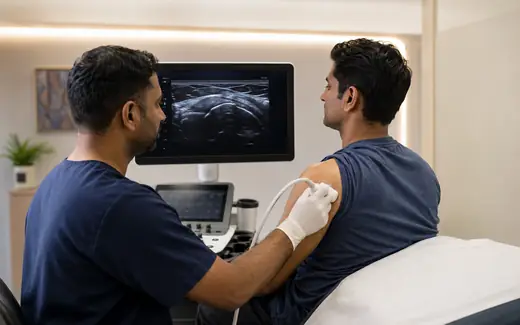
Create image: shoulder-ultrasound-scan.webpShoulder ultrasound scan in clinic setting.
Ultrasound or MRI may help identify bursitis, tendinitis, calcification or tendon tear.

Why choose Dr. Soma Sundar?
👨⚕️ A mechanics-first plan for shoulder impingement
🎯
Diagnosis clarity: impingement is separated from frozen shoulder, tear, arthritis and calcific tendinitis.
🏋️
Rehab-first approach: rotator cuff and shoulder blade control are corrected gradually.
💉
Injection support when needed: subacromial injection can reduce pain enough to restart useful movement.
🔬
Surgery only selectively: arthroscopy is discussed only when symptoms persist or structural pathology requires it.
14+Years Experience
4.9★Google Rating
FRCS(UK) Certified
💉Pain Specialist
🩺 Shoulder Impingement Treatment Options in Chennai
Most shoulder impingement improves without surgery. The treatment goal is to reduce inflammation, improve shoulder mechanics and gradually rebuild pain-free overhead function.
 Create image: shoulder-physiotherapy-hero.webpPhysiotherapist guiding patient shoulder rehab.
🌿 Step 1
Physiotherapy and activity correction
First-line care for most patients.
- Scapular stabilisation
- Rotator cuff strengthening
- Temporary overhead activity modification
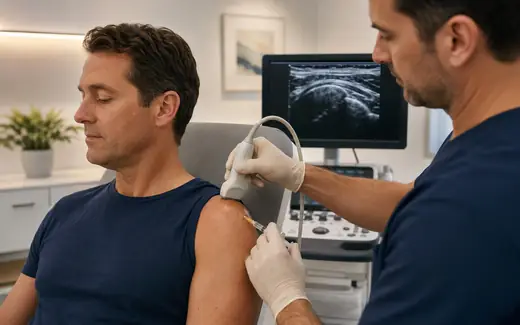 Create image: subacromial-bursa-injection.webpImage-guided subacromial bursa injection.
💉 Step 2
Subacromial bursa injection
Useful when pain persists or blocks rehab.
- Reduces bursa inflammation
- Can improve sleep and activity
- Works best with physiotherapy
 Create image: shoulder-treatment-options.webpDoctor showing treatment pathway.
🔬 Step 3
Arthroscopy rarely
Only for selected persistent cases or associated structural problems.
- Failed good non-surgical care
- Associated cuff tear
- Selected decompression/repair planning
🔎 The root cause is often mechanics + inflammation
Injection may reduce pain, but long-term recovery depends on correcting shoulder blade control, rotator cuff strength and painful overhead loading patterns.
💉 Subacromial Injection for Shoulder Impingement
When shoulder impingement pain is prolonged, disturbs sleep or prevents exercises, a targeted subacromial bursa injection can be a simple, quick and usually comfortable pain-relief option.
The injection is placed around the inflamed bursa beneath the acromion. This can reduce pain enough for patients to restart shoulder physiotherapy, rotator cuff exercises and scapular stabilisation.
It is not meant as a shortcut to avoid rehab. It works best as part of a complete plan: diagnosis, pain control, exercise correction and gradual return to overhead activity.
🌙 Night pain
Injection may help when painful inflammation disturbs sleep.
🏋️ Pain blocks physio
Reducing pain can make exercises easier and more productive.
🎯 Focused treatment
The inflamed bursa is targeted rather than giving general pain relief only.

Create image: subacromial-bursitis-diagram.webpDiagram showing inflamed subacromial bursa.
Subacromial injection targets the inflamed bursa commonly involved in impingement pain.
✅ Balanced advice
Injection is most useful when inflammation is the main pain driver. If weakness, traumatic onset or persistent symptoms suggest rotator cuff tear, imaging and repair options may need discussion.
🏋️ Shoulder Impingement Exercises
Exercise should reduce irritation, not provoke it. The right plan often focuses on posture, shoulder blade control and rotator cuff endurance.
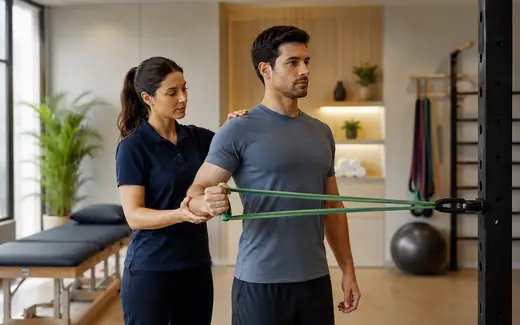 Create image: rotator-cuff-band-exercise.webpPatient doing resistance band external rotation.
Rotator cuff activation
Builds control of the shoulder ball and reduces overload during lifting.
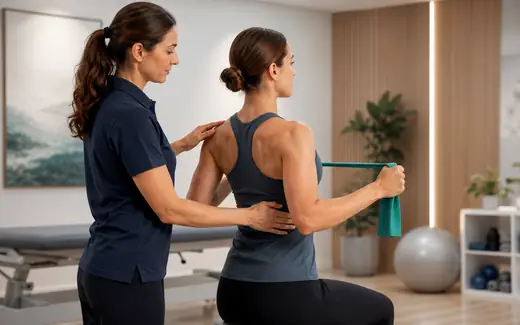 Create image: scapular-stabilisation-exercise.webpPatient doing scapular retraction/posture exercise.
Scapular stabilisation
Shoulder blade control creates better space and smoother overhead movement.
 Create image: shoulder-home-exercise-plan.webpPatient following home shoulder exercise plan.
Home exercise plan
Regular low-irritation exercises work better than occasional painful workouts.
❓ Shoulder Impingement Treatment in Chennai: FAQs
Dr. Soma Sundar S treats shoulder impingement with physiotherapy planning, posture and scapular correction, subacromial injection in selected patients, and arthroscopy only when needed.
Shoulder impingement occurs when the rotator cuff tendons or bursa are pinched or irritated under the acromion during arm movement.
Painful arc means pain during the middle part of lifting the arm, especially sideways. It is a common clue for impingement or rotator cuff-related pain.
Yes. Most patients improve with activity modification, physiotherapy, rotator cuff strengthening and scapular stabilisation.
A subacromial bursa injection may help when pain persists or blocks physiotherapy. It reduces inflammation and can create a pain-free window for rehab.
Imaging may be needed if pain persists, there is weakness, traumatic onset, suspected rotator cuff tear, calcific tendinitis or unclear diagnosis.
Impingement can coexist with rotator cuff tendinitis or tear. Persistent pain and weakness should be checked to rule out tendon damage.
Exercises usually focus on shoulder blade control, rotator cuff strengthening, posture correction, mobility and gradual return to overhead activity.
Surgery is uncommon and considered only when symptoms persist despite good non-surgical care or there is associated structural pathology like rotator cuff tear.
No. Impingement mainly causes painful movement, especially overhead. Frozen shoulder causes marked stiffness and restriction of both active and passive movement.
Yes. Heavy pressing, repeated overhead lifting, poor form and weak shoulder blade control can aggravate impingement symptoms.
Call +91 90809 68066 or WhatsApp to book a consultation with Dr. Soma Sundar S at Kauvery Hospital Alwarpet or Shens Hospital Ashok Nagar.
⭐ Patient Stories from Shoulder Impingement Care
I had pain every time I lifted my arm sideways. Dr. Soma Sundar explained the impingement clearly and changed my exercises. The pain settled gradually without surgery.
★★★★★5 Star ratedMr. Naveen R., 42IT professional, AdyarShoulder impingement physiotherapy
Night pain was the worst part. The injection was simple and helped me sleep, then I could actually do the physiotherapy properly.
★★★★★5 Star ratedMrs. Kavitha S., 50Teacher, MylaporeSubacromial injection + rehab
I thought it was a gym injury that would go away. He checked my form, strength and explained how shoulder blade control was part of the problem. Very practical advice.
★★★★★5 Star ratedMr. Arvind K., 34Fitness enthusiast, VelacheryGym-related shoulder impingement
I was worried about rotator cuff tear. He examined me and advised imaging only because I had weakness. The plan felt honest and not rushed.
★★★★★5 Star ratedMr. Daniel P., 47Business owner, Anna NagarImpingement with MRI review
💻 Video Consultation for Shoulder Impingement
If you already have X-ray, MRI or ultrasound reports, a video consultation can help you understand whether pain is from impingement, bursitis, tendinitis or rotator cuff tear.
📄Share reports and pain history
Send imaging reports, pain location, painful movements and gym/work triggers.
🎯Understand the likely source
Discuss whether symptoms match impingement, bursitis, frozen shoulder or cuff tear.
🗓️Plan next step
Know whether you need physiotherapy, injection planning or imaging review.
💬 Video Consultation📞 Call Clinic

Dr. Soma Sundar SOrthopaedic, Spine & Pain Specialist Online consultation available
1
Send reports and describe painful movements
2
Discuss likely diagnosis and treatment options
3
Receive a clear physio / injection / imaging plan