Meniscus Tear Treatment in ChennaiKnee locking, swelling, twisting injury and arthroscopy care
A meniscus tear is one of the common reasons for knee pain after a twist, sports injury, squat, fall or sudden turn. The right plan depends on the tear type — some improve with physiotherapy, while locked or unstable tears may need keyhole arthroscopy.
📞 Call Us Now
💬 WhatsApp
🩺 Treatment Options

Create image: meniscus-tear-hero.webpAdult patient with twisting knee injury consulting doctor.
Meniscus tears need diagnosis-based care — not every tear needs surgery.
Dr. Soma Sundar S
MBBS, MS (Ortho), DNB (Ortho), FRCS (UK), FISS (Spine Surgery), FESS (Germany), FMISS (Switzerland), FAOS (Nottingham, UK)
🎓 AO Spine Fellowship (Nottingham, UK)
🏅 Gold Medalist
🔬 Minimally Invasive Specialist
💉 Advanced Pain Management Specialist
Dr. Soma Sundar treats meniscus tears with a practical, knee-preserving approach — identifying whether the tear is stable, degenerative, displaced, repairable or associated with ligament injury before deciding between rehabilitation, injection support or arthroscopy.
📞 Call Clinic
💬 WhatsApp

4.9★Google Rating
🏥Kauvery Hospital, Alwarpet🕗 Mon – Sat | 8:30 AM – 5:00 PM📍 Get Directions
🏥Shens Hospital, Ashok Nagar🕔 Mon – Sat | 5:30 PM – 8:00 PM📍 Get Directions
💡 Quick Answer: What Is a Meniscus Tear?
The meniscus is the C-shaped shock absorber inside the knee. A tear can cause pain, swelling, clicking, catching, locking or a feeling that the knee gives way. Younger active patients often tear it during a twist; older adults may develop degenerative tears along with knee osteoarthritis.
🦵 Meniscus Tear Is a Knee Shock-Absorber Injury
Each knee has two menisci — medial and lateral. They sit between the thigh bone and shin bone, sharing load, improving stability and protecting cartilage during walking, stairs, squats and sports.
A tear can happen suddenly during twisting, pivoting or deep squatting. It can also happen slowly as part of age-related wear, especially when there is knee arthritis. That difference matters because a young sports tear, a degenerative tear and a locked bucket-handle tear are treated differently.
🦵 Knee pain guide🔒 Knee locking💧 Knee swelling🔬 Knee arthroscopy
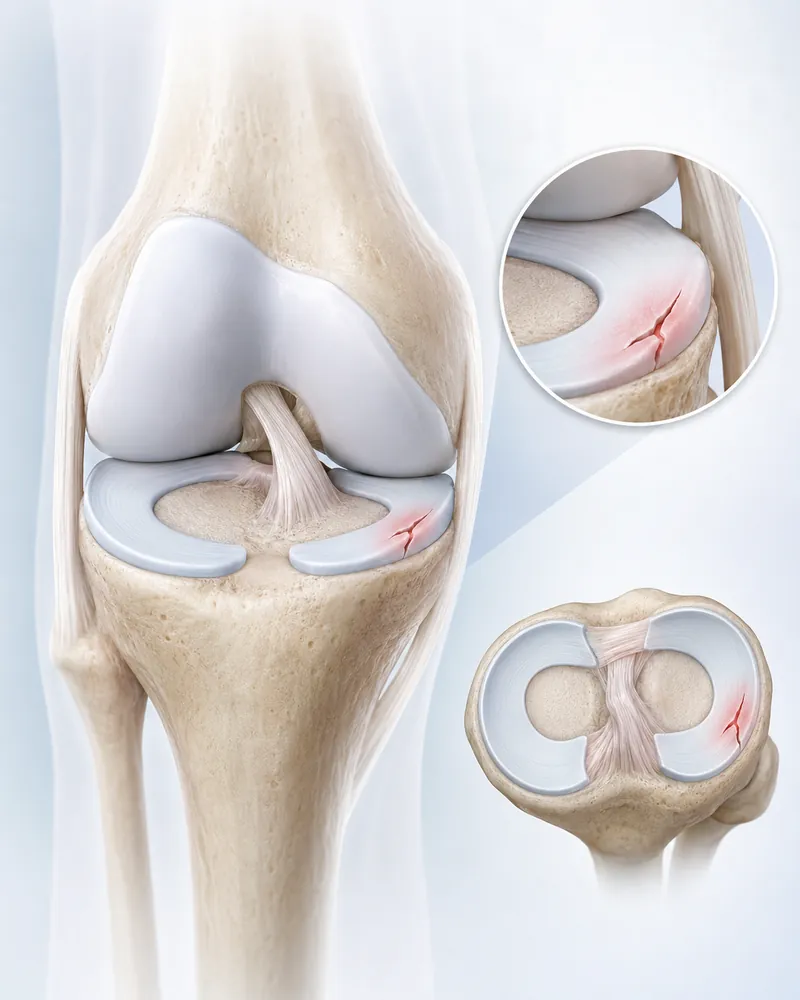
Create image: meniscus-tear-anatomy-diagram.webpClean diagram showing medial and lateral meniscus tear.
The meniscus protects the knee joint surface and helps knee stability.
👀 Meniscus Tear Symptoms and Pain Patterns
The classic symptoms are pain, swelling, stiffness, catching, locking and difficulty fully bending or straightening the knee. True locking after a twist is especially important because a displaced tear may block movement.
🔁 Pain after twisting
Sudden pain during sports, stairs, squatting, sitting cross-legged or turning quickly can suggest meniscus injury.
🔒 Knee locking
The knee feels stuck or cannot fully straighten. This can happen with displaced or bucket-handle tears.
💧 Swelling
Swelling may appear within hours or over 1–3 days after injury, depending on associated damage.
🔊 Clicking or catching
A torn fragment may catch during bending, squatting or rising from a chair.
📍 Joint-line pain
Medial meniscus tears often cause inner knee pain; lateral tears may cause outer knee pain.
⚡ Giving way
If the knee gives way after injury, ACL injury or combined ligament injury should also be assessed.
 Create image: knee-locking-meniscus-symptom.webpPatient unable to fully bend or straighten knee.
Knee locking
Locking suggests a mechanical block and should be assessed early.
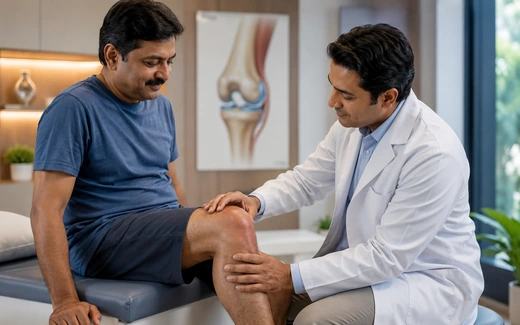 Create image: knee-swelling-examination.webpDoctor gently examining swollen knee.
Swelling after injury
Swelling may mean meniscus tear, ligament injury or cartilage injury.
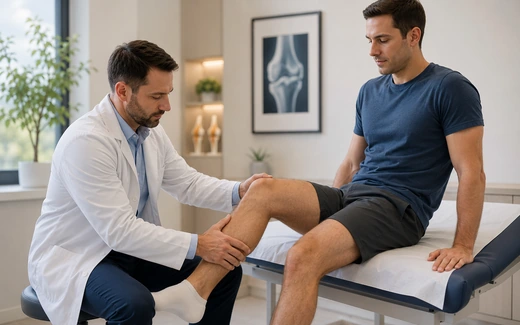 Create image: knee-ligament-clinical-test.webpDoctor performing gentle knee stability test.
Combined injury check
Meniscus tears can occur with ACL injury or collateral ligament injury.
🧩 Types of Meniscus Tears and What They Mean
Treatment depends on tear location, pattern, age of tear, tissue quality, arthritis level and whether the knee is mechanically locked.
🏃 Traumatic tear
Often occurs after twisting or pivoting. Repair may be possible in selected young active patients if the tear is in a healing zone.
⏳ Degenerative tear
Common with ageing or arthritis. Many improve with physiotherapy and arthritis-focused treatment rather than immediate surgery.
🔒 Bucket-handle tear
A displaced fragment can block knee movement. This often needs early MRI and arthroscopy discussion.
🌱 Root tear
A meniscus root tear can behave like loss of the meniscus and may accelerate arthritis if missed.
📍 Medial meniscus tear
Usually causes inner knee pain and tenderness along the joint line.
📍 Lateral meniscus tear
May cause outer knee pain, catching and swelling, especially after sports injuries.
🚩 Meniscus Tear Red Flags: Get Checked Early
Most meniscus tears are not emergencies, but these signs need early orthopaedic assessment.
⚠️
The knee is locked and cannot fully straighten after a twisting injury.
⚠️
Rapid swelling, inability to bear weight, severe pain or giving way after injury.
⚠️
Fever, redness, warmth, severe swelling or unexplained night pain.
📌 Important
True mechanical locking is different from pain-related stiffness. A locked knee may need early MRI to rule out a displaced tear.
🩻 How a Meniscus Tear Is Diagnosed
MRI helps confirm the tear, but the treatment decision should match your symptoms, examination, arthritis grade and activity needs.
1
👂 History and injury mechanism
Twist, pop, swelling timing, locking, catching, sports injury and previous knee pain are noted.
2
🩺 Clinical examination
Joint-line tenderness, range of motion, McMurray-type tests, swelling and ligament stability are checked.
3
🩻 X-ray and MRI
X-ray checks arthritis and alignment. MRI shows tear pattern, root tear, cartilage status and associated ligament injury.
4
🎯 Diagnosis-based treatment plan
Stable tears may start with physiotherapy. Locked, repairable or persistent mechanical tears may need arthroscopy.
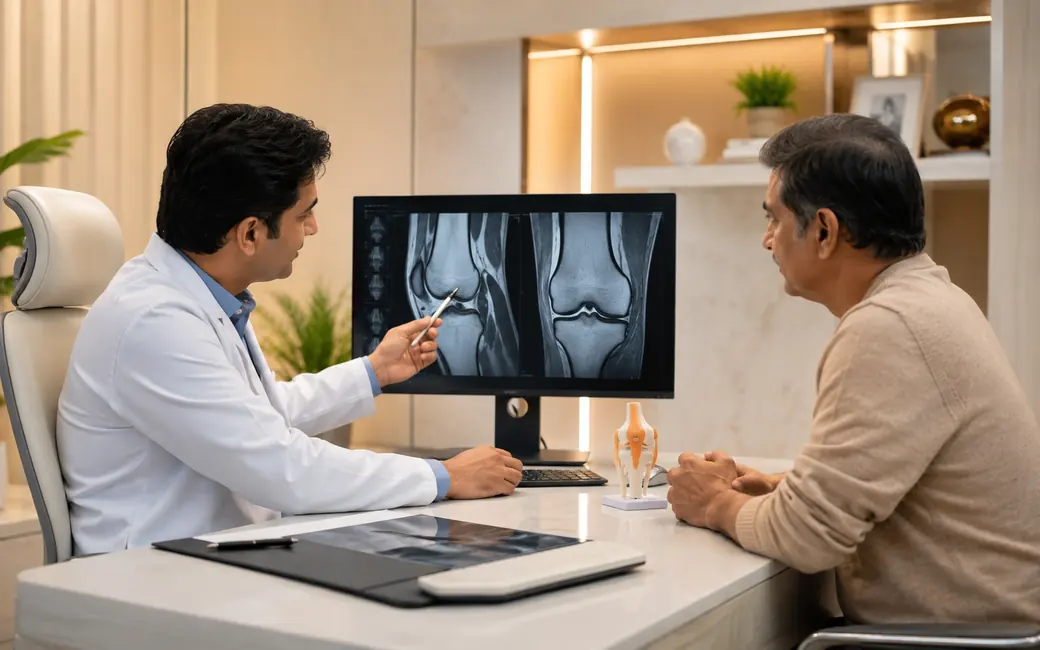
Create image: knee-xray-mri-review.webpSpecialist reviewing knee X-ray or MRI with patient.
MRI findings matter most when they match your symptoms and examination.

Why choose Dr. Soma Sundar?
👨⚕️ A knee-preserving meniscus plan, not routine surgery
🩺
Cause-based knee assessment: meniscus tear, ACL injury, swelling, cartilage damage and arthritis are assessed together.
🌿
Non-surgical-first where appropriate: degenerative and stable tears often begin with physiotherapy, activity guidance and pain control.
🔬
Arthroscopy when clearly indicated: locked tears, repairable tears, root tears and persistent mechanical symptoms are discussed with clear expectations.
💉
Injection and pain expertise: selected patients with arthritis-related pain may benefit from knee injection support alongside rehab.
💬
Clear communication: you understand whether your tear needs rehab, monitoring, injection support, repair or trimming.
14+Years Experience
4.9★Google Rating
FRCS(UK) Certified
MISKeyhole Specialist
🩺 Meniscus Tear Treatment Options in Chennai
The goal is to relieve pain, restore knee movement, protect cartilage and help you return to daily activity or sport safely.
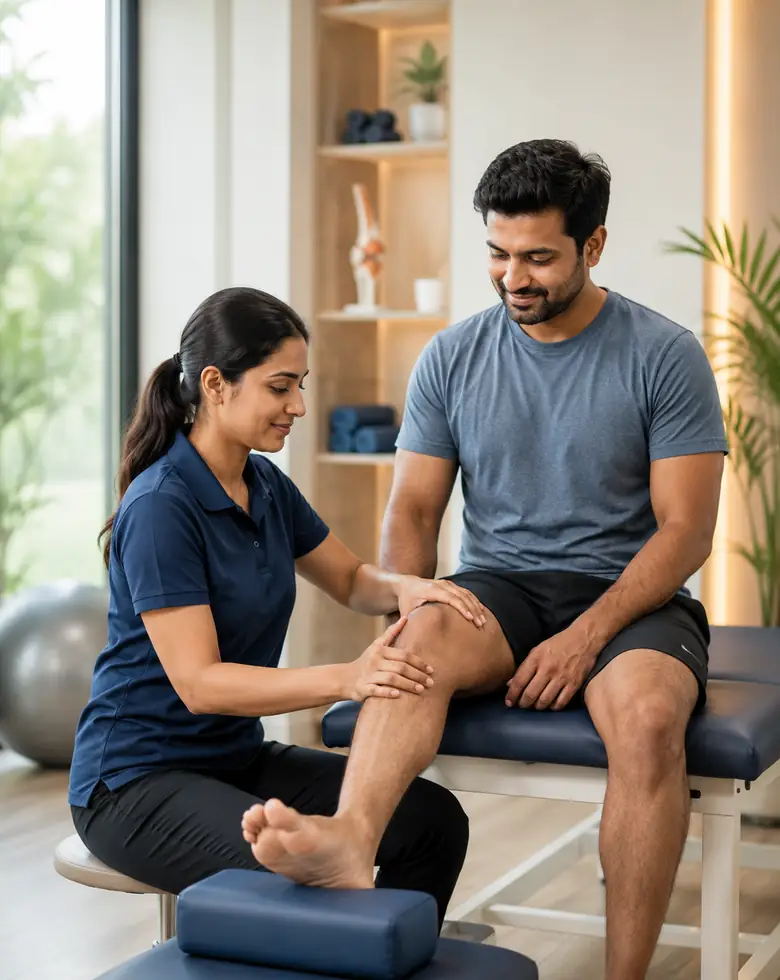 Create image: physiotherapy-for-knee-pain.webpPhysiotherapist guiding knee rehab.
🌿 Step 1
Physiotherapy and activity modification
Often the first step for stable or degenerative tears.
- Swelling control and pain reduction
- Quadriceps and hip strengthening
- Gradual return to walking, stairs and sport
 Create image: knee-injection-hero.webpCalm image-guided knee injection setup.
💉 Step 2
Injection support when pain blocks rehab
Useful when arthritis, inflammation or swelling is a major pain driver.
- Steroid injection for painful swollen flares
- Hyaluronic acid for arthritis-related knee pain
- Best combined with structured rehabilitation
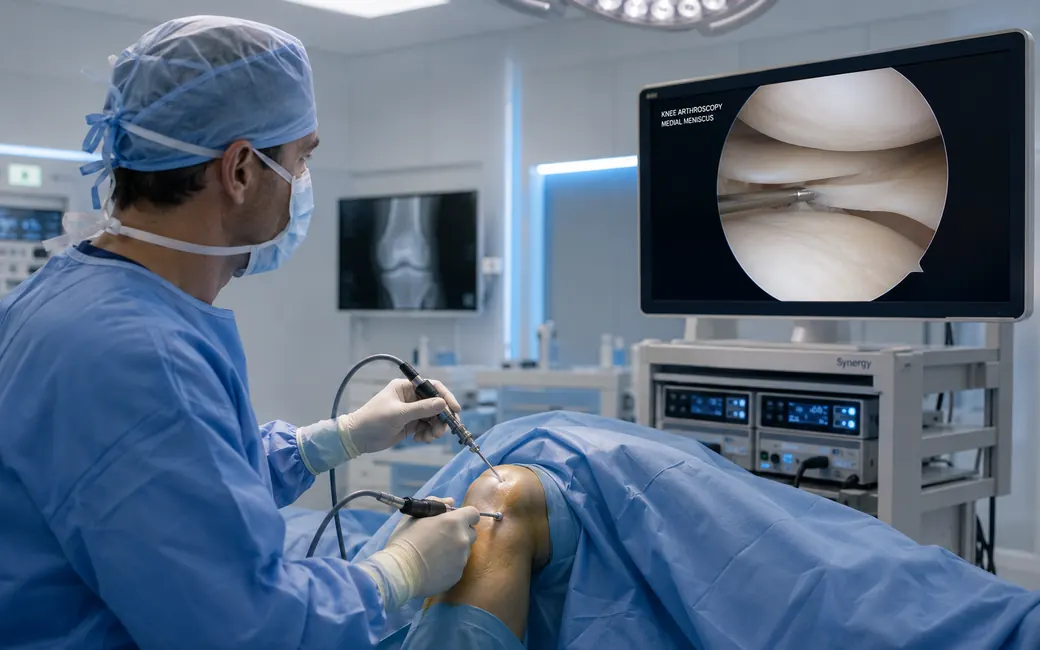 Create image: meniscus-surgery-arthroscopy.webpArthroscopic meniscus repair or trimming concept.
🔬 Step 3
Meniscus surgery / arthroscopy
Considered for locked, displaced, repairable or persistent mechanical tears.
- Meniscus repair when healing potential is good
- Partial meniscectomy only when repair is not suitable
- Root tear and ACL-associated tear planning
🔎 Key message
A meniscus tear on MRI does not automatically mean surgery. The decision depends on your symptoms, examination, tear type, age, cartilage status and whether the knee is mechanically locked.
🔬 Knee Arthroscopy for Meniscus Tear
Arthroscopy is a keyhole procedure where a camera and small instruments are used inside the knee. It may be used to repair a tear, trim an unstable torn fragment, treat a locked bucket-handle tear, or address associated cartilage and ligament problems.
Meniscus repair is preferred when the tear pattern, location and tissue quality allow healing. Trimming is considered when the torn fragment is unstable and not repairable. In degenerative tears with arthritis, a careful non-surgical plan is often tried first unless there are strong mechanical symptoms.
🔬 Knee arthroscopy🧵 Meniscus surgery🦵 ACL reconstruction⚖️ Replacement vs injection
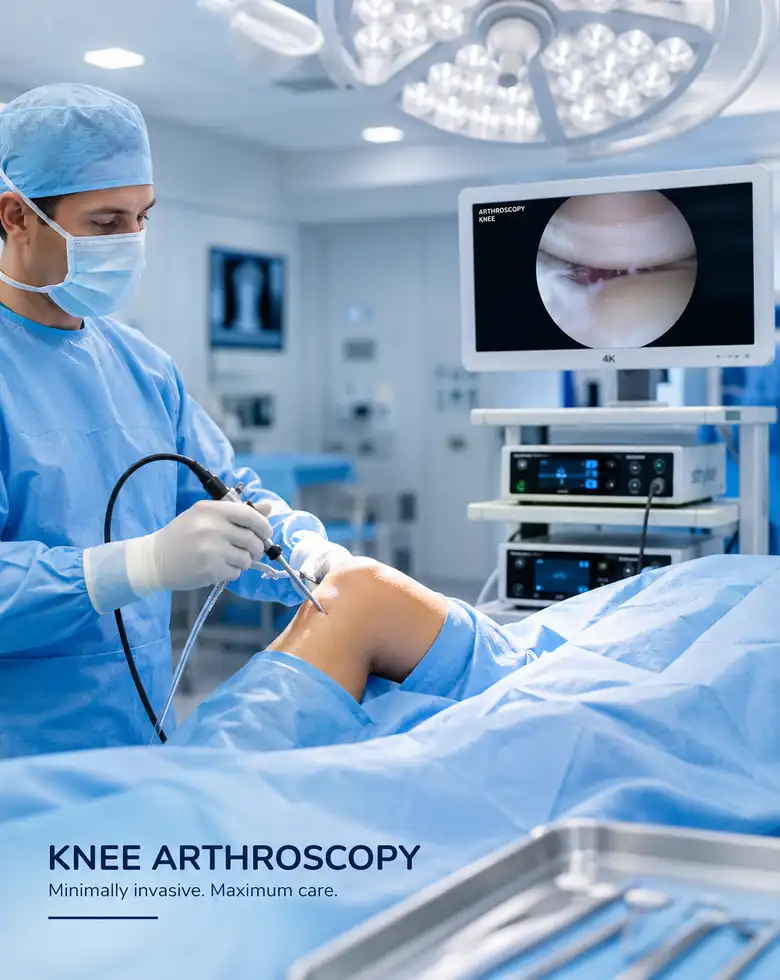
Create image: knee-arthroscopy-hero.webpModern arthroscopy OT setup, clean and non-scary.
Arthroscopy is reserved for cases where it clearly fits the tear pattern and symptoms.
❓ Meniscus Tear Treatment in Chennai: FAQs
A meniscus tear is an injury to the C-shaped cartilage shock absorber inside the knee. It can happen during twisting injuries or develop gradually with ageing and arthritis.
Pain, swelling, stiffness, clicking, catching, locking, giving way and difficulty fully bending or straightening the knee are common symptoms.
Many patients can walk after a meniscus tear, but swelling and stiffness may increase over the next few days. Avoid pivoting, squatting and sports until assessed.
No. Stable and degenerative tears often improve with physiotherapy, activity modification and pain control. Surgery is considered when there is locking, displaced tear, repairable tear pattern, associated injury or persistent mechanical symptoms.
MRI is useful when symptoms suggest meniscus tear, locking, combined ligament injury, persistent swelling, sports injury or when surgery planning is being considered.
True locking means the knee is physically stuck and cannot fully straighten. This can occur when a torn meniscus fragment blocks joint movement.
Meniscus repair is an arthroscopic procedure where sutures are used to preserve and heal the torn meniscus. It is usually considered in selected tear patterns with good healing potential.
Partial meniscectomy means trimming only the unstable, non-repairable torn fragment while preserving as much healthy meniscus as possible.
Injections do not stitch a torn meniscus, but they may reduce pain and inflammation when arthritis, swelling or synovitis is contributing to symptoms. They are best combined with rehabilitation.
Recovery depends on treatment. Non-surgical rehab may take several weeks. After trimming, recovery is usually faster than repair. Meniscus repair needs more protection and a longer rehab timeline.
Yes. Meniscus tears often occur with ACL injuries, especially after pivoting sports injuries. Combined injuries need careful MRI review and surgical planning if instability is present.
Yes. You can share MRI images/reports, X-rays and symptom details before the video consultation. Dr. Soma Sundar can guide whether physiotherapy, injection support, in-person examination or arthroscopy discussion is needed.
⭐ Patient Stories from Meniscus Tear Care
After a twisting injury, my knee was swollen and I could not straighten it fully. Dr. Soma Sundar explained the MRI clearly and helped me understand why arthroscopy was needed.
★★★★★5 Star ratedMr. Naveen R., 34IT professional, VelacheryLocked meniscus tear
I was worried that any meniscus tear means surgery. Doctor reassured me that mine could start with physiotherapy. My pain settled and I returned to walking comfortably.
★★★★★5 Star ratedMrs. Uma S., 49Teacher, AdyarDegenerative meniscus tear
My son had a sports injury with ACL and meniscus tear. The explanation was very practical — what needed repair, what recovery would involve and how to plan return to sport.
★★★★★5 Star ratedMr. Srinivas K., 46Parent, Anna NagarACL + meniscus planning
Doctor did not rush me into surgery. He first checked whether my arthritis was contributing to the pain and gave a clear non-surgical plan before discussing arthroscopy.
★★★★★5 Star ratedMr. Hari P., 58Business owner, MylaporeMeniscus + arthritis pain
I had catching in my knee every time I squatted. The MRI review and treatment options were explained in simple language. The decision-making was very transparent.
★★★★★5 Star ratedMs. Lakshmi V., 41Homemaker, T. NagarCatching knee pain
After arthroscopy, the rehab instructions were clear and structured. I liked that the focus was on protecting the knee, not just finishing the surgery.
★★★★★5 Star ratedMr. Arjun B., 31Fitness enthusiast, PorurMeniscus arthroscopy rehab
💻 Video Consultation for Meniscus Tear
Outside Chennai or already have an MRI report? A video consultation can help you understand whether your meniscus tear needs physiotherapy, injection support, in-person examination or arthroscopy discussion.
📄Share MRI and X-ray reports
Send MRI images, report, X-ray and injury details before the appointment.
🎯Understand tear type
Discuss whether it sounds degenerative, traumatic, locked, root tear or associated with ACL injury.
🗓️Plan the next step
Know whether rehab, injection, bracing, in-person exam or surgery planning is appropriate.
💬 Video Consultation📞 Call Clinic
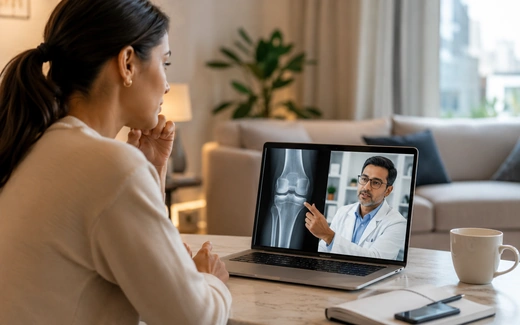
Dr. Soma Sundar SOrthopaedic, Spine & Pain Specialist Online consultation available
1
Send MRI, X-ray and symptoms
2
Discuss tear type and treatment options
3
Receive a clear rehab or arthroscopy plan
For locked knee, severe swelling, inability to bear weight or suspected fracture, in-person evaluation is safer.