Physiotherapy for Knee PainSafe exercises for arthritis, ligament injury, meniscus tear and kneecap pain
Knee physiotherapy is not just a list of exercises. The right plan should reduce pain, improve walking, strengthen the muscles that protect the knee, and help you avoid repeated painkillers or unnecessary procedures.
📞 Call Us Now
💬 WhatsApp
🦵 Rehab Plan
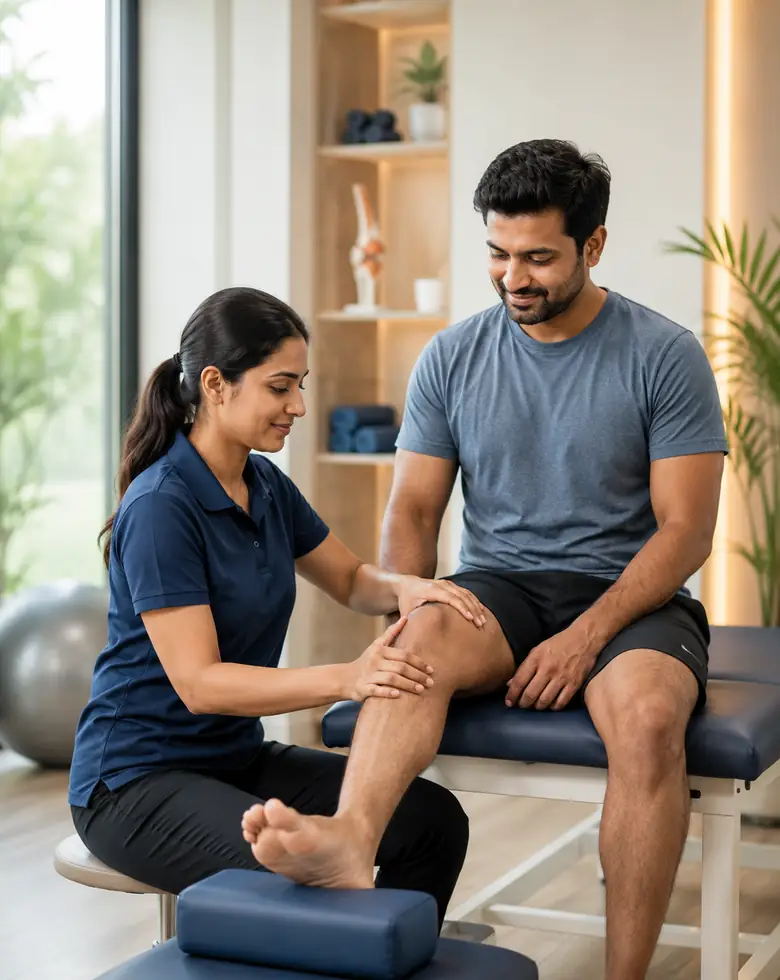
Create image: physiotherapy-for-knee-pain.webpPhysiotherapist assessing and guiding knee rehab.
Guided knee rehab helps patients move with more confidence and less fear.
Dr. Soma Sundar S
MBBS, MS (Ortho), DNB (Ortho), FRCS (UK), FISS (Spine Surgery), FESS (Germany), FMISS (Switzerland), FAOS (Nottingham, UK)
🎓 AO Spine Fellowship (Nottingham, UK)
🏅 Gold Medalist
💉 Advanced Pain Management Specialist
🔬 Minimally Invasive Specialist
Dr. Soma Sundar plans knee physiotherapy based on the diagnosis — arthritis, meniscus tear, ACL injury, kneecap tracking, stair pain, runner’s knee or post-surgery recovery — so exercises are safe, purposeful and progressive.
📞 Call Clinic
💬 WhatsApp

4.9★Google Rating
🏥Kauvery Hospital, Alwarpet🕗 Mon – Sat | 8:30 AM – 5:00 PM📍 Get Directions
🏥Shens Hospital, Ashok Nagar🕔 Mon – Sat | 5:30 PM – 8:00 PM📍 Get Directions
💡 Quick Answer: Does Physiotherapy Help Knee Pain?
Yes. Most knee pain improves when the right muscles are strengthened and the painful movement pattern is corrected. Knee physiotherapy is especially useful for knee arthritis, chondromalacia patella, meniscus tear, ACL injury, stair pain and post-surgery recovery.
🦵 Knee Physiotherapy Is Diagnosis-Based Rehabilitation
Good knee physiotherapy starts with understanding why the knee hurts. Arthritis pain, meniscus pain, ACL instability, kneecap tracking pain and post-surgery stiffness all need different exercise priorities.
A generic “knee exercise sheet” may not be enough — and sometimes the wrong exercise can increase pain. The aim is to build strength, restore movement, improve balance, train safe stairs/walking and reduce fear of using the knee.
Knee pain causesKnee pain exercisesQuadriceps strengtheningArthritis exercises
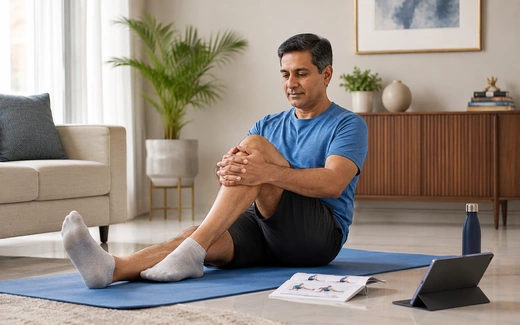
Create image: knee-home-exercise-plan.webpPatient following home knee exercise plan on mat.
Home exercises work best when they are prescribed for the exact knee problem.
✅ Conditions Where Knee Physiotherapy Helps
Physiotherapy is useful across many knee problems — but the plan changes based on the diagnosis, pain irritability and patient goals.
🦴 Knee osteoarthritis
Strengthening, weight-friendly activity, safe stairs and pain control help improve walking and function.
Read more
KNEECAP
🛡️ Chondromalacia patella
Focuses on kneecap tracking, quadriceps control, hip strength and avoiding painful deep flexion.
Read more
SPORTS
🏃 ACL injury rehab
Improves swelling, range, strength, balance and confidence before or after ACL reconstruction.
Read more
MENISCUS
🔁 Meniscus tear
Many non-locked meniscus tears improve with swelling control, strengthening and movement retraining.
Read more
STAIRS
🪜 Stair pain
Teaches safe stair technique and builds the muscles needed for climbing without knee overload.
Read more
RUNNERS
👟 Runner’s knee
Includes gait review, training load correction, hip control and gradual return-to-run planning.
Read more
POST OP
🚶 After knee surgery
Rebuilds movement, walking, swelling control, extension, flexion and confidence after surgery.
Read more
BRACE
🦾 Brace-supported rehab
Useful in selected ligament injury or arthritis patients while strength and control are rebuilt.
Read more
 Create image: knee-arthritis-exercises.webpElderly patient doing safe knee arthritis exercises.
Safe arthritis exercises
Low-impact strengthening helps protect the joint without aggravating knee arthritis.
 Create image: knee-pain-in-runners-gait.webpRunner gait assessment with physiotherapist.
Runner gait assessment
Running knee pain often needs load control, cadence changes, hip strength and shoe/activity review.
 Create image: safe-stairs-knee-pain-technique.webpPatient learning safe stair technique with therapist.
Stair technique
Correct stair strategy can reduce pain while strength is gradually rebuilt.
🏋️ Knee Physiotherapy Plan: From Pain Relief to Confidence
A good rehab plan progresses step by step. Pushing too early can irritate the knee; resting too long causes weakness.
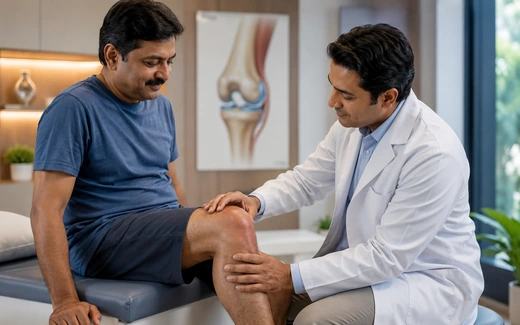 🌿 Phase 1
Pain and swelling control
Reduce irritability so exercise becomes comfortable and useful.
- Diagnosis and red flag screening
- Swelling control and gentle mobility
- Ice/heat, taping or brace when needed
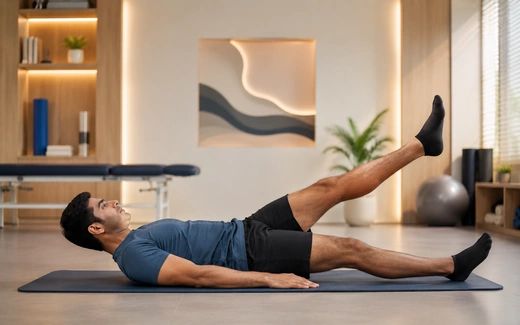 💪 Phase 2
Strength and control
The main phase for most knee pain patients.
- Quadriceps and VMO strengthening
- Hip and glute strengthening
- Balance and knee alignment training
 🚶 Phase 3
Walking, stairs and return to activity
Return to daily activity safely without repeated flare-ups.
- Gait correction and stair practice
- Functional strengthening
- Return-to-sport or return-to-work plan
📌 Best results come from progression
Exercises should become gradually more challenging only when pain, swelling and control allow it. This is why a supervised plan is safer than randomly increasing repetitions.
⚠️ Exercises to Avoid When Knee Pain Is Active
Not every “strengthening exercise” is safe for every knee. Painful arthritis, kneecap pain, meniscus symptoms and ligament injury need careful modification.
🚫
Deep squats, deep lunges and floor sitting when they trigger sharp pain or swelling.
🚫
Running, jumping or sudden pivoting when the knee is swollen, unstable or giving way.
🚫
Heavy leg press or aggressive gym loading before basic control and pain-free range are restored.
✅ Safer starting point
Most patients start better with controlled quadriceps activation, straight leg raises, hip strengthening, gentle range of motion and walking/stair modification. For details, see exercises to avoid in knee arthritis.
💉 Knee Injection + Physiotherapy: A Useful Combination
Sometimes patients cannot do physiotherapy properly because pain, swelling or stiffness is too much. In selected patients, a knee injection can reduce pain enough to allow rehab to begin.
For arthritis-related knee pain, options may include hyaluronic acid / viscosupplement injection, steroid injection, PRP injection or other non-surgical pain procedures depending on the diagnosis.
🧴 Viscosupplement support
May improve lubrication and comfort in selected arthritis patients, especially when combined with strengthening.
⚡ Fast flare relief
Can help when swelling or inflammation is blocking sleep, walking and exercise progress.
🩸 Selected tendon / early OA cases
Considered for selected chronic pain patterns after proper diagnosis and imaging review.

The aim of injection is to create a pain-free window for better rehabilitation — not to replace strengthening.

Why choose Dr. Soma Sundar?
👨⚕️ A doctor-led knee rehab plan, not generic exercises
🩺
Diagnosis-first approach: arthritis, meniscus, ACL, kneecap and referred pain are assessed separately before exercise selection.
🏋️
Progressive strengthening: quadriceps, hip, glute and balance training are progressed based on pain and swelling response.
💉
Pain procedure support: injections are considered when pain prevents useful physiotherapy, especially in arthritis flares.
🚶
Function-focused goals: walking, stairs, squatting modification, return to gym, return to running or post-surgery recovery are planned clearly.
14+Years Experience4.9★Google RatingFRCS(UK) CertifiedRehab+ Pain Specialist
❓ Knee Physiotherapy: FAQs
Yes. It improves strength, flexibility, balance, walking mechanics and confidence. The plan should be diagnosis-based rather than a generic exercise sheet.
Many patients need 4–6 supervised sessions to learn the plan, followed by home exercises. Arthritis, ACL, meniscus and post-surgery rehab may need longer structured follow-up.
There is no single best exercise. Quadriceps strengthening, hip strengthening and controlled mobility are commonly used, but the safest choice depends on the diagnosis.
Yes. Strengthening and low-impact activity can reduce pain, improve walking and help delay worsening of function in many knee arthritis patients.
A swollen knee should be assessed, especially after injury. Gentle mobility may be safe, but heavy loading, running or deep squats should be avoided until the cause is clear.
Many non-locked meniscus tears improve with physiotherapy. True locking, displaced tears or persistent swelling may need MRI review and arthroscopy discussion.
Yes. ACL rehab is important before surgery, after surgery and even in selected non-surgical ACL plans. It focuses on swelling, range, strength, balance and sport-specific control.
No. Injections may reduce pain and inflammation, but strength and movement control still need physiotherapy. The best results often come from combining pain relief with rehab.
Deep squats may worsen arthritis or kneecap pain in some patients. Modified shallow squats may be added later if pain control and knee alignment are good.
Yes, but the plan should first be taught and checked. Home exercises work best when technique, progression and warning signs are clear.
Stop if there is sharp pain, increasing swelling, giving way, locking, numbness, fever, redness or pain lasting significantly beyond the session.
Yes. You can share your symptoms, X-rays, MRI reports and current exercise plan. Dr. Soma Sundar can guide whether in-person assessment, injection support or physiotherapy changes are needed.
⭐ Patient Stories from Knee Rehabilitation
I had knee arthritis and was afraid to walk. The plan was simple and progressive. After strengthening and walking guidance, I could climb stairs with much less pain.
★★★★★5 Star ratedMrs. Lalitha R., 58Homemaker, MylaporeKnee arthritis rehab
My knee pain after squats kept returning. The issue was not just the knee — my hip control and technique needed correction. The explanation was very clear.
★★★★★5 Star ratedMr. Arjun V., 31Fitness enthusiast, Anna NagarGym-related knee pain
After my ACL injury, I was confused about surgery and exercises. The staged rehab plan helped swelling settle and made me confident about the next step.
★★★★★5 Star ratedMr. Dinesh K., 27Football player, ChennaiACL injury rehab
I had pain behind the knee and swelling. The doctor explained when exercises are safe and when imaging is needed. That clarity helped me avoid doing the wrong things.
★★★★★5 Star ratedMs. Nisha P., 42Teacher, T. NagarSwelling and rehab guidance
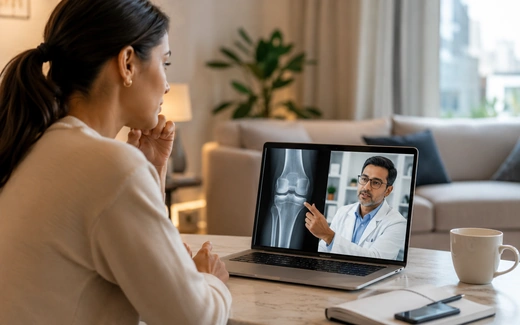
💻 Video Consultation for Knee Exercise Planning
Already doing exercises but not improving? A video consultation can help review your symptoms, reports and current plan.
📄Share reports and exercise plan
Send X-rays, MRI, prescriptions and videos/photos of exercises if needed.
🎯Understand what to modify
Know what to continue, reduce, stop or progress based on your diagnosis.
💉Plan pain relief when needed
Discuss whether injection support or in-person assessment is needed before rehab.
💬 Video Consultation📞 Call Clinic
Dr. Soma Sundar SOrthopaedic, Spine & Pain Specialist Online consultation available
1
Send reports and pain details
2
Review diagnosis and exercise safety
3
Receive a clear rehab or clinic plan
For severe injury, swelling, locking, deformity or inability to bear weight, in-person assessment is safer.