Avascular Necrosis Hip Treatment in Chennai Diagnose Early. Protect the Femoral Head. Walk Confidently Again.
Avascular necrosis of the hip — also called AVN or osteonecrosis of the femoral head — can begin as groin pain, thigh pain, hip stiffness or a limp. This guide helps you understand AVN stages, MRI diagnosis, risk factors and the full treatment pathway offered by Dr. Soma Sundar S: activity modification, hip-safe physiotherapy, image-guided options for selected pain patterns, hip-preserving procedures when suitable, and joint replacement only when collapse or arthritis makes it necessary.

 15+ Years of Experience
Dr. Soma Sundar S
Spine & Orthopaedic Surgeon, Chennai
Kauvery Hospital, Alwarpet
Mon–Sat · 8:30 AM – 5:30 PM Get DirectionsShens Hospital, Ashok Nagar
Mon–Sat · 6:00 PM – 8:30 PM Get DirectionsAvascular Necrosis Hip Care Pathway
AVN treatment depends mainly on stage: early disease without collapse is treated very differently from advanced collapse with arthritis. These cards help patients understand the pathway clearly. 👇
 Early AVN & MRI Diagnosis
Groin pain with normal-looking X-rays may still be AVN — MRI detects early femoral head changes best.
Go to diagnosis →
🛡️ Preserve hip
Early AVN & MRI Diagnosis
Groin pain with normal-looking X-rays may still be AVN — MRI detects early femoral head changes best.
Go to diagnosis →
🛡️ Preserve hip Pre-Collapse Treatment
Activity modification, protected weight-bearing and hip-preserving options may help selected early-stage patients.
See roadmap →
🤸 Rehab
Pre-Collapse Treatment
Activity modification, protected weight-bearing and hip-preserving options may help selected early-stage patients.
See roadmap →
🤸 Rehab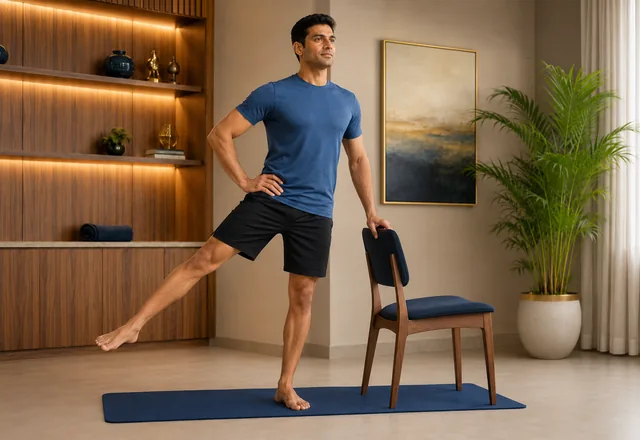 Hip-Safe Physiotherapy
Strengthen glutes, protect gait and avoid painful high-impact loading while the hip is being treated.
Open physio →
🔬 Advanced stage
Hip-Safe Physiotherapy
Strengthen glutes, protect gait and avoid painful high-impact loading while the hip is being treated.
Open physio →
🔬 Advanced stage Collapse / Arthritis Stage
When the femoral head collapses and arthritis sets in, joint replacement may become the most reliable option.
Treatment options →
Collapse / Arthritis Stage
When the femoral head collapses and arthritis sets in, joint replacement may become the most reliable option.
Treatment options →
What Is Avascular Necrosis of the Hip?
Avascular necrosis of the hip means part of the femoral head — the ball of the hip joint — has reduced blood supply. When the bone weakens, it may develop tiny cracks; if the problem progresses, the round ball can flatten or collapse.
In the early stage, the joint surface may still be preserved. That is why early diagnosis matters: treatment choices are wider before collapse. Once collapse and arthritis develop, the focus shifts from hip preservation to reliable pain relief and walking function.
The practical question is: is the hip still pre-collapse, or has the femoral head already collapsed? The answer comes from symptoms, examination, X-rays and MRI — and it decides the treatment pathway.
AVN is a stage-based condition — the earlier it is identified, the more hip-preserving options can be considered.
Common Causes and Risk Factors for AVN Hip
AVN can occur after injury, after certain medicines, due to lifestyle and medical risk factors, or sometimes without a clear cause. The goal is to find both the hip stage and the underlying trigger. 👇
Steroid Exposure
Long-term or repeated high-dose steroid use is an important AVN risk factor and should be discussed openly during consultation.
Alcohol-Related Risk
Heavy alcohol intake can affect bone blood supply and is one of the common preventable associations with AVN.
Hip Injury or Dislocation
Fracture, dislocation or major trauma around the hip can disturb the blood supply to the femoral head.
Blood & Clotting Factors
Certain blood disorders and clotting tendencies may reduce the tiny circulation within the femoral head.
Medical Conditions
Some autoimmune, metabolic and chronic medical conditions can increase risk, especially when steroids are also involved.
Idiopathic AVN
Sometimes no obvious cause is found. Treatment still depends on stage, symptoms and how much of the femoral head is involved.
Other Hip Pain Causes
Not all groin pain is AVN — hip arthritis, bursitis, spine-referred pain and muscle problems can mimic it.
🦴Collapse to Arthritis
Advanced AVN may progress to joint surface collapse and secondary arthritis, changing the treatment priority.
🩻 MRI staging
MRI helps identify early disease and the size/location of femoral head involvement.
🤸 Hip-safe strengthening
Rehab focuses on gait, glute strength and avoiding painful overload.
💉 Pain relief options
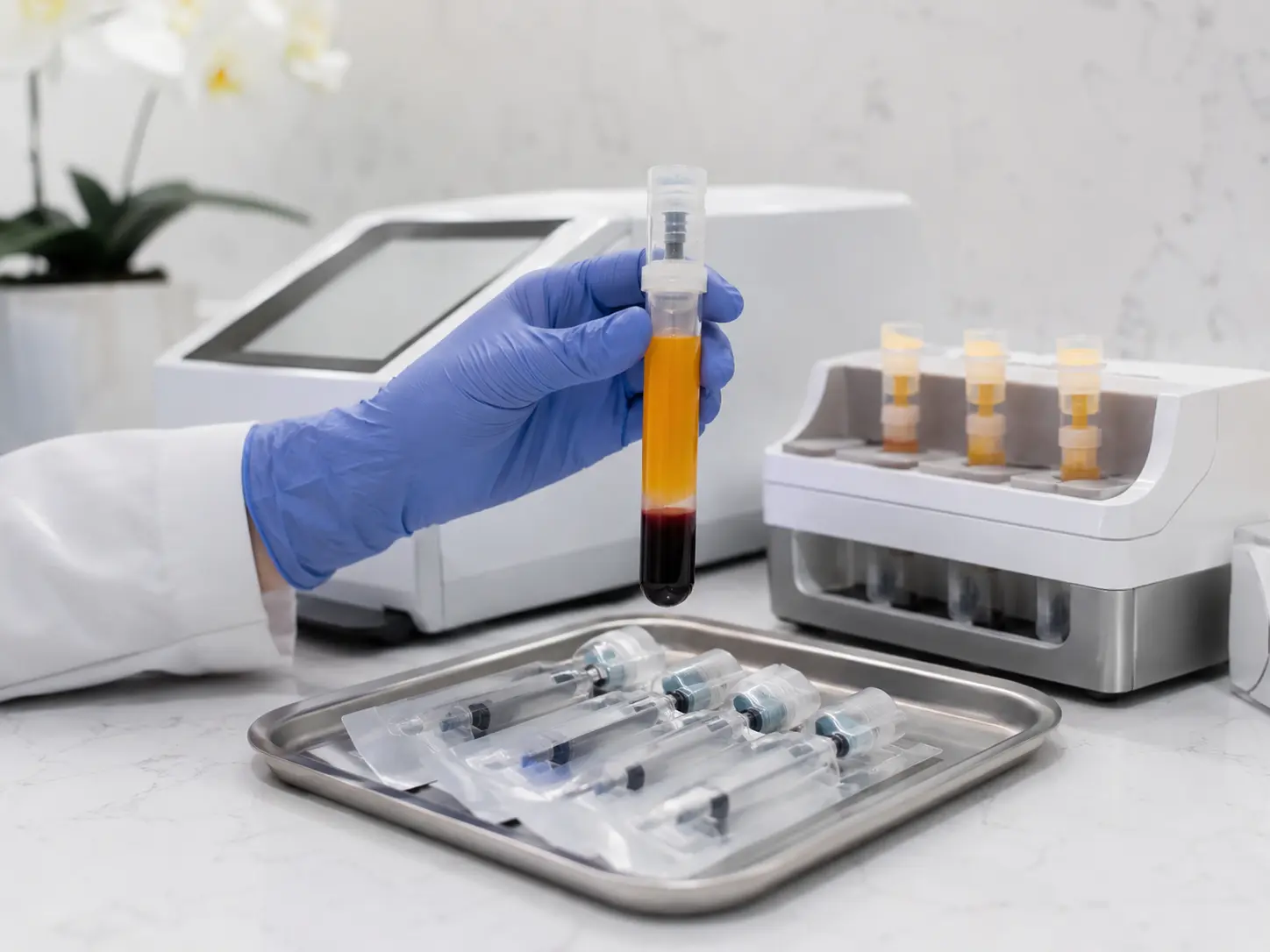
Selected injection or biologic options may help pain, but stage decides suitability.
AVN Hip Symptoms — What Is Yours Telling You?
AVN pain often feels different from simple muscle pain. Match your symptom pattern below and plan timely assessment. 👇
Deep Groin Pain
Pain in the groin or front of hip, especially on standing or walking, is a classic hip-joint clue.
Common clueThigh or Knee-Referred Pain
Hip joint pain can travel to the thigh or even the knee, so the pain location can be misleading.
Often missedLimp While Walking
A new limp, reduced walking distance or difficulty climbing stairs suggests the hip needs evaluation.
Functional signPain Getting Up From Chair
Start-up pain after sitting and stiffness during daily movements can occur as the joint becomes irritated.
Mechanical patternNight or Rest Pain
Pain at rest or while lying down can mean the condition is more irritable and needs timely review.
Priority reviewStiff Hip Rotation
Difficulty crossing legs, wearing socks or sitting low may indicate hip joint stiffness or arthritis change.
Stage clue💡 Tip: If hip pain is deep in the groin and not improving, do not keep treating it as a simple muscle strain for months — AVN is best assessed early.
When to See a Hip Specialist for AVN in Chennai
Early AVN can be missed because the first X-ray may look normal. These signs deserve a focused hip evaluation and, when appropriate, MRI. ⏱️
Groin pain lasting more than 2–3 weeks
New limp or reduced walking distance
Pain at night or even at rest
Hip pain after steroid treatment history
Hip pain after fracture, fall or dislocation
Increasing stiffness or difficulty wearing socks
⏰ Early stage decides treatment choice
AVN management changes once the femoral head collapses. If you have persistent groin pain, limp, steroid exposure, alcohol-related risk, or a previous hip injury, early evaluation is sensible. 📞 Call +91 90809 68066 for an appointment.
Why Chennai Trusts Dr. Soma Sundar
Experienced hands, international training, and a philosophy that always starts with the least invasive treatment that can genuinely help you. View doctor profile.

15+ Years of Experience
Over fifteen years dedicated to spine and orthopaedic care, from everyday back pain to complex spinal conditions.
Internationally Trained
Fellowship training in Germany, Switzerland and the UK — FESS, FMISS, FAOS and the AO Spine Fellowship.
4.9 · 500+ Google Reviews
Consistently rated 4.9 by more than five hundred patients across both Chennai clinics.
FRCS & Gold Medallist
FRCS (Glasgow, UK) certified, MS Orthopaedics Gold Medallist, DNB and MNAMS qualified.
Non-Surgical First
Advanced pain management, injections and physiotherapy are always explored before surgery is considered.
Two Chennai Locations
Kauvery Hospital, Alwarpet (mornings) and Shens Hospital, Ashok Nagar (evenings) — six days a week.
How AVN Hip Is Diagnosed and Staged
The most important step is not just confirming AVN — it is staging it correctly so the treatment plan fits the hip.
Hip Pain Pattern Review 🗺️
Groin pain, limp, night pain, steroid exposure, alcohol history and injury history guide the first suspicion.
Focused Hip Examination 🔦
Hip rotation, gait, leg length, spine referral and knee referral are checked because hip pain can be misleading.
X-ray + MRI When Needed 🩻
X-rays check collapse and arthritis. MRI helps detect early AVN and estimate femoral head involvement.
Stage-Based Treatment Plan 🪜
You leave knowing whether the hip is pre-collapse, collapse, or arthritis stage — and what the sensible next step is.
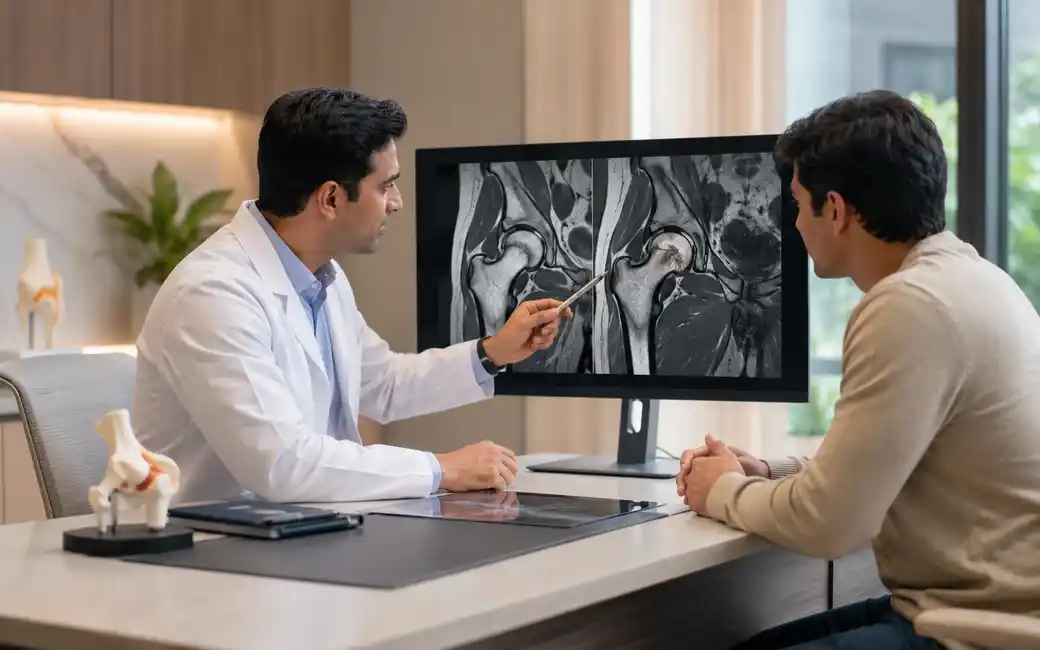
In AVN, MRI stage and femoral head shape matter as much as the pain score.
AVN Hip Treatment Options — Stage-Based Roadmap
Dr. Soma Sundar follows a practical stage-based plan: protect the hip early, control pain safely, preserve the joint when suitable, and choose replacement only when it offers the most reliable recovery.
Protect the Hip 🦯
Activity modification + weight-bearing adviceReduce painful loading while diagnosis and stage are confirmed.
- Walking stick/walker when suitable
- Avoid running and jumping
- Safe daily activity plan
Rebuild Support 🤸
Hip-safe physiotherapyStrengthen glutes and improve gait without overloading the femoral head.
- Glute strengthening
- Gait correction
- Fall and limp prevention

Target Pain / Preserve 💉
Selected injections or hip-preserving proceduresOptions depend on MRI stage, lesion size and pain generator.
- Image-guided options when appropriate
- Biologic discussion in selected cases
- Core decompression suitability review
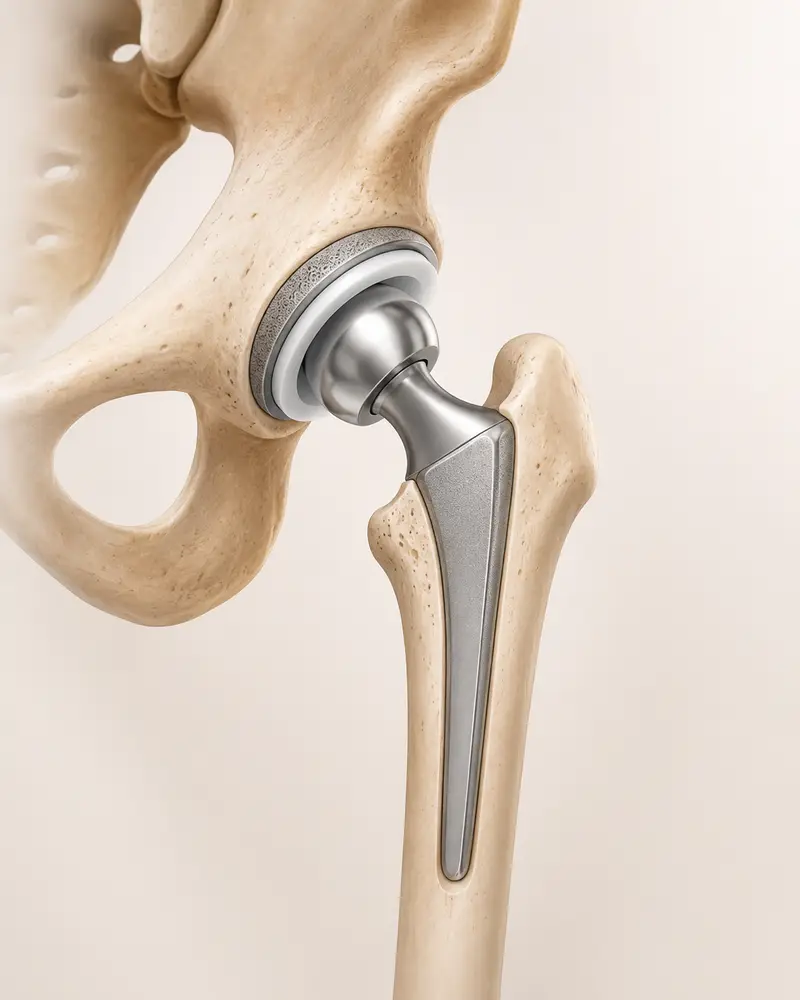
Replace When Collapsed 🔬
Joint replacement for advanced collapse/arthritisWhen the ball has collapsed and walking is limited, replacement may be the most predictable solution.
- Collapsed femoral head
- Secondary hip arthritis
- Persistent daily pain
Hip-Safe Physiotherapy & Exercises for AVN
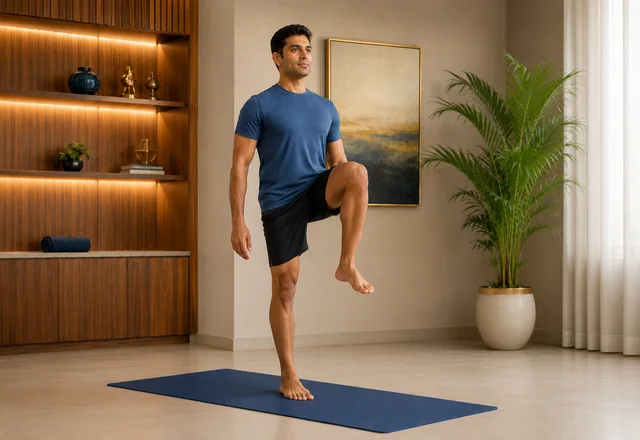
Physiotherapy for AVN is not aggressive stretching or heavy strengthening. It is stage-safe support: protect the joint, improve gait and build muscles around the hip. 👇
Hip Pain Physiotherapy
Guided rehab for hip mobility, glute strength, gait correction and safe progression.
🏠Hip Exercises at Home
Simple exercises that support hip function without high-impact loading.
🧑⚕️Physiotherapy in Chennai
Clinic and home-visit physiotherapy support for hip, knee and spine conditions.
📚Patient Resources
Understand scans, warning signs and how to prepare for an orthopaedic consultation.
🦵Hip Pain Hub
Compare AVN with arthritis, bursitis, fracture and referred pain patterns.
 🌉 Hip bridges
 🐚 Clamshell
 🧘 Hip flexor stretch
 ↗️ Side leg raise🦵 Standing abduction🚶 Hip march
🏠 Hip pain making travel difficult? Home-visit physiotherapy is available across Chennai. Stage-safe guidance for hip pain, AVN support, balance, walking and post-surgery rehab.
📞 Physio Home Visits · +91 98403 45335Injections and Biologic Options for AVN Hip
Injections can help selected pain patterns, but AVN stage decides what is appropriate.
In AVN, injections must be used carefully. A hip injection may help selected patients with severe inflammatory pain or associated soft-tissue pain, but it should not delay stage-appropriate treatment if the femoral head is at risk.
PRP or other biologic discussions are most relevant in selected early-stage situations and should be explained honestly: they may help pain or healing biology in chosen cases, but they do not reliably reverse advanced femoral head collapse.
When Is Surgery Needed for AVN Hip?
Surgery is considered when AVN is progressive, painful despite proper care, or when imaging shows a stage where joint-preserving treatment may help. In selected early pre-collapse cases, hip-preserving procedures such as core decompression may be discussed.
When the femoral head has collapsed and the joint surface has become arthritic, the goal changes: reliable pain relief, improved walking and daily function. In that stage, joint replacement surgery may be the most predictable treatment.
Good AVN treatment means choosing the right option for the right stage — not delaying or rushing.
⚖️ Balanced treatment principle
AVN is not treated by pain score alone. The MRI stage, femoral head shape, arthritis change, age, activity level and walking limitation all decide whether conservative care, hip-preserving treatment or replacement is the safest path.
Avascular Necrosis Hip — Frequently Asked Questions
What Hip Pain Patients Say
I came with groin pain and a limp. The doctor explained why MRI was needed even though my first X-ray looked almost normal. The stage-based explanation made the plan clear.
★★★★★I was worried that AVN automatically meant hip replacement. Dr. Soma explained pre-collapse and collapse stages patiently and gave a practical plan without scaring us.
★★★★★My walking distance had reduced a lot. The consultation focused on my actual problem — limp, MRI stage and daily function — not just medicines.
★★★★★The hip physiotherapy plan was safe and sensible. I was told what exercises to do and what to avoid, which helped me move better without flaring the pain.
★★★★★I shared my MRI on WhatsApp before travelling to Chennai. The video consultation helped me understand whether I needed urgent treatment or planned review.
★★★★★Everything was explained in simple Tamil and English. The doctor showed where the femoral head was affected and why stage matters so much in AVN.
★★★★★My father had advanced AVN with arthritis. We appreciated the honest explanation that injection would not solve a collapsed joint, and replacement was discussed clearly.
★★★★★I had hip pain after steroid tablets for another illness. Dr. Soma connected the history with my symptoms and guided the MRI and next steps quickly.
★★★★★The best part was the balanced plan — protect the hip, strengthen safely, repeat review and decide based on stage. Very reassuring consultation.
★★★★★Explore More Orthopaedic Care
Expert Orthopaedic Advice, From Wherever You Are
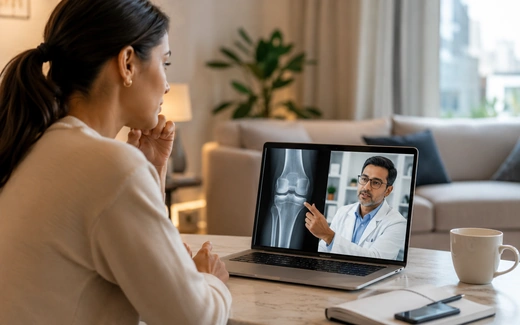
Can’t travel to Chennai, or want a specialist opinion before deciding your next step? Consult Dr. Soma Sundar over a secure video call for knee, shoulder, hip, sports injury, fracture, joint pain and orthopaedic concerns — and let your whole family join and ask questions.
-
Consult from anywhere
Connect from home, another city, or abroad — no travel needed for an expert orthopaedic opinion.
-
X-rays, MRI & reports — optional
You can share scans or reports in advance on WhatsApp if you have them, or simply talk first. Both work.
-
Clear next steps
Leave the call knowing what the likely problem is, what to try first, and when a clinic visit or procedure is truly needed.
Book an Ortho Video Consultation
Message us on WhatsApp with your name and a short note about your joint, bone, muscle or injury-related problem — our team will confirm a convenient slot.
Especially useful for- Outstation and overseas patients — and their families
- Knee, shoulder, hip, ankle, elbow or wrist pain
- A second opinion before orthopaedic surgery
- Understanding an X-ray, MRI or scan report in plain language
- Follow-up reviews after injections, procedures or surgery
- Elderly patients who find travelling difficult
📎 Sending X-rays, MRI or reports in advance is optional — many patients simply describe their problem and share reports later if needed.
Explore Orthopaedic Care
Patient-friendly guides for knee, shoulder, hip, foot and ankle problems — organised into simple boxes for conditions, treatments, physiotherapy, home exercises and one compact spine segment.