Joint Health · Home Exercise Guide
Hip Pain Exercises You Can Do Safely at Home
If your hip feels stiff, achy, or catches when you walk or climb stairs, the right gentle movement — not rest alone — is usually the fastest way back to comfort. Here are eight safe, doctor-approved exercises, with step-by-step guidance from Chennai orthopaedic surgeon Dr. Soma Sundar S.
Start the Exercises ↓
📞 Book Appointment
Gentle, guided movement is the foundation of hip pain recovery.
Dr. Soma Sundar S
MBBS · MS (Ortho) · DNB · FRCS (Tr & Orth) UK · FISS · FESS (Germany) · FMISS (Switzerland)
AO Spine Fellowship (UK)
Gold Medallist
EuroSpine Frankfurt Speaker
Published Researcher
Call Now
WhatsApp

4.9★
410+ Reviews
Google
🏥
Kauvery Hospital, Alwarpet
Mon – Sat · 8:30 AM – 5:00 PM
📍 Get Directions →
🏥
Shens Hospital, Ashok Nagar
Mon – Sat · 5:30 PM – 8:00 PM
📍 Get Directions →
Movement Is the Best Medicine for Most Hip Pain
For years the advice for a painful hip was simple: rest it until it settles. We now know gentle, regular movement works faster and lasts longer — it loosens a stiff joint, builds the muscles that support and stabilise the hip, and calms irritated tissues. Most cases of hip osteoarthritis and many cases of trochanteric bursitis improve this way, without surgery.
This is a general starter routine. If you have a diagnosed hip labral tear or hip impingement (FAI), your ideal exercises may differ — check the warning signs below and get assessed if unsure.
1
Start gentle (Phase 1)
Mobility & relief exercises to ease stiffness and calm the pain.
2
Build strength (Phase 2)
Hip & glute work that protects your joint for the long term.
3
Stay consistent
Little and often, plus a daily walk — the routine below shows how.
Gentle mobility first, then strength — the same staged approach used in physiotherapy and rehabilitation.
Six Simple Ground Rules
Follow these and you’ll get the benefit safely. The single most important rule: work into a mild stretch or effort — never sharp pain.
🟢
Hurt vs. harm
A mild ache that settles within a few hours is normal and safe. Sharp, shooting, or worsening pain is your signal to stop.
🪜
Start with Phase 1
Master the gentle mobility exercises first. Only add the Phase 2 strengthening work once Phase 1 feels easy.
🫁
Keep breathing
Breathe normally throughout — never hold your breath or strain. Slow and controlled beats fast and forced.
🔁
Consistency beats intensity
A little every day works far better than one long, hard session. Build the habit, not the burn.
🚶
Warm up first
A short walk or a minute of gentle movement before you start makes everything safer and more comfortable.
🩺
When in doubt, ask
New, severe, or groin-related symptoms deserve a proper assessment before you exercise. See the warning signs below.
8 Hip Pain Exercises, Step by Step
Work through Phase 1 first. When those feel comfortable and pain-free, add Phase 2 to build lasting strength. Each exercise shows you exactly how to do it, how many to do, and the one thing to get right.
Phase 1
Gentle Relief & Mobility
Ease stiffness and calm the pain. Safe to start even on a sore day.
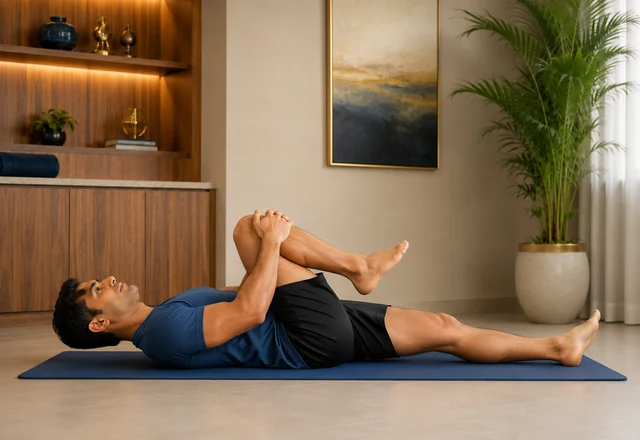
Supine Hip Flexion Stretch
🎯 Hip flexors & lower backGentle20–30shold3×each side1–2×daily1Lie on your back on a firm but comfortable surface, with both legs straight out.2Gently draw one knee up towards your chest, clasping your hands behind the thigh or shin.3Hold where you feel a gentle stretch in the hip and buttock — never pain.4Lower slowly and repeat on the other side, keeping your lower back relaxed throughout.💡
Keep your other leg flat and relaxed on the floor — the stretch should be felt at the front of the hip and into the buttock, not in your lower back.
Clamshell
🎯 Hip rotators & glutesGentle 2–3shold10–12reps2×daily1Lie on your side with hips and knees bent, feet stacked together, head resting on your arm.2Keeping your feet touching, slowly lift your top knee like opening a clamshell.3Hold briefly at the top, keeping your hips stacked and still — don’t let your pelvis roll back.4Lower with control and repeat, then switch sides.💡
Keep your core gently braced so the movement comes from the hip — not by rocking your whole body.
Side-Lying Hip Abduction
🎯 Hip abductors & outer thighGentle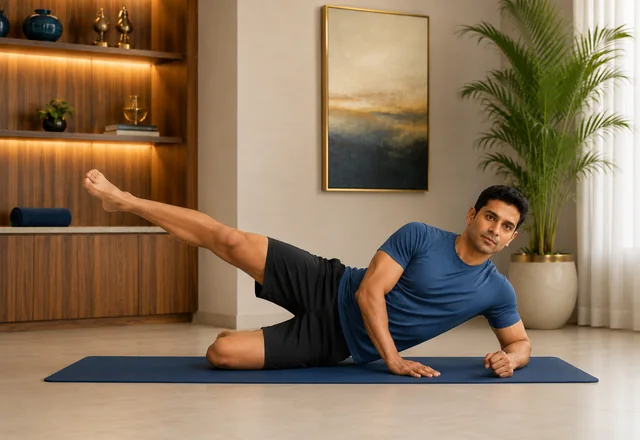 2shold10reps2×daily1Lie on your side with your bottom leg slightly bent and your top leg straight, body in one line.2Keeping your top leg straight and toes facing forward, lift it slowly towards the ceiling.3Raise only as far as feels comfortable, without rolling your hip or trunk backward.4Lower slowly and repeat, then switch sides.💡
Lead with your heel, not your toes — this keeps the hip muscles working instead of the front of the thigh.
Figure-4 Piriformis Stretch
🎯 Piriformis & deep hip rotatorsGentle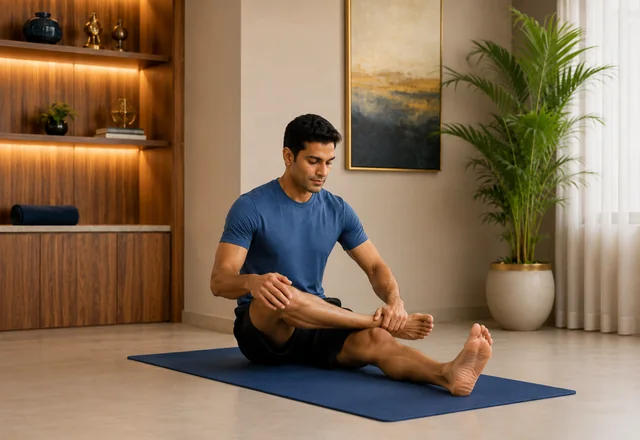 20–30shold2–3×each side1–2×daily1Lie on your back with both knees bent, feet flat on the floor.2Cross one ankle over the opposite knee, forming a relaxed figure-4 shape.3Gently draw the uncrossed thigh towards your chest until you feel a stretch deep in the buttock.4Hold where comfortable, breathing normally, then repeat on the other side.💡
Keep your lower back flat on the floor throughout — the stretch should be felt deep in the buttock, not in the lower back.
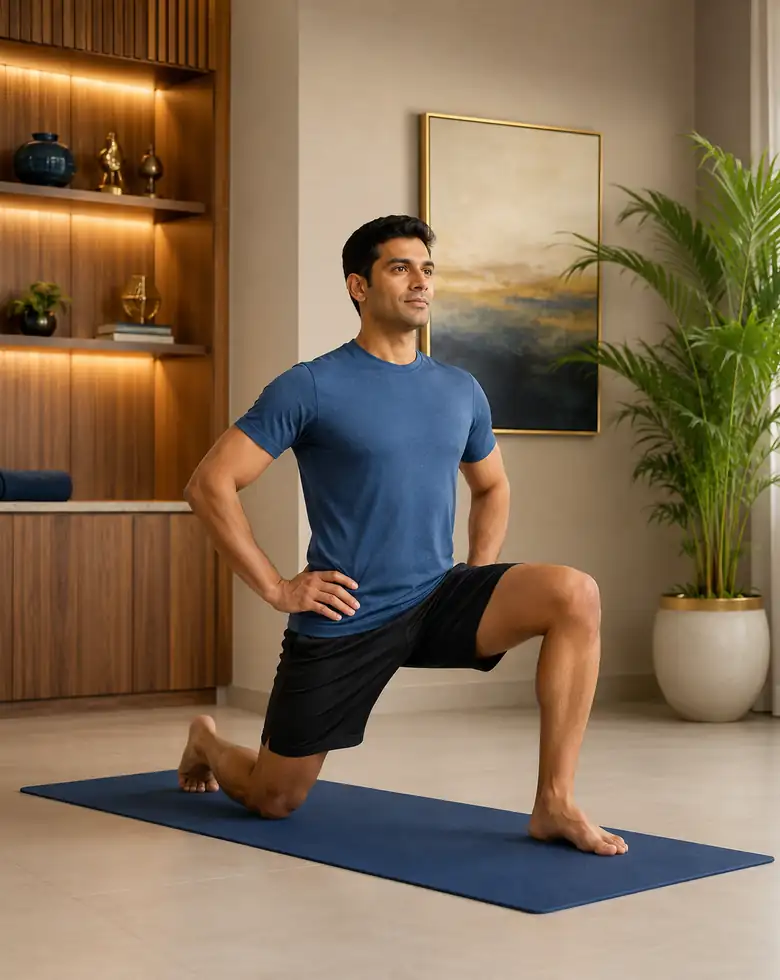
Half-Kneeling Hip Flexor Stretch
🎯 Front of hip & hip flexorsGentle–Moderate 20–30shold2–3×each side1×daily1Kneel on one knee with the other foot planted in front, that knee bent at a right angle.2Keep your trunk upright and gently tuck your tailbone under.3Shift your weight slowly forward until you feel a stretch at the front of the back hip.4Hold where comfortable, then return and repeat on the other side.⚠️
Watch your hip and groin sensation. If you feel pinching at the front of the hip rather than a stretch, ease back the angle — sharp pinching can suggest hip impingement, which needs a different approach.
Phase 2
Build Strength & Stability
Add these once Phase 1 is comfortable — they protect your spine for the long term.
Glute Bridge
🎯 Glutes, hips & coreModerate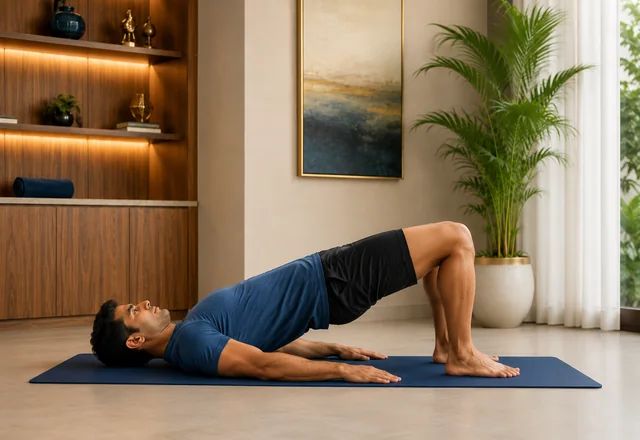 3–5shold10–12reps1–2×daily1Lie on your back, knees bent, feet flat hip-width apart, arms by your sides.2Tighten your tummy and squeeze your buttocks.3Lift your hips until your body forms a straight line from shoulders to knees.4Hold briefly, then lower slowly with control.💡
Drive through your heels and keep your knees pointing forward — don’t let them fall inward as you lift.
Standing Hip Abduction
🎯 Hip abductors & balanceModerate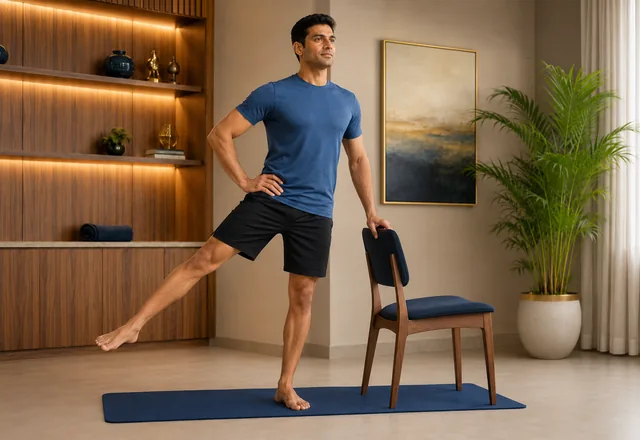 2shold10–12each side1×daily1Stand tall behind a sturdy chair or counter, holding on lightly for balance.2Keeping your knee straight and toes facing forward, lift one leg out to the side.3Rise only as far as you can without leaning your trunk sideways.4Lower with control and repeat, then switch legs.💡
Keep your hips level and facing forward throughout — the movement should come entirely from the hip, not from tilting your body.
Standing Hip Marching
🎯 Hip flexors & balanceModerate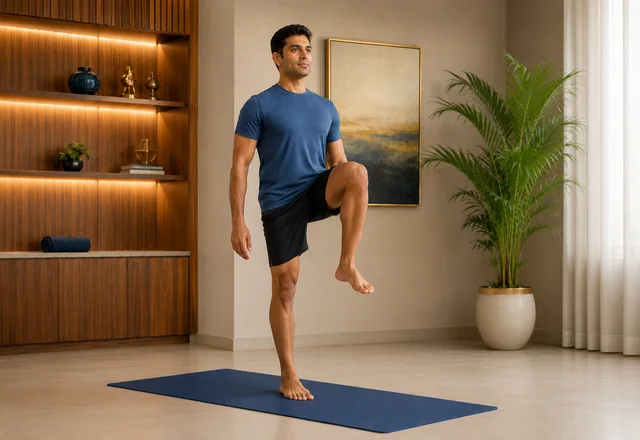 8–10each sideslowtempo1×daily1Stand tall, holding a chair or wall lightly for support if needed.2Slowly lift one knee up towards your chest, keeping your back straight.3Hold briefly at the top, balancing on the standing leg.4Lower with control and repeat on the other side, alternating sides.💡
Quality over height — only lift as high as you can without your trunk swaying or your back arching.
🚶♂️
Don’t Forget to Walk
A brisk 20–30 minute walk most days is one of the most effective things you can do for hip pain — it keeps the joint moving, nourishes the cartilage, and supports recovery. Think of it as the easiest exercise on this page.
Your Day, At a Glance
Not sure how it all fits together? Here’s a simple daily flow that brings the eight exercises above into one easy routine.
1Warm UpA short walk or gentle marching on the spot1–2 min
2Phase 1: MobilityHip Flexion Stretch, Clamshell, Side Leg Raise, Piriformis Stretch6–8 min
3Hip Flexor StretchEspecially useful if you sit for long hours1–2 min
4Phase 2: Strength (3–4× / week)Glute Bridge, Standing Abduction, Standing Marching5–6 min
5Daily WalkFinish with a brisk walk, most days of the week20–30 min
A Simple Weekly Routine
You don’t need a gym or a lot of time — just a clear, repeatable plan. Here’s a balanced week to aim for, adjusting to how your back feels.
📅Every Day
The Phase 1 mobility exercises (5–10 minutes) plus a 20–30 minute walk. Gentle, daily movement is what keeps a stiff hip loosening up.
💪3–4× a Week
The Phase 2 strengthening exercises — bridge, standing abduction and marching. Leave a rest day in between to let the muscles adapt.
📈Every 1–2 Weeks
Progress gently — add a few reps, a few seconds of hold, or a little more range — as long as your hip stays comfortable.
What’s Behind Your Hip Pain?
Hip pain has many possible causes — from simple muscle strain to joint wear and nerve irritation. Here are the conditions we see most often, with more detail on each.
🦴Hip Osteoarthritis
Wear and tear of the hip joint cartilage, causing stiffness and pain that’s often worse after rest or activity.
🔥Trochanteric Bursitis
Inflammation of the cushioning sac over the outer hip, causing tenderness when lying on that side.
🔗Piriformis Syndrome
A deep buttock muscle irritating the sciatic nerve, causing pain that can radiate into the hip and leg.
🩻Hip Labral Tear
Damage to the cartilage rim of the hip socket, often causing catching, clicking or deep groin pain.
⚡Hip Impingement (FAI)
Abnormal contact between the hip bones during movement, common in active young adults.
💺Muscle Strain & Overuse
Overstretched or overworked hip muscles from activity or prolonged sitting — the most common everyday cause of hip pain.
Learn more →
When to Stop and See a Doctor
Exercises help most hip pain — but some symptoms need proper medical assessment rather than self-treatment. Pause your routine and arrange to be seen if any of the following apply.
🦵
Groin pain travelling down the leg
New or worsening groin pain that radiates down the leg, or numbness, tingling, or weakness in the leg.
⏱️
No improvement in 2–4 weeks
Hip pain that isn’t easing with gentle exercise after two to four weeks deserves a specialist opinion.
🌙
Night pain or feeling unwell
Pain that wakes you at night, with fever, unexplained weight loss, or generally feeling unwell.
💥
Pain after a fall or injury
Significant hip pain following a fall, road accident, or other injury should be checked promptly — especially in older adults, where this can indicate a hip fracture.
🚨
Seek emergency care immediately if you have:
Sudden inability to bear weight on the leg, a visibly deformed or shortened leg after a fall, or a hot, swollen, severely painful hip with fever (a possible joint infection). These are urgent warning signs that need same-day hospital assessment — do not wait.
If exercises alone aren’t enough, there is a clear path forward — from structured hip pain physiotherapy to targeted hip joint injections when pain is more stubborn. Dr. Soma Sundar S will guide you to the least invasive option that reliably works.
Why Choose Dr. Soma Sundar S?
Dr. Soma Sundar S sees both ends of the spectrum — hip pain that resolves with the right exercises, and the rare cases that need more. That balanced view is exactly why his first advice is so often movement, not the operating theatre.
14+ Years Experience
Gold Medallist
AO Spine Fellowship (UK)
EuroSpine Frankfurt Speaker
🎓
Fellowship-Trained, Internationally
MBBS, MS (Ortho), FRCS (Tr & Orth) UK, FISS, FESS (Germany) and FMISS (Switzerland) — trained across four countries to bring world-class technique to Chennai.
🤝
Conservative-First Philosophy
Surgery is offered only when it is genuinely necessary — never as a default. Exercise, physiotherapy and targeted injections come first.
🩺
Personally Examines Every Patient
No handoffs to juniors — Dr. Soma Sundar personally assesses your case and explains the plan in clear, simple language.
⭐
Trusted Across Chennai
A 4.9★ rating from 410+ verified Google reviews, built on consistent, honest results over 14+ years.

4.9★410+ Reviews
Hip Pain Exercises — Your Questions Answered
Yes. These are gentle, widely-recommended exercises for general hip pain and are safe for most people when done within a comfortable, pain-free range. Move into a mild stretch or effort only — never sharp pain. If you have a diagnosed hip condition, a recent injury, a fall, or any of the warning signs listed above, get assessed by a doctor before starting.
Gentle movement recovers faster than prolonged rest. Resting a stiff hip for too long lets the surrounding muscles weaken and the joint stiffen further. Start with the gentle Phase 1 mobility exercises and a short daily walk, and build up gradually as the pain settles.
Many people notice their hip feeling looser and less painful within one to two weeks of consistent, daily practice. Building lasting strength around the hip usually takes six to eight weeks. Little and often works far better than occasional intense sessions.
Early on, avoid deep squatting, crossing your legs for long periods, sitting on low sofas, and high-impact activities such as running or jumping. Reintroduce these gradually once your pain has settled and your hip feels stronger.
Aim for the gentle Phase 1 mobility exercises every day (5–10 minutes) along with a 20–30 minute walk. Add the Phase 2 strengthening exercises three to four times a week once Phase 1 feels comfortable. Consistency matters more than intensity.
No. Every exercise on this page uses just your body weight on a mat or carpet at home, with a sturdy chair for support in the standing exercises. No gym membership or equipment needed.
Often yes, but with care. Choose the moves that feel like a gentle stretch rather than a pinch at the front of the hip, and stop any exercise that triggers sharp clicking or catching. Persistent clicking with pain can suggest a labral tear or hip impingement, which is worth getting checked.
Yes. Targeted exercise plus activity modification is the mainstay of treatment for both hip osteoarthritis and trochanteric bursitis. Exercises don’t reverse cartilage wear, but they reduce pain, improve movement, and strengthen the muscles that support the joint. Dr. Soma Sundar S tailors the plan to your specific diagnosis.
A mild muscle ache that settles within a few hours is normal. But sharp pain, deep groin pain, or pain that worsens with each session means stop that exercise. If pain worsens or doesn’t improve after two to three weeks of gentle exercise, see an orthopaedic specialist for assessment and a personalised programme.
See a doctor if your hip pain hasn’t improved after two to four weeks, if you have deep groin pain with clicking or catching, or if walking becomes difficult. Seek urgent care if you cannot bear weight on the leg after a fall, notice a visibly deformed hip, or develop fever with a hot, swollen, severely painful hip. Dr. Soma Sundar S consults at Kauvery Hospital, Alwarpet and Shens Hospital, Ashok Nagar in Chennai.
Dr. Soma Sundar S is a Chennai-based orthopaedic and spine specialist who treats hip pain with the right blend of exercise, physiotherapy and minimally invasive injections when needed. He is FRCS (Tr & Orth) UK certified with fellowships from Nottingham, Germany and Switzerland, and consults at Kauvery Hospital, Alwarpet and Shens Hospital, Ashok Nagar.
For many people with early to moderate hip arthritis or muscular hip pain, yes — a consistent exercise routine, weight management, and activity modification can delay or avoid the need for surgery for years. Dr. Soma Sundar S considers hip replacement only when conservative care no longer gives a reasonable quality of life.
How the Right Exercises Helped Our Patients
“
My right hip was so stiff every morning I could barely put on my sandals. Dr. Soma Sundar sir examined me properly, said it was early osteoarthritis, and gave me a simple set of stretches and exercises. I do them daily now along with my walk. After about six weeks I can move so much more freely. Very clear and patient doctor.
★★★★★GGanesh MoorthyRetired Bank Employee, MylaporeHip Osteoarthritis
“
I do a lot of household work and squatting was becoming very painful in my hip. Doctor explained the clamshell and side leg raise exercises very patiently and showed me exactly how to do them correctly. I followed it sincerely for two months. Honestly I did not expect such simple exercises to help this much. Thank you sir.
★★★★★RRevathi KrishnanHomemaker, NungambakkamHip Pain · Exercises
“
I sit in the auto the whole day and the outer side of my hip became so tender I could not even lie on that side at night. He diagnosed it as bursitis and gave me specific stretches and the standing abduction exercise. Slowly the tenderness reduced and now I sleep properly again. Excellent guidance, never rushed.
★★★★★MMohan RajAuto Driver, SaidapetTrochanteric Bursitis
“
Long hours at my desk gave me a deep buttock pain that went into my hip and leg. I was very worried it was something serious. Dr. Soma Sundar explained it was piriformis syndrome and showed me the figure-4 stretch and a few others. Within a few weeks the pain settled completely. Very thorough and reassuring doctor.
★★★★★SSaranya PandianIT Professional, SholinganallurPiriformis Syndrome
“
Another hospital told me my hip arthritis was severe and I would need a replacement soon. I came to Dr. Soma Sundar for a second opinion. He was honest — he said try a proper exercise programme and weight management first. I did, and a year later I am managing very well without surgery. I am so grateful I did not rush into an operation.
★★★★★BBhuvaneswari IyerRetired Teacher, MandaveliAvoided Hip Replacement
“
As a runner I started feeling a pinching pain at the front of my hip during longer runs. Doctor diagnosed hip impingement and gave me a careful exercise plan, telling me exactly which stretches to avoid for now. Following his advice I am back to running comfortably. Very knowledgeable and sports-friendly approach.
★★★★★AArun PrakashMarathon Runner, Anna NagarHip Impingement Recovery

4.9 / 5
410+ verified patient reviews
Free Download
Take These Exercises With You
Download the complete Hip Pain Exercises guide as a free, printable PDF — every exercise, step, and rep count in one handy page you can stick on the fridge or keep on your phone. No sign-up required.
Hip Pain — Home Exercise Guide
Download Free PDF
PDF · Free · Printable
Video Consultation Available
Not in Chennai? Or prefer to discuss your scans from the comfort of home before deciding to visit? Dr. Soma Sundar S offers secure video consultations — bringing the same expertise directly to you, wherever you are.
Simply share your MRI reports and X-rays in advance. Dr. Soma Sundar will review them before your call and provide a clear, personalised assessment — including whether you need to visit in person, and what treatment to expect.
📋
Share your reports in advance
Send MRI, X-ray, and clinical notes before the call for a prepared, focused consultation
🩺
Expert opinion, clear plan
Receive a diagnosis, treatment recommendation, and honest assessment — no vagueness
🌍
Available across India & internationally
Patients from outside Chennai, NRIs, and international patients welcome
⏱
Flexible timing
Evening slots available to suit working professionals and those in different time zones
WhatsApp to Book Video Call
Call to Book


Dr. Soma Sundar S
MBBS · MS (Ortho) · FRCS UK · FMISS
Available for video consultation
1
WhatsApp or call to schedule
2
Share your MRI / X-ray reports
3
Join video call at agreed time
4
Receive your personalised treatment plan
Secure & confidential. Reports shared via WhatsApp stay private.
Hip Pain Learning Hub
More exercise guides, related conditions and treatment options for a complete picture of hip pain care.
🏃 Home Exercise Guides
Back Pain Exercises
Knee Pain Exercises
Sciatica Exercises
🦴 Orthopaedic Conditions
Hip Osteoarthritis
Trochanteric Bursitis
Hip Labral Tear
💉 Treatments
Hip Joint Injection
PRP Injection
Hip Pain Physiotherapy
📅 Appointments
About Dr. Soma Sundar
All Orthopaedic Conditions
Book an Appointment