Hip Fracture Treatment in Chennai Act Early. Fix Safely. Walk Again With Confidence.
A hip fracture is a serious injury, especially after a fall in an elderly person. It usually causes severe hip or groin pain, inability to stand or walk, and sometimes a shortened or outward-turned leg. This guide explains hip fracture symptoms, X-ray diagnosis, fracture types, surgery options, early mobilisation, fracture rehabilitation, and osteoporosis prevention after treatment. Dr. Soma Sundar S focuses on quick diagnosis, safe surgical planning when needed, and structured recovery so patients can return to walking as early and safely as possible.

 15+ Years of Experience
Dr. Soma Sundar S
Spine & Orthopaedic Surgeon, Chennai
Kauvery Hospital, Alwarpet
Mon–Sat · 8:30 AM – 5:30 PM Get DirectionsShens Hospital, Ashok Nagar
Mon–Sat · 6:00 PM – 8:30 PM Get DirectionsHip Conditions Related to Fall, Pain and Walking Difficulty
Not every hip pain after a fall is the same. These related pages help separate fracture, arthritis, AVN and outer-side hip pain — and guide the right next step. 👇
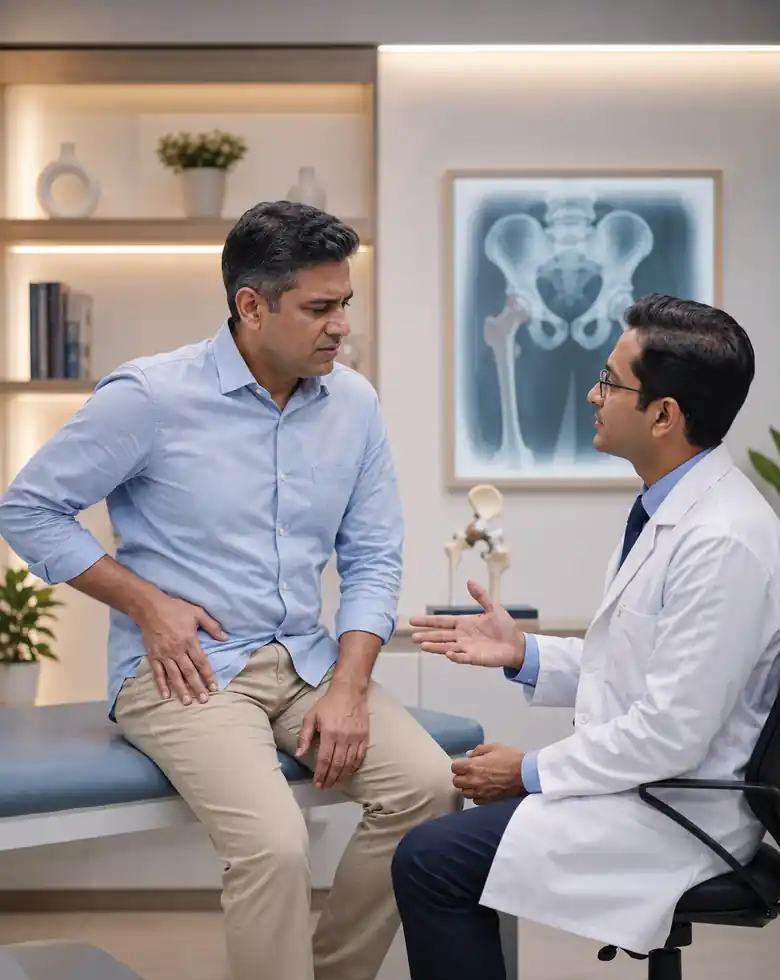 Hip PainGroin, buttock, thigh or outer-side hip pain — the complete symptom guide.Open hip hub →
🦴 Wear & tear
Hip PainGroin, buttock, thigh or outer-side hip pain — the complete symptom guide.Open hip hub →
🦴 Wear & tear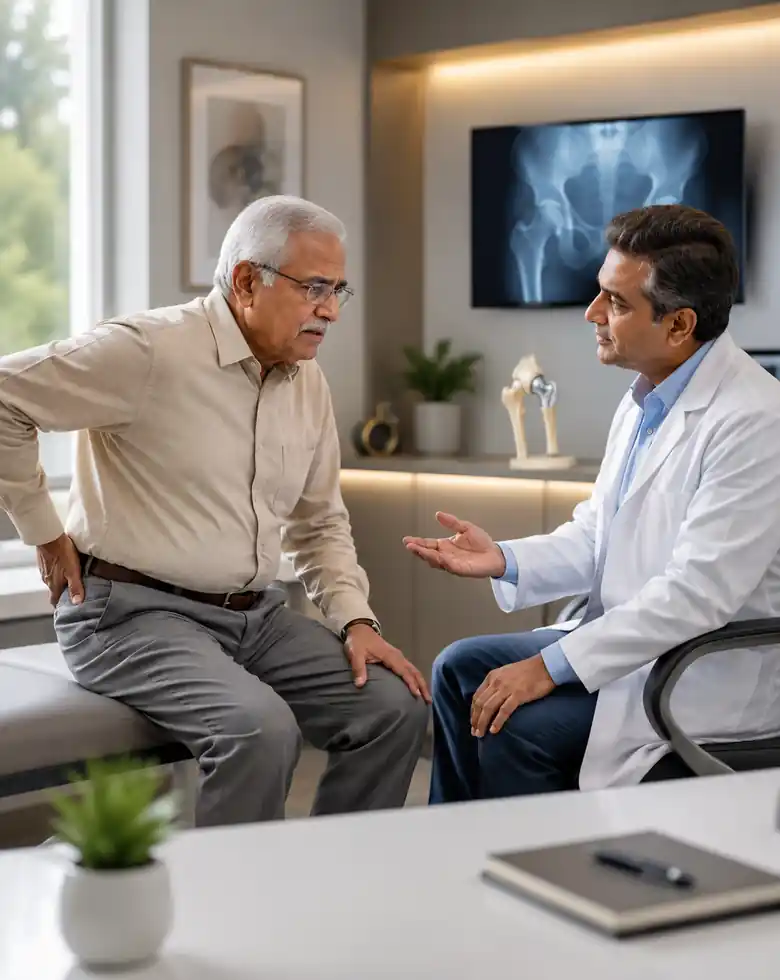 Hip ArthritisGradual groin pain, stiffness and walking limitation from joint-space wear.Read the guide →
🩻 MRI diagnosis
Hip ArthritisGradual groin pain, stiffness and walking limitation from joint-space wear.Read the guide →
🩻 MRI diagnosis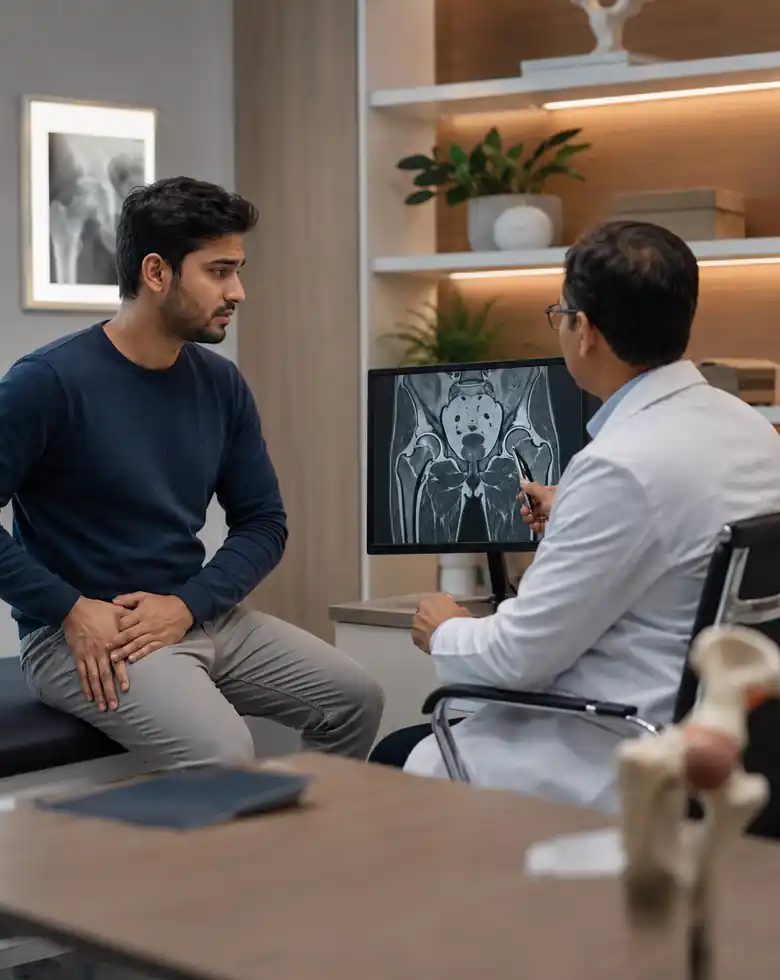 Avascular Necrosis HipDeep groin pain in younger adults — early MRI diagnosis can preserve the hip.Read the guide →
🌙 Side pain
Avascular Necrosis HipDeep groin pain in younger adults — early MRI diagnosis can preserve the hip.Read the guide →
🌙 Side pain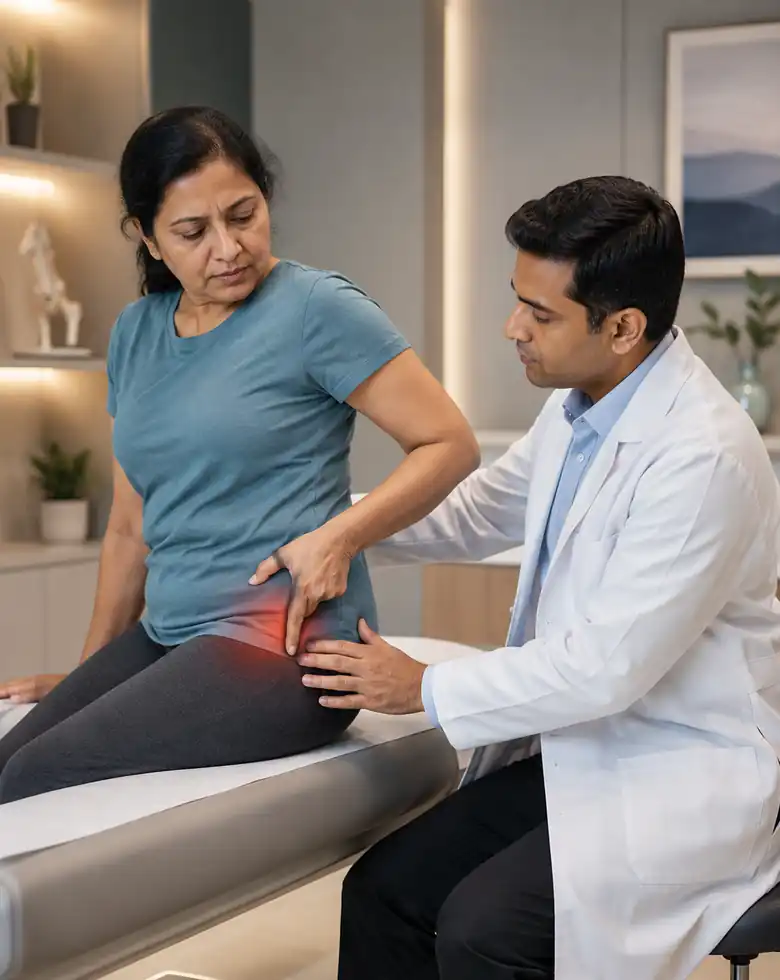 Trochanteric BursitisOuter-side hip pain, pain while lying on the side, and walking discomfort.Read the guide →
What Is a Hip Fracture?
A hip fracture is a break in the upper part of the thigh bone near the hip joint. In older adults it often happens after a simple fall because the bone is weaker from osteoporosis; in younger adults it usually follows a higher-energy injury.
Most patients feel severe hip or groin pain and cannot stand or put weight on the leg. The leg may look shortened or turned outward. A few fractures are initially subtle, especially incomplete or impacted fractures, so persistent pain after a fall should not be dismissed.
The treatment goal is practical: control pain, diagnose quickly, stabilise or replace the broken part when needed, and begin safe mobilisation early. Early rehabilitation and bone-strength treatment help prevent loss of independence and reduce the risk of another fracture. 🛡️
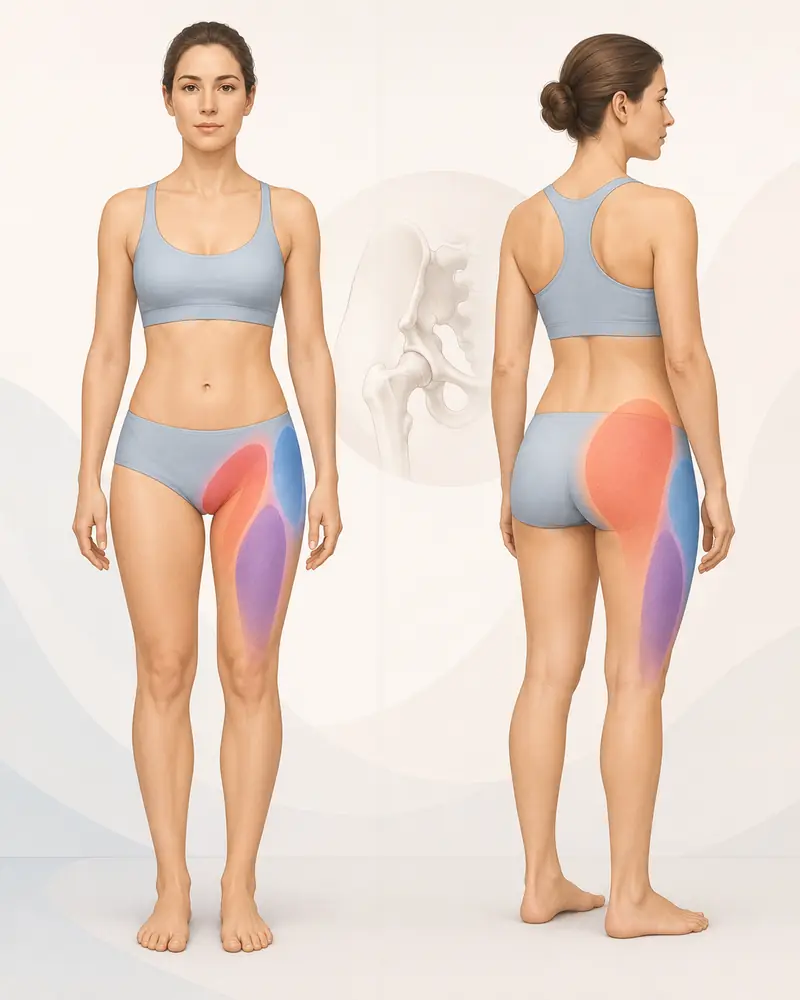
Hip fracture pain is usually felt deep in the groin or upper thigh after a fall.
Common Causes and Types of Hip Fracture
The fracture location and the patient’s general health decide the treatment plan — screws, plates, nails, partial replacement or total hip replacement.
Fall in Elderly Patients
A simple fall from standing height is the classic story when osteoporosis has weakened the bone.
Osteoporosis
Low bone density makes the hip vulnerable and must be treated after the fracture, not ignored.
Road Accident or High-Energy Injury
In younger adults, hip fractures usually need careful trauma assessment and precise fixation planning.
Femoral Neck Fracture
A break just below the ball of the hip joint; treatment depends on displacement, age and bone quality.
Intertrochanteric Fracture
A break between the bony prominences near the top of the thigh bone; often treated with a nail or plate.
Stress Fracture
Activity-related groin pain in runners or active adults can rarely be an early femoral neck stress fracture.
Medical Risk Factors
Long-term steroid use, poor nutrition, vitamin D deficiency, balance problems and repeated falls increase risk.
X-ray Pattern
X-rays usually show the fracture; CT or MRI may be needed when pain is strong but X-ray is unclear.
🧓 Fall-related hip pain
Inability to stand after a fall should be treated as a fracture until proven otherwise.

🩻 X-ray diagnosis
The fracture type guides the safest fixation or replacement plan.
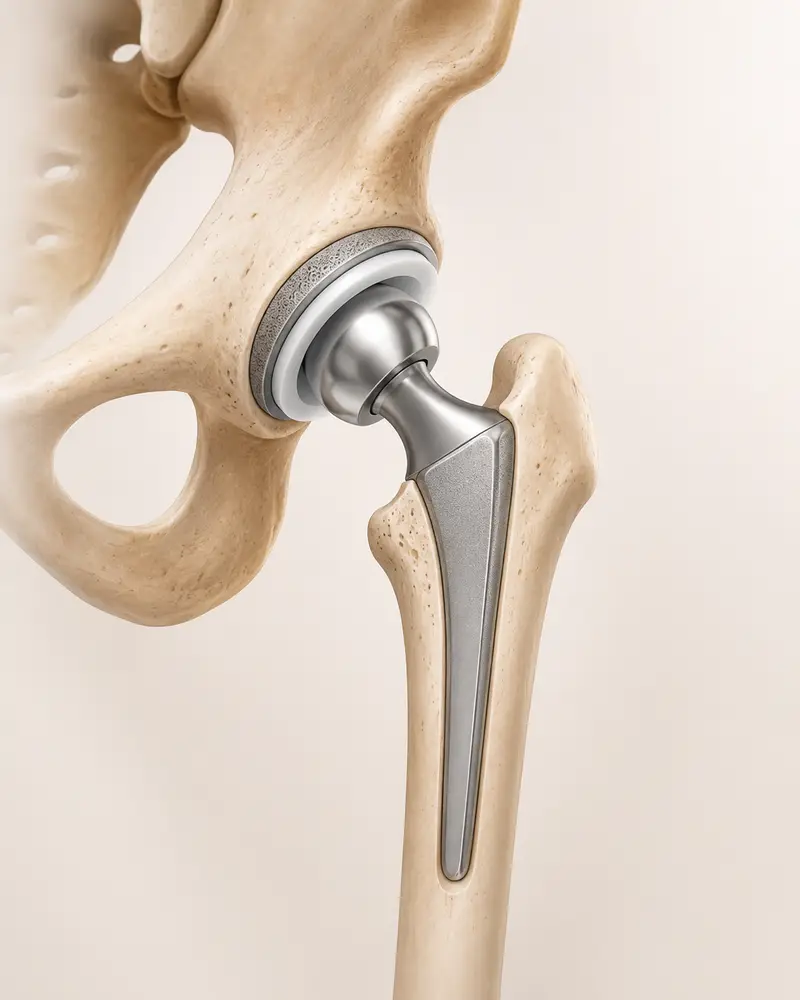
🔧 Replacement when needed
Selected femoral neck fractures in older patients are treated reliably with partial or total hip replacement.
Hip Fracture Symptoms — What Should You Look For?
Hip fracture symptoms are usually dramatic, but impacted or stress fractures can be quieter. After a fall, function matters more than pain tolerance. 👇
Cannot Stand or Walk
Inability to get up or put weight on the leg after a fall is the most important warning sign.
Urgent signSevere Groin or Hip Pain
Deep groin, upper thigh or buttock pain after injury can come from a fracture near the hip joint.
Typical symptomShortened or Turned-Out Leg
A visibly shortened or outward-turned leg strongly suggests a displaced hip fracture.
Classic findingSwelling or Bruising
Bruising around the hip or upper thigh may appear after a fracture, especially after a significant fall.
Injury signPain Despite Normal X-ray
If walking is still impossible, an occult fracture may need CT or MRI even when the first X-ray looks normal.
Don’t missActivity Groin Pain
Gradual groin pain during running or long walking can rarely be a femoral neck stress fracture.
Early review💡 Tip: do not massage, force walking, or delay imaging after a fall if the patient cannot bear weight.
When to Seek Urgent Hip Fracture Care in Chennai
A suspected hip fracture is not a “wait and watch” condition. Early assessment protects mobility, comfort and independence. ⏱️
Unable to stand or walk after a fall
Severe hip, groin or upper-thigh pain
Leg appears shortened or turned outward
Elderly patient with fall and new hip pain
Persistent pain despite a “normal” first X-ray
Known osteoporosis, steroid use or repeated falls
⏰ Suspected hip fracture needs immediate evaluation
Keep the patient comfortable, avoid forced walking, and arrange urgent orthopaedic assessment. X-ray diagnosis, pain control, medical optimisation and surgical planning are time-sensitive in elderly hip fractures. 📞 Call +91 90809 68066 for urgent appointment guidance.
Why Chennai Trusts Dr. Soma Sundar
Experienced hands, international training, and a philosophy that always starts with the least invasive treatment that can genuinely help you. View doctor profile.

15+ Years of Experience
Over fifteen years dedicated to spine and orthopaedic care, from everyday back pain to complex spinal conditions.
Internationally Trained
Fellowship training in Germany, Switzerland and the UK — FESS, FMISS, FAOS and the AO Spine Fellowship.
4.9 · 500+ Google Reviews
Consistently rated 4.9 by more than five hundred patients across both Chennai clinics.
FRCS & Gold Medallist
FRCS (Glasgow, UK) certified, MS Orthopaedics Gold Medallist, DNB and MNAMS qualified.
Non-Surgical First
Advanced pain management, injections and physiotherapy are always explored before surgery is considered.
Two Chennai Locations
Kauvery Hospital, Alwarpet (mornings) and Shens Hospital, Ashok Nagar (evenings) — six days a week.
How Hip Fracture Is Diagnosed
The first priority is to confirm the fracture, identify the exact type, assess medical fitness, and decide the safest route to early mobilisation.
Fall and Symptom Review 🗺️
How the fall happened, whether walking is possible, pain location, previous mobility and medical risks are checked.
Clinical Examination 🔦
Leg position, pain with movement, neurovascular status and associated injuries are assessed carefully.
X-ray, CT or MRI 🩻
X-rays usually confirm the diagnosis. CT or MRI is used when symptoms are strong but the fracture is subtle or hidden.
Medical Optimisation 🫀
Blood tests, anaesthesia review, pain control and co-morbidity optimisation prepare the patient for safe treatment.
The X-ray pattern guides whether fixation or replacement is the safer option.
Hip Fracture Treatment Options — Restore Mobility Safely
Treatment depends on fracture type, age, bone quality, pre-injury walking level and medical fitness. The usual goal is safe early mobilisation. ✅
Stabilise & Control Pain 🚑
Assessment + safe positioningKeep the patient comfortable, avoid forced walking, and complete urgent assessment.
- Pain control
- X-ray confirmation
- Medical review
Plan the Right Surgery 🩻
Fracture-specific decisionThe fracture pattern decides screws, nail, plate, hemiarthroplasty or total hip replacement.
- Femoral neck vs trochanteric
- Stable vs displaced
- Bone quality assessment
Fix or Replace Safely 🔧
Surgery for most adult hip fracturesModern fixation or replacement aims to reduce pain and allow safe mobilisation.
- Screws / DHS / nail
- Partial hip replacement
- Total hip replacement when suitable

Rehab & Prevent Falls 🚶
Walking + balance + bone healthPhysiotherapy, fall prevention and osteoporosis care reduce future fracture risk.
- Walker training
- Strength and balance
- Bone health plan
Fracture Rehabilitation After Hip Fracture
Rehabilitation begins with safe bed movement and progresses to standing, walking, stairs, balance and independent daily activities. 👇
Fracture Rehabilitation
Bed mobility, transfers, walker training and progressive strengthening after hip fracture surgery.
🤸Hip Pain Physiotherapy
Hip mobility and strengthening support recovery after fracture healing and surgical stabilisation.
🏠Hip Exercises at Home
Gentle hip and lower-limb exercises after clearance from the treating surgeon.
🛡️Osteoporosis Fracture Care
Bone health evaluation is essential because one fragility fracture raises risk of another.
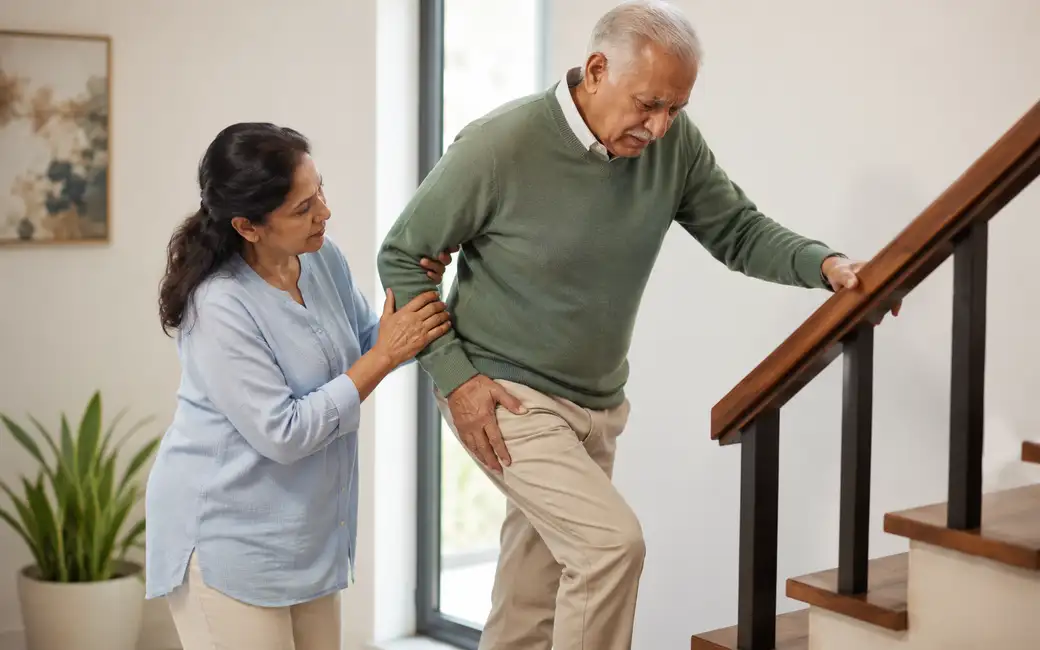 🚶 Safe walking practice
 🦵 Marching and balance
 💪 Hip strengthening
 🏋️ Bed-based strengthening
🏠 Home physiotherapy can support recovery after discharge.Walker training, safe transfers, strengthening and fall-prevention guidance at home.
📞 Physio Home Visits · +91 98403 45335Hip Fracture Surgery — Fixation or Replacement?
Displaced femoral neck fractures in older adults often need partial or total hip replacement.
For intertrochanteric fractures, fixation with a proximal femoral nail or plate is commonly used. For femoral neck fractures, the choice may be screws, hemiarthroplasty or total hip replacement depending on displacement and patient factors.
The surgical plan is personalised. Age alone is not the only deciding factor — previous walking level, independence, bone quality, arthritis, medical fitness and fracture stability all matter. The aim is reliable healing or replacement stability with early safe mobilisation. 🤝
After Hip Fracture: Osteoporosis and Fall Prevention
A hip fracture is often a warning sign that the skeleton is fragile. After the immediate fracture care, the next priority is to reduce the chance of another fracture.
This includes bone-density evaluation when appropriate, vitamin D and calcium correction, osteoporosis medicines when indicated, strength and balance training, home fall-risk changes, vision review, footwear advice and review of medicines that increase fall risk.
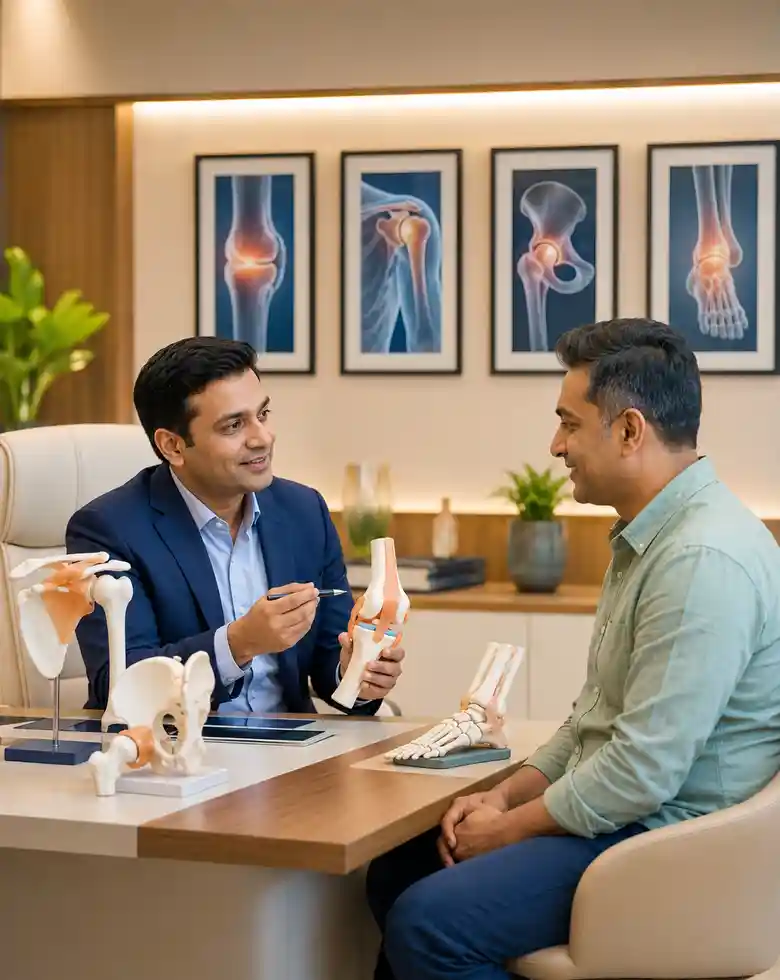
Good hip fracture care includes treating the fracture and preventing the next fall.
⚖️ Practical recovery principle
The operation is only one part of recovery. Walking confidence, nutrition, family support, physiotherapy and bone health treatment decide long-term independence.
Hip Fracture — Frequently Asked Questions
What Hip Fracture Patients and Families Say
My father fell at home and could not stand. The X-ray and surgery plan were explained clearly, and mobilisation started early with the physiotherapy team.
★★★★★We were scared about hip fracture surgery because my mother is diabetic. The medical optimisation and step-by-step explanation gave us confidence.
★★★★★The best part was the recovery planning. Walker training, home safety advice and osteoporosis medicines were all discussed before discharge.
★★★★★My grandmother had a fracture neck of femur. The doctor explained why replacement was better than screws in her case. She is now walking with support.
★★★★★We shared X-rays on WhatsApp and were guided quickly on what to do next. The family felt reassured before coming to the hospital.
★★★★★The physiotherapy home visits after discharge were very helpful. My mother learnt safe transfers and walking with a walker.
★★★★★We appreciated that bone strength was not forgotten after surgery. Vitamin D, DEXA and fall prevention were all explained in simple words.
★★★★★My uncle’s hip fracture surgery was planned after checking his heart condition. The team was calm, practical and transparent about recovery.
★★★★★The doctor explained the X-ray, implant choice and walking plan very clearly. It helped our family make decisions without confusion.
★★★★★Explore More Hip and Orthopaedic Care
Expert Orthopaedic Advice, From Wherever You Are
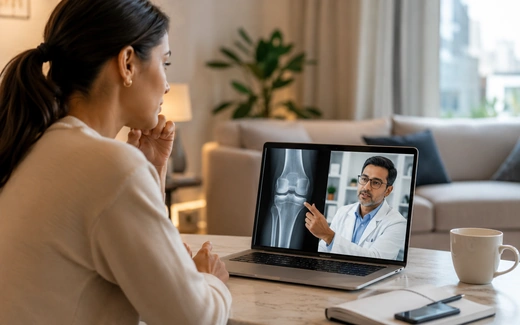
Can’t travel to Chennai, or want a specialist opinion before deciding your next step? Consult Dr. Soma Sundar over a secure video call for knee, shoulder, hip, sports injury, fracture, joint pain and orthopaedic concerns — and let your whole family join and ask questions.
-
Consult from anywhere
Connect from home, another city, or abroad — no travel needed for an expert orthopaedic opinion.
-
X-rays, MRI & reports — optional
You can share scans or reports in advance on WhatsApp if you have them, or simply talk first. Both work.
-
Clear next steps
Leave the call knowing what the likely problem is, what to try first, and when a clinic visit or procedure is truly needed.
Book an Ortho Video Consultation
Message us on WhatsApp with your name and a short note about your joint, bone, muscle or injury-related problem — our team will confirm a convenient slot.
Especially useful for- Outstation and overseas patients — and their families
- Knee, shoulder, hip, ankle, elbow or wrist pain
- A second opinion before orthopaedic surgery
- Understanding an X-ray, MRI or scan report in plain language
- Follow-up reviews after injections, procedures or surgery
- Elderly patients who find travelling difficult
📎 Sending X-rays, MRI or reports in advance is optional — many patients simply describe their problem and share reports later if needed.
Explore Orthopaedic Care
Patient-friendly guides for knee, shoulder, hip, foot and ankle problems — organised into simple boxes for conditions, treatments, physiotherapy, home exercises and one compact spine segment.