Lumbar Canal Stenosis Treatment in Chennai Walk Further. Stand Longer. Reclaim Your Day.
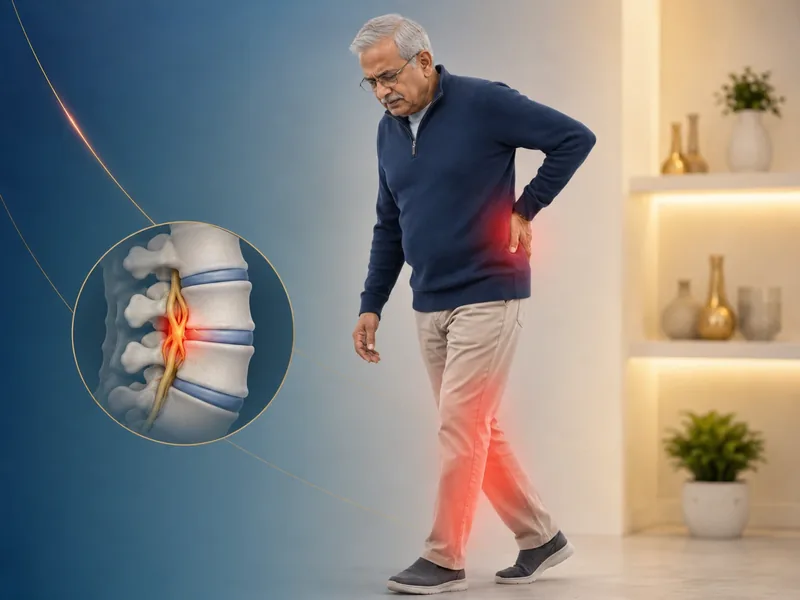
Lumbar canal stenosis is narrowing of the spinal canal in the lower back that squeezes the nerves. The classic sign is leg pain, heaviness or numbness that comes on while walking or standing and eases when you sit or bend forward. Dr. Soma Sundar S offers diagnosis-first care with physiotherapy, injections and surgery only when clearly needed.
 15+ Years of Experience
Dr. Soma Sundar S
Spine & Orthopaedic Surgeon, Chennai
Kauvery Hospital, Alwarpet
Mon–Sat · 8:30 AM – 5:30 PM Get DirectionsShens Hospital, Ashok Nagar
Mon–Sat · 6:00 PM – 8:30 PM Get DirectionsWhat Is Lumbar Canal Stenosis?
Lumbar canal stenosis is narrowing of the spinal canal in the lower back. As the space around the nerves tightens, walking or standing can bring on leg pain, heaviness, cramping or numbness.
The tell-tale pattern is relief on sitting or bending forward — many patients notice they can walk further leaning on a trolley, or that cycling is easier than walking.
The key question is: where is the canal narrowed, and how much is it limiting you? That decides whether exercise and injections are enough, or whether decompression would help.

Leg pain or heaviness that comes on with walking and eases on sitting is the hallmark of canal stenosis.
Common Causes of Lumbar Canal Stenosis
Lumbar canal stenosis usually develops slowly as age-related changes narrow the space around the nerves. Tap any cause to learn more.
Age-Related Wear
Thickened ligaments, bony spurs and disc changes gradually narrow the canal over years.
💿Lumbar Disc Bulge
A disc bulge can add to canal narrowing and press on the nerves passing through.
🎯Spinal Nerve Compression
Pressure on the lumbar nerves produces leg pain, numbness or heaviness on activity.
🧩Spondylolisthesis
Slippage of one vertebra over another can narrow the canal and worsen stenosis.
⚡Sciatica Overlap
Some patients also have sciatica-type leg pain from a specific irritated nerve.
🦵Leg Numbness & Tingling
Reduced sensation or tingling in the legs can accompany canal narrowing.
🪑Posture & Deconditioning
Weak core support and stooped posture can worsen symptoms and reduce walking distance.
🩻MRI–Clinical Correlation
MRI shows the narrowing, but your walking pattern decides how much it matters.
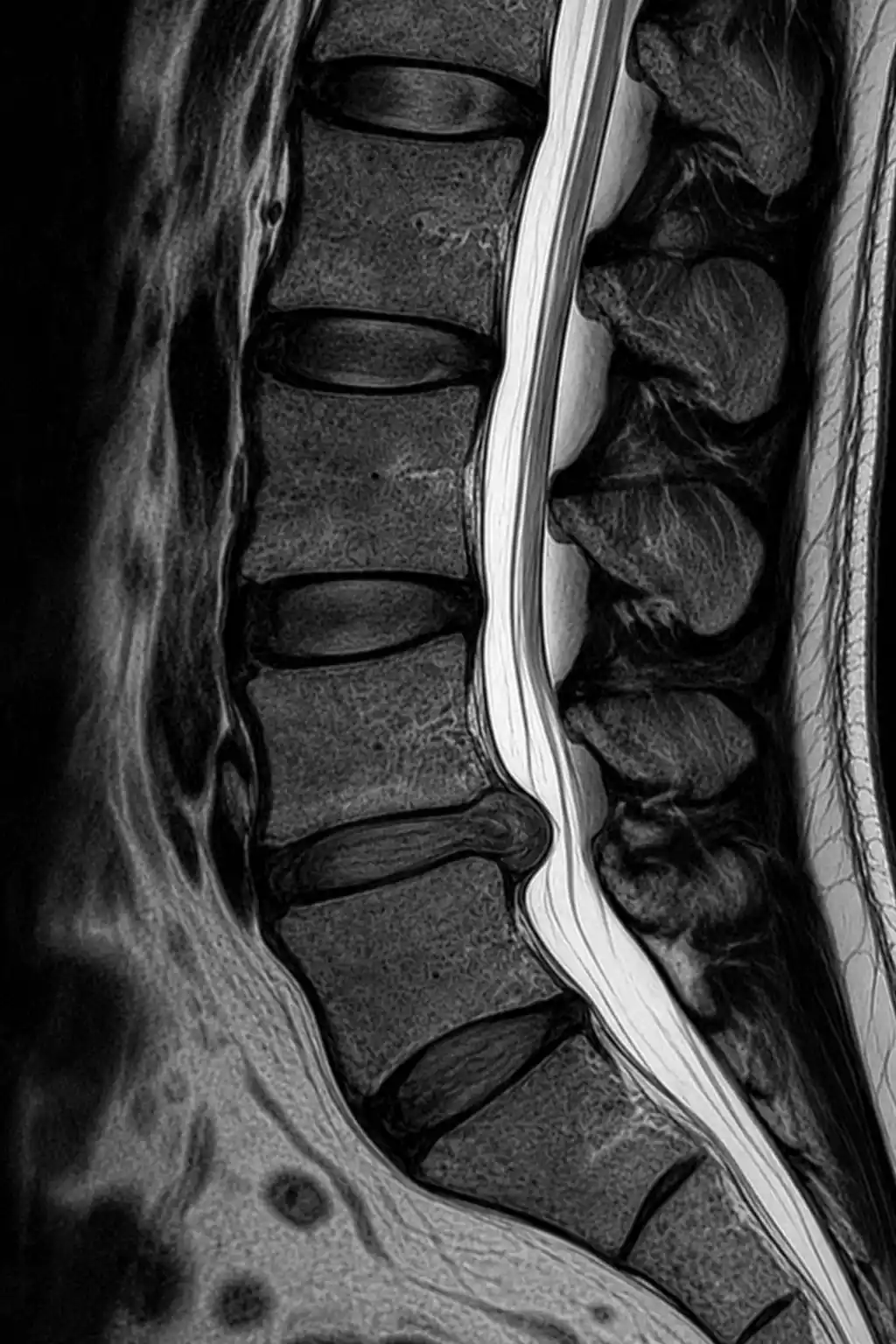
MRI canal narrowing
MRI shows the level and severity of narrowing around the lumbar nerves.
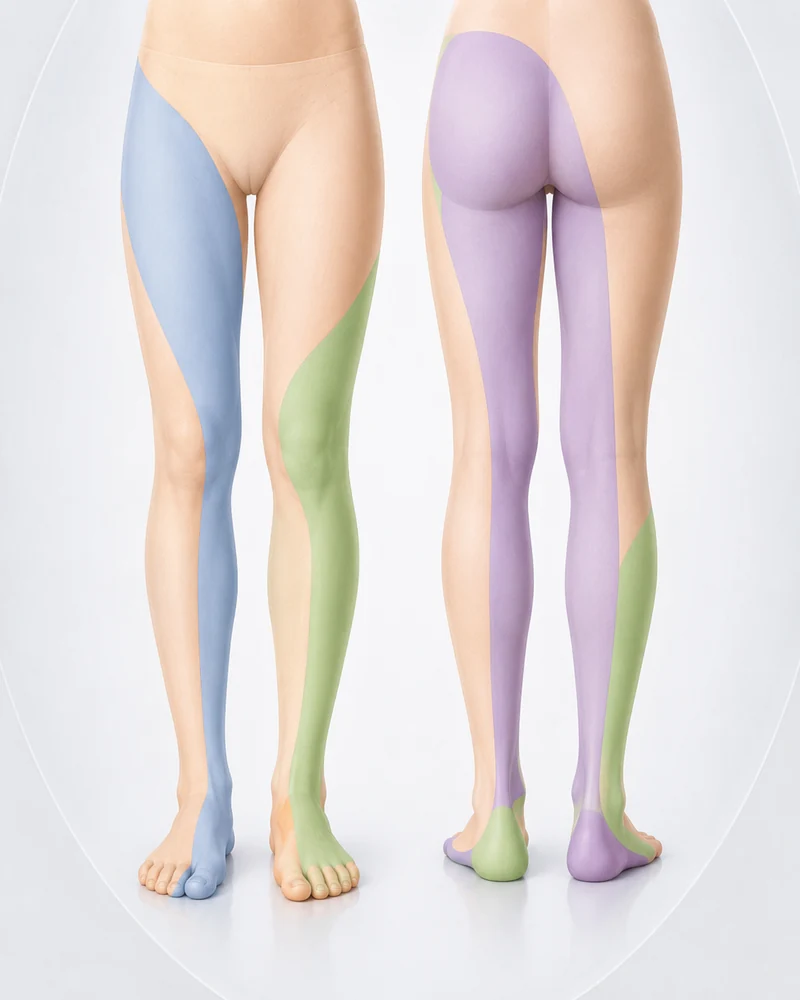
Leg symptom map
The pattern of leg symptoms helps identify which nerves are being squeezed.

Relief on sitting
Bending forward or sitting opens the canal a little and often eases the leg symptoms.
Symptoms of Lumbar Canal Stenosis
Canal stenosis symptoms are activity-related — they come and go with walking, standing and sitting. See which pattern matches yours.
Leg Pain on Walking
Pain, heaviness or cramping in the legs that builds up after walking a certain distance.
Neurogenic claudicationRelief on Sitting
Symptoms ease within minutes of sitting or bending forward — a classic stenosis clue.
Position-dependentBetter Leaning Forward
Walking further while leaning on a trolley or cycling comfortably is very typical.
Flexion reliefLeg Numbness or Tingling
Numbness, pins-and-needles or a heavy feeling in one or both legs on activity.
Nerve signal changeLeg Weakness
Weakness, foot dragging or unsteadiness after walking needs careful review.
Priority reviewReduced Walking Distance
Slowly shrinking walking distance over months is a common reason patients seek help.
Progressive limitWhen to See a Spine Specialist for Lumbar Canal Stenosis
Early clarity helps you keep walking and avoids unnecessary decline. See a specialist if any of these apply:
Leg pain or heaviness that limits walking
Symptoms that ease on sitting or bending forward
Numbness or tingling in one or both legs
Leg weakness, foot dragging or unsteadiness
Shrinking walking distance over weeks or months
Any new bladder or bowel changes (urgent)
Some symptoms need prompt review
Progressive leg weakness, foot drop, or any new bladder or bowel change should be assessed urgently to protect the nerves. 📞 Call +91 90809 68066 for a priority appointment.
Why Chennai Trusts Dr. Soma Sundar
Experienced hands, international training, and a philosophy that always starts with the least invasive treatment that can genuinely help you. View doctor profile.

15+ Years of Experience
Over fifteen years dedicated to spine and orthopaedic care, from everyday back pain to complex spinal conditions.
Internationally Trained
Fellowship training in Germany, Switzerland and the UK — FESS, FMISS, FAOS and the AO Spine Fellowship.
4.9 · 500+ Google Reviews
Consistently rated 4.9 by more than five hundred patients across both Chennai clinics.
FRCS & Gold Medallist
FRCS (Glasgow, UK) certified, MS Orthopaedics Gold Medallist, DNB and MNAMS qualified.
Non-Surgical First
Advanced pain management, injections and physiotherapy are always explored before surgery is considered.
Two Chennai Locations
Kauvery Hospital, Alwarpet (mornings) and Shens Hospital, Ashok Nagar (evenings) — six days a week.
How Lumbar Canal Stenosis Is Diagnosed
A scan matters only when it matches your walking pattern and nerve examination. Here is the four-step process:
Walking & Symptom History
How far you can walk, what eases the pain and which positions help paints the clearest picture of stenosis.
Nerve Examination
Power, sensation, reflexes and walking assessment help identify which lumbar nerves are affected.
MRI When Needed
MRI shows canal narrowing, disc changes, ligament thickening and the exact level of nerve compression.
Clear Treatment Plan
You leave with a staged plan — exercise, physiotherapy, injection review or a surgical opinion if walking is badly limited.
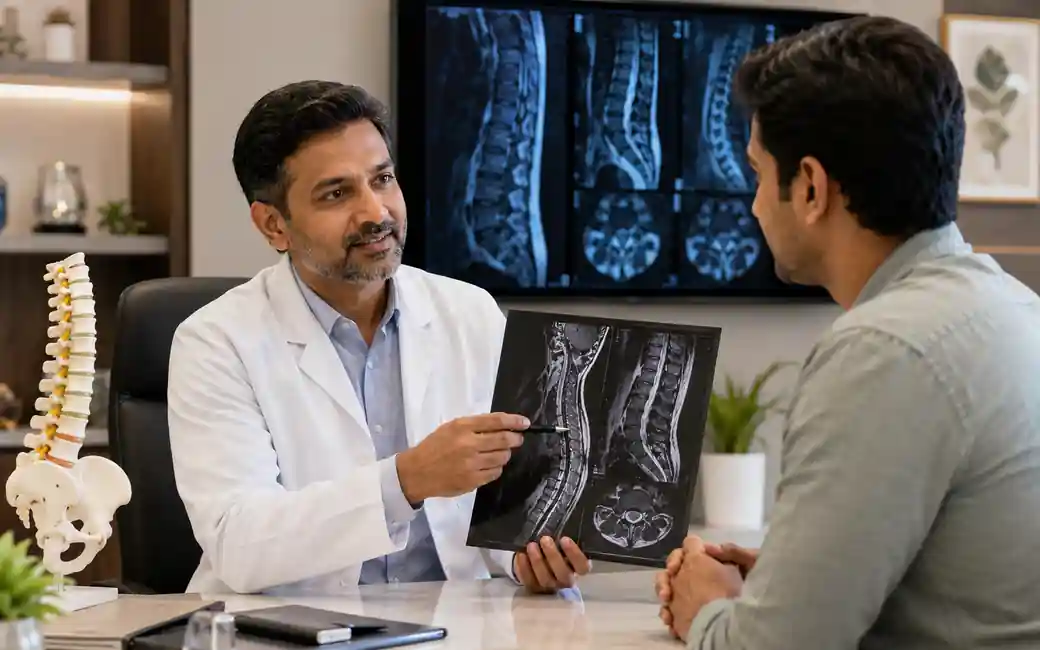
MRI is interpreted alongside your walking pattern and examination, not as a scan report alone.
Lumbar Canal Stenosis Treatment Options
Treatment is staged. The goal is to keep you walking comfortably, settle leg symptoms and avoid unnecessary surgery — many patients improve without an operation.
Settle & Modify
Activity advice + medicinesPacing, forward-flexion strategies and short-term medicines reduce leg symptoms and keep you moving.
- Ease leg pain on walking
- Use flexion-friendly walking tactics
- Protect daily activity and sleep
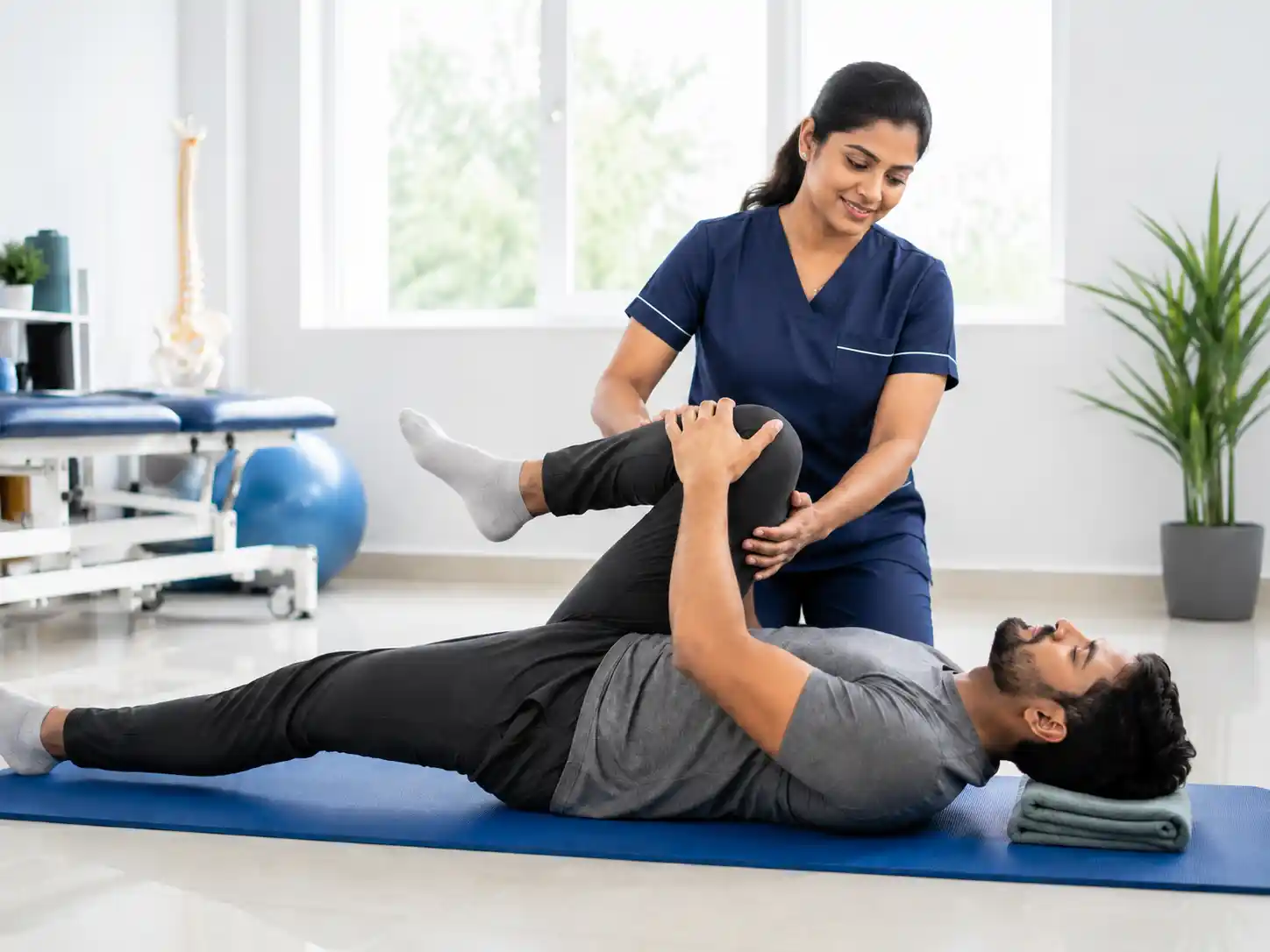
Build Strength & Endurance
Physiotherapy + core + walking programmeGuided physiotherapy improves core support, flexibility and walking tolerance so you can do more with less pain.
- Core and hip strengthening
- Graded walking and cycling
- Posture and flexibility work
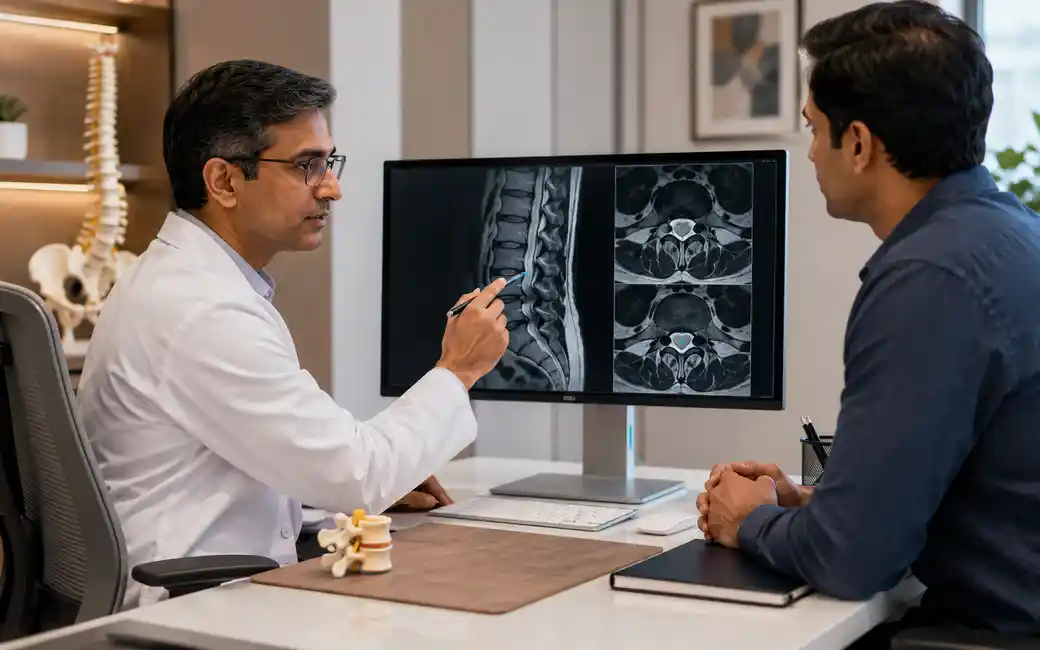
Target the Narrowing
Injection or decompression for selected patientsIf leg symptoms are limiting despite rehab, an epidural injection or decompression surgery may be discussed.
- Walking distance badly limited
- Persistent leg pain or weakness
- Selected significant-narrowing cases
Non-Surgical Treatment for Lumbar Canal Stenosis
Most patients start — and many finish — with non-surgical care. The plan depends on how far you can walk, your leg symptoms and MRI correlation.
Walking Programme
A graded walking and cycling plan that builds tolerance without flaring leg symptoms.
💊Medicines
Short-term pain relief and nerve-pain medicines planned after clinical evaluation.
🤸Physiotherapy
Core strengthening, flexibility and flexion-based exercises that open the canal a little.
🏠Home Exercises
Gentle back and core exercises chosen for stenosis and safe for daily practice.
🩻Report Review
MRI and X-ray findings are matched with your walking pattern before any procedure.
🏠 Can’t travel for physiotherapy? Home-visit physiotherapy is available across Chennai. Guided sessions at your home for neck, back and joint rehabilitation.
📞 Physio Home Visits · +91 98403 45335Epidural Injection for Lumbar Canal Stenosis

Targeted injections are planned around the narrowed level and used for selected patients.
When leg pain limits walking, disturbs sleep or blocks physiotherapy, a targeted epidural steroid injection may help selected patients by calming nerve inflammation around the narrowed canal.
The aim is to create a comfortable window for rehabilitation and walking practice. It is not a cure for the narrowing, and it is used only when symptoms, examination and imaging clearly agree.
When Surgery May Be Needed for Lumbar Canal Stenosis
Surgery is considered when leg symptoms badly limit walking, when weakness is progressing, or when structured non-surgical care has not given enough relief.
Decompression removes the pressure on the nerves so you can walk more comfortably. Where instability or slippage coexists, a stabilising procedure may be added. The plan is chosen from your MRI, level and examination.

Decompression is discussed only when walking limitation, symptoms and imaging clearly justify it.
Balanced treatment principle
Good stenosis care is not anti-surgery or pro-surgery. Many patients do well with exercise and injections; surgery is offered when walking is genuinely limited and imaging agrees.
Frequently Asked Questions
What Patients Say
I could barely walk to the end of my street without stopping. Understanding why sitting helped, and getting a clear plan, made a real difference.
★★★★★My legs would go heavy in the market. The walking programme and an injection got me back to my morning walks.
★★★★★I was told I needed surgery elsewhere. Here it was explained honestly that I could try rehab first — and it worked.
★★★★★The video consultation helped my daughter and me review the MRI together before deciding. Very clear and unhurried.
★★★★★Expert Spine Advice, From Wherever You Are
Can’t travel to Chennai, or want a specialist opinion before deciding your next step? Consult Dr. Soma Sundar over a secure video call — and let your whole family join and ask questions.

-
Consult from anywhere
Connect from home, another city, or abroad — no travel needed for an expert opinion.
-
Reports & MRI — optional
You can share scans in advance on WhatsApp if you have them, or simply talk first. Both work.
-
Clear next steps
Leave the call knowing what your condition is, what to try first, and when a clinic visit is truly needed.
Book a Video Consultation
Message us on WhatsApp with your name and a short note about your problem — our team will confirm a convenient slot.
Especially useful for- Outstation and overseas patients — and their families
- A second opinion before agreeing to spine surgery
- Understanding an MRI or scan report in plain language
- Follow-up reviews after surgery or injections
- Elderly patients who find travelling difficult
📎 Sending scans or MRI in advance is optional — many patients simply describe their problem and share reports later if needed.
Explore SundarSpine
Everything on this site, organised the way patients think — conditions, treatments, physiotherapy, home exercises and free resources.