Spondylolisthesis Treatment in Chennai Stabilise the Slip. Protect the Nerves. Walk Better Again.
Spondylolisthesis means one spinal bone has slipped forward over the bone below it. Some slips are mild and stable; others can cause persistent low back pain, sciatica, leg numbness, walking difficulty or weakness. This guide helps you understand the type of slip, how standing X-rays and MRI are matched with symptoms, and every treatment step Dr. Soma Sundar S offers: medicines, posture correction, physiotherapy, home exercises, targeted injections — and minimally invasive stabilisation surgery only when truly needed.
 15+ Years of Experience
Dr. Soma Sundar S
Spine & Orthopaedic Surgeon, Chennai
Kauvery Hospital, Alwarpet
Mon–Sat · 8:30 AM – 5:30 PM Get DirectionsShens Hospital, Ashok Nagar
Mon–Sat · 6:00 PM – 8:30 PM Get DirectionsTypes of Spondylolisthesis We Treat
The word sounds alarming, but treatment depends on the type, grade and stability of the slip — not just the MRI report. These are the common patterns seen in clinic. 👇
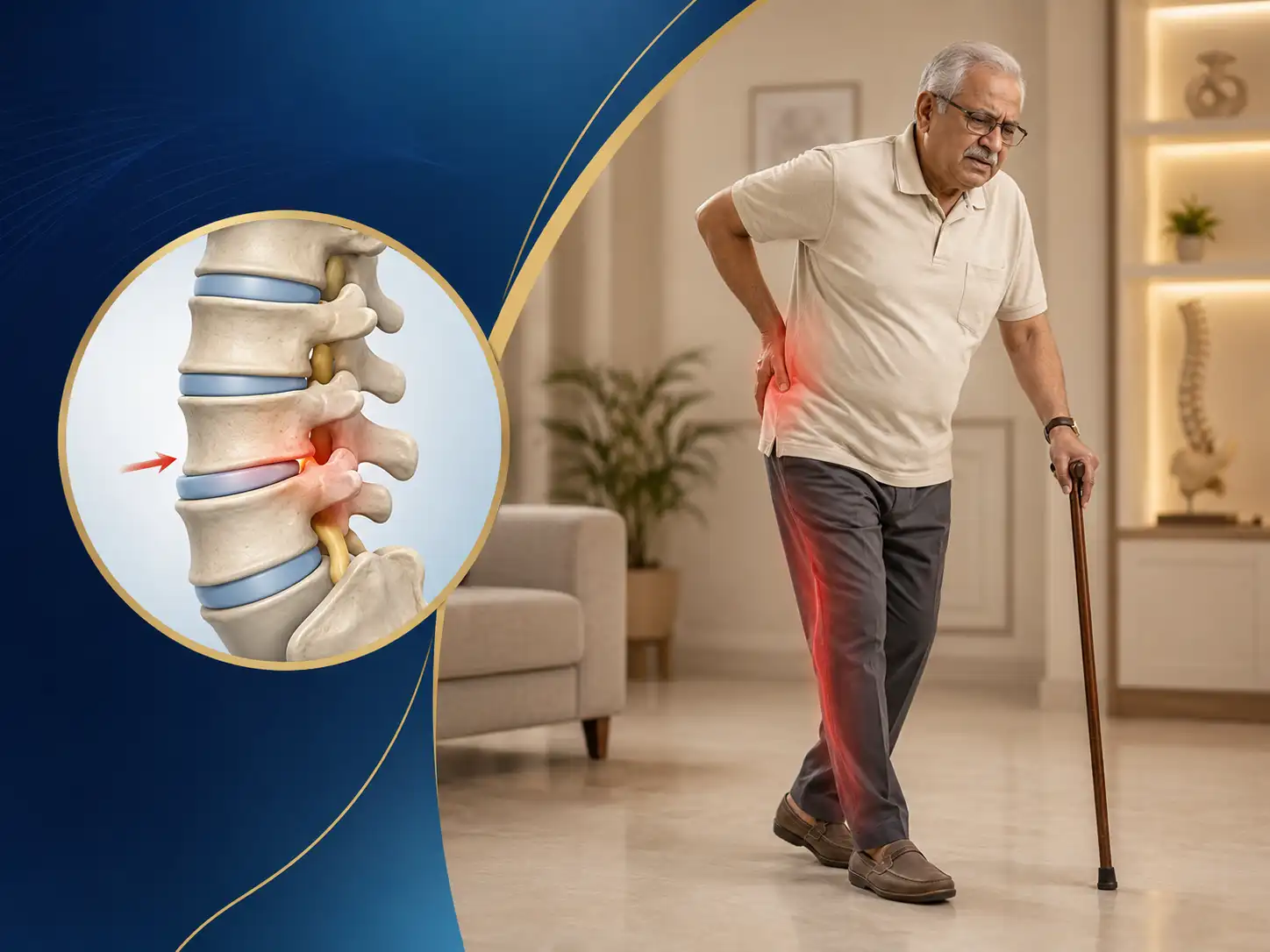
Degenerative SpondylolisthesisAge-related disc and facet wear allows one vertebra to slip forward — often with canal stenosis and walking pain.Learn the pattern →
🏃 Pars defect Isthmic SpondylolisthesisA stress defect in the pars bone may allow a slip — often starting younger and becoming symptomatic later.Learn the pattern →
✅ Often non-surgical
Isthmic SpondylolisthesisA stress defect in the pars bone may allow a slip — often starting younger and becoming symptomatic later.Learn the pattern →
✅ Often non-surgical Low-Grade Stable SlipMany Grade 1 slips are managed with activity modification, core strengthening, walking plan and follow-up.See non-surgical care →
🚨 Needs review
Low-Grade Stable SlipMany Grade 1 slips are managed with activity modification, core strengthening, walking plan and follow-up.See non-surgical care →
🚨 Needs review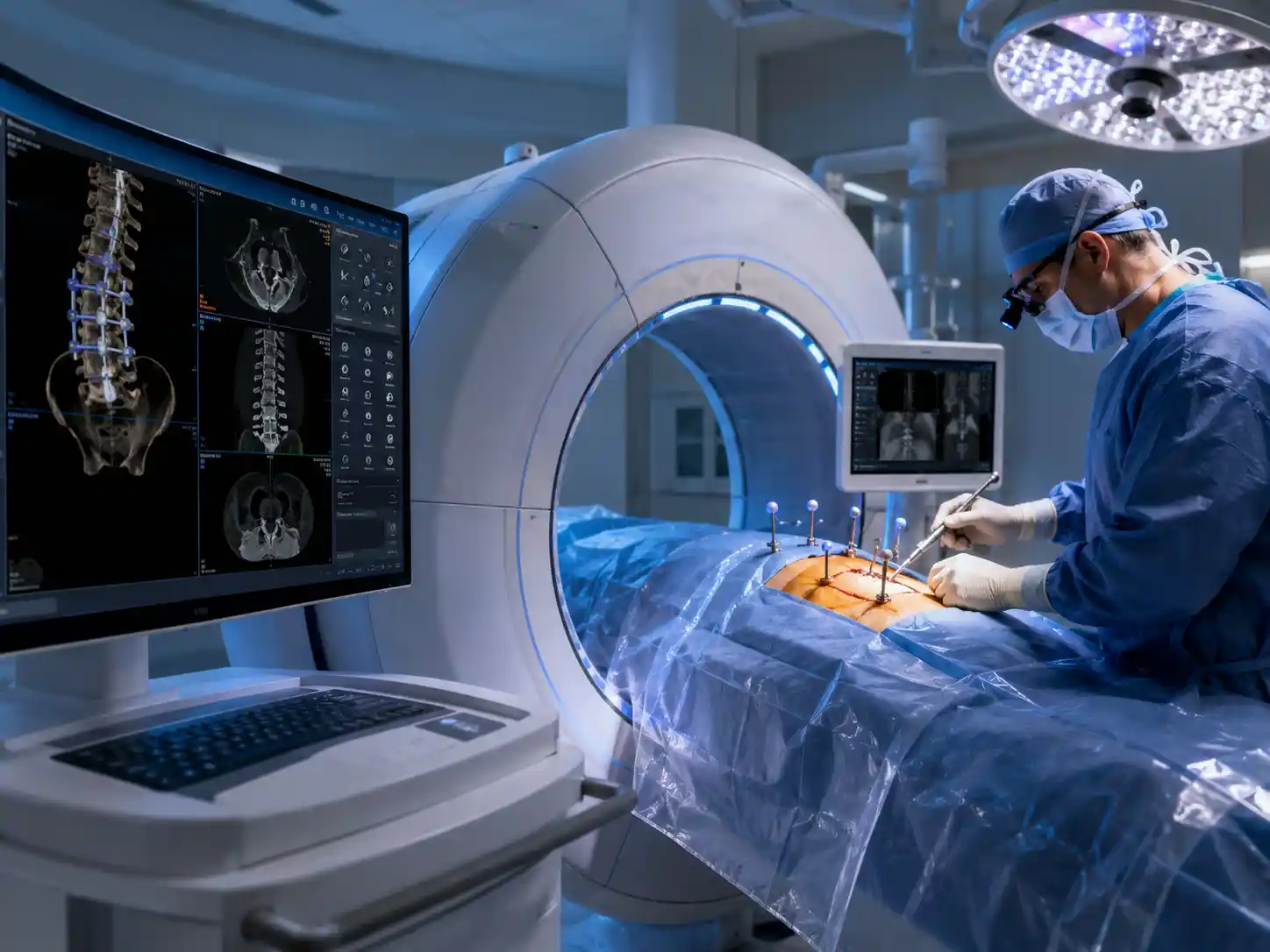 Unstable or Higher-Grade SlipWorsening slip, severe nerve compression, weakness or disabling walking limitation may need stabilisation.Understand surgery →
What Is Spondylolisthesis?
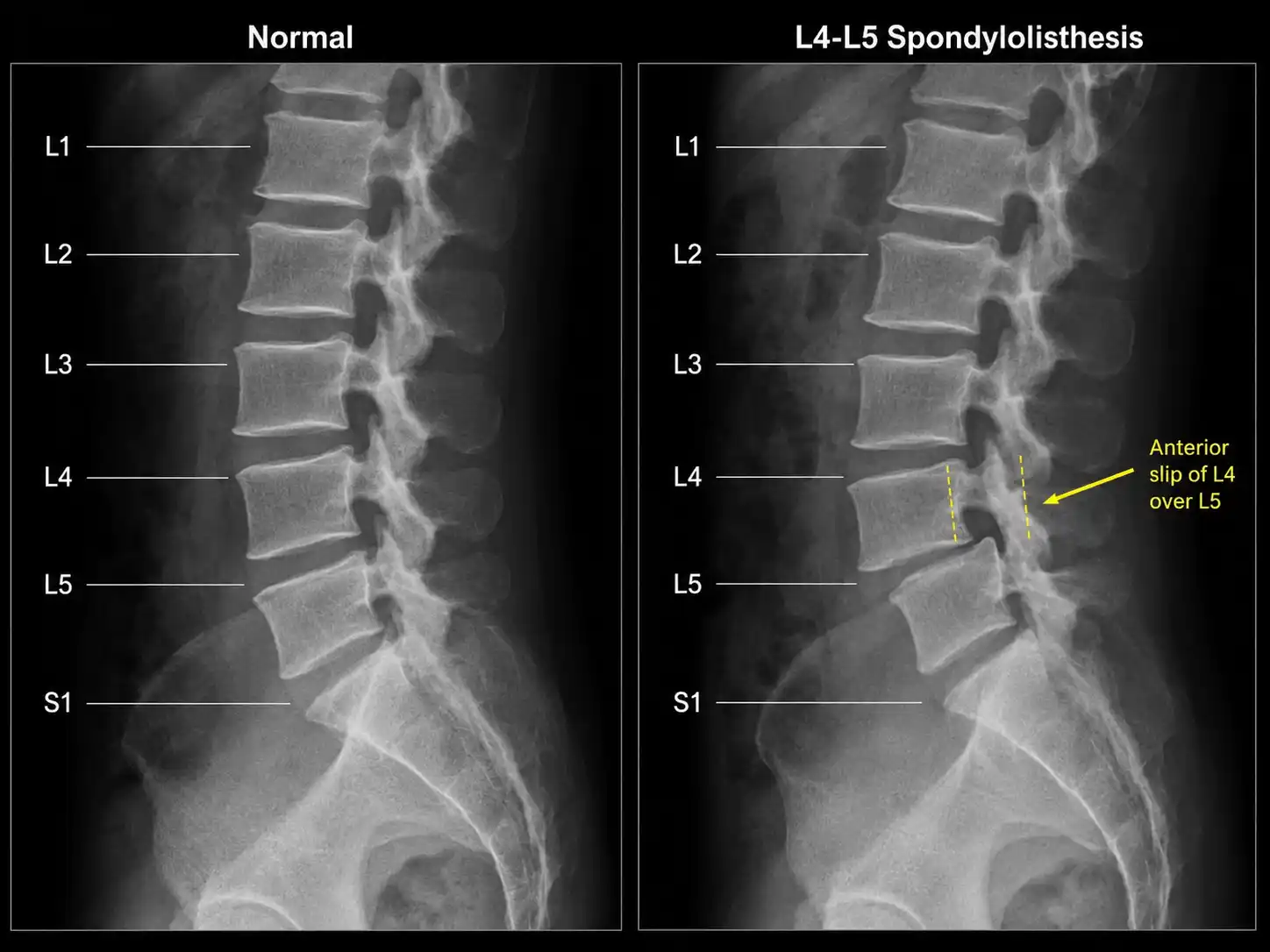
Spondylolisthesis means one spinal bone has moved forward compared with the bone below it. In the lower back, this most often happens at L4–L5 or L5–S1. Patients often describe it as a “slip in the backbone” or “slipped vertebra”.
The slip can irritate pain-sensitive joints and discs, or narrow the space for nerves. That is why symptoms may stay as low back pain, or travel as sciatica into the buttock, thigh, calf or foot. Some patients notice they can stand or walk only for a short distance before needing to sit.
The key question is simple: is the slip stable, and is a nerve being compressed? That answer decides whether treatment should be physiotherapy and posture control, a targeted injection, or stabilisation surgery in selected cases.
A small forward slip can be painless — symptoms matter as much as the scan.
Common Causes of Spondylolisthesis
A vertebra slips when the disc, facet joints, pars bone or supporting muscles cannot hold the segment firmly enough. The reason differs by age, activity and slip type. 👇
Age-Related Facet & Disc Wear
Degeneration loosens the motion segment, especially at L4–L5, causing back pain with standing or walking.
Pars Stress Defect
A stress fracture-like defect in the pars bone may lead to isthmic spondylolisthesis, often at L5–S1.
Associated Canal Stenosis
The slip can narrow the spinal canal, causing leg heaviness, calf pain or walking limitation that improves with sitting.
⚡Nerve Root Compression
Narrowing around a nerve can produce sciatica — pain, tingling or numbness travelling down the leg.
💿Disc Collapse or Bulge
Disc degeneration reduces support and may add nerve irritation, especially when the slip and disc bulge occur together.
🪑Posture & Core Deconditioning
Weak core and hip muscles increase load on the painful segment and make symptoms recur after temporary relief.
Repetitive Back Extension
Sports, heavy lifting and repeated arching can stress the posterior elements in susceptible patients.
X-ray–MRI Correlation
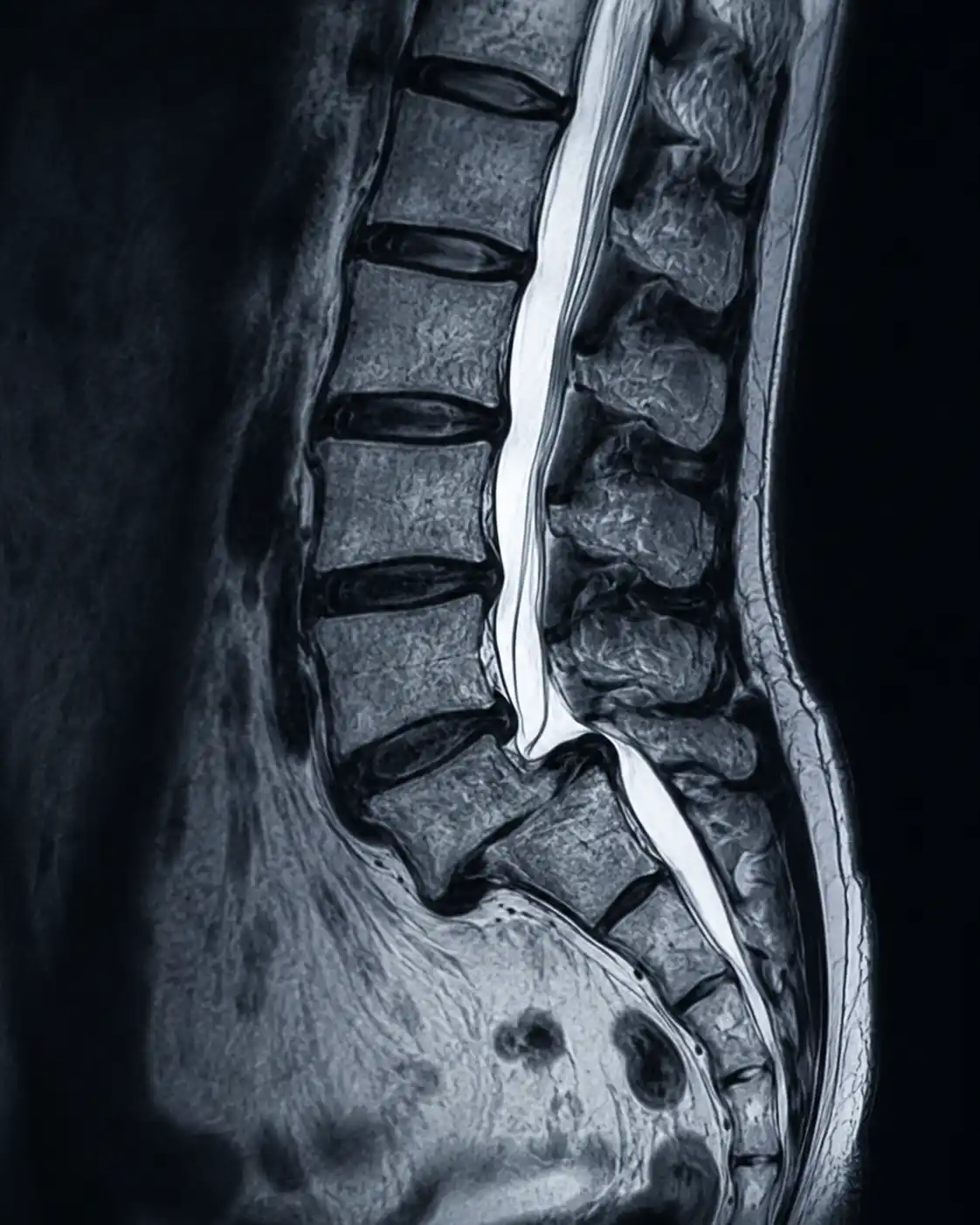
Standing X-rays show the slip; MRI shows the nerves. Both are matched with examination before deciding treatment.
🩻 Standing X-ray + MRI
X-rays grade the slip; MRI identifies canal or nerve compression.
🔎 Symptom matching
The scan is matched carefully with your back pain, leg pain and walking tolerance.
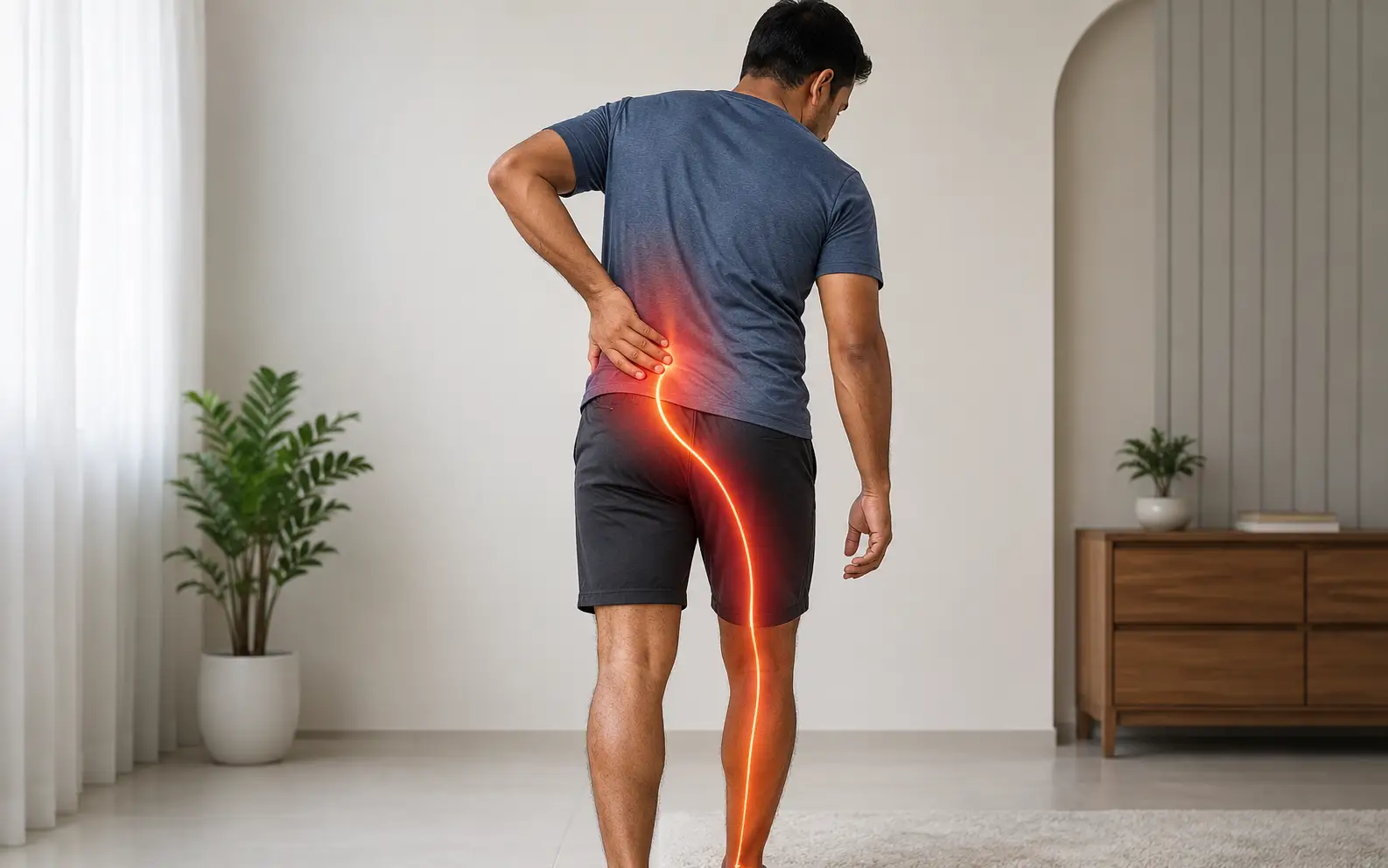
⚡ Leg pain pattern
Nerve irritation can send pain from the lower back into the leg or foot.
Spondylolisthesis Symptoms — What Is Yours Telling You?
Symptoms depend on whether the slip is mainly painful, compressing a nerve, or causing canal stenosis. Match your pattern below. 👇
Low Back Pain
Often worse with standing, walking, lifting or arching the back; relieved by lying down or changing posture.
Common patternHamstring Tightness
Tightness behind the thighs, altered posture or a mild forward-bent walk can accompany a symptomatic slip.
Often missedSciatica Leg Pain
Shooting pain into the buttock, thigh, calf or foot suggests a nerve root being irritated.
Nerve irritationNumbness or Tingling
Pins-and-needles, numb toes or burning leg pain can mean narrowing around the nerve.
Nerve signWalking Limitation
Leg heaviness or calf pain after walking, relieved by sitting or bending forward, suggests canal stenosis with the slip.
Stenosis patternWeakness or Foot Drop
Difficulty lifting the foot, climbing stairs or standing on toes needs early assessment.
Priority review💡 Tip: the slip grade alone does not decide treatment. A low-grade slip with severe nerve symptoms may need active treatment, while some higher-grade slips remain stable for years.
When to See a Spondylolisthesis Specialist in Chennai
Mild, stable slips can often be treated calmly. But these symptoms need timely review to protect the nerves and prevent avoidable worsening. ⏱️
Leg pain travelling below the knee
Tingling, numbness or burning in the foot
New weakness, foot drop or difficulty climbing stairs
Walking distance becoming shorter week by week
Known slip that is worsening on standing X-rays
Back pain after a fall, accident or major lifting injury
⏰ Nerve symptoms need early review
Progressive leg pain, weakness, foot drop, bladder or bowel changes, fever, unexplained weight loss or night pain should not be ignored. Early assessment decides whether physiotherapy, injection or surgery is the safest path. 📞 Call +91 90809 68066 for a priority appointment.
Why Chennai Trusts Dr. Soma Sundar
Experienced hands, international training, and a philosophy that always starts with the least invasive treatment that can genuinely help you. View doctor profile.

15+ Years of Experience
Over fifteen years dedicated to spine and orthopaedic care, from everyday back pain to complex spinal conditions.
Internationally Trained
Fellowship training in Germany, Switzerland and the UK — FESS, FMISS, FAOS and the AO Spine Fellowship.
4.9 · 500+ Google Reviews
Consistently rated 4.9 by more than five hundred patients across both Chennai clinics.
FRCS & Gold Medallist
FRCS (Glasgow, UK) certified, MS Orthopaedics Gold Medallist, DNB and MNAMS qualified.
Non-Surgical First
Advanced pain management, injections and physiotherapy are always explored before surgery is considered.
Two Chennai Locations
Kauvery Hospital, Alwarpet (mornings) and Shens Hospital, Ashok Nagar (evenings) — six days a week.
How Spondylolisthesis Is Diagnosed
Good treatment starts with knowing whether the slip is stable, whether it moves on bending, and whether it is compressing nerves.
Symptom Pattern Review 🗺️
Back pain, leg pain, walking distance, posture, sitting relief and weakness are mapped before judging the scan.
Neurological Examination 🔦
Power, reflexes, sensation, straight-leg raise, walking and balance are checked to detect nerve involvement early.
Standing X-rays + MRI 🩻
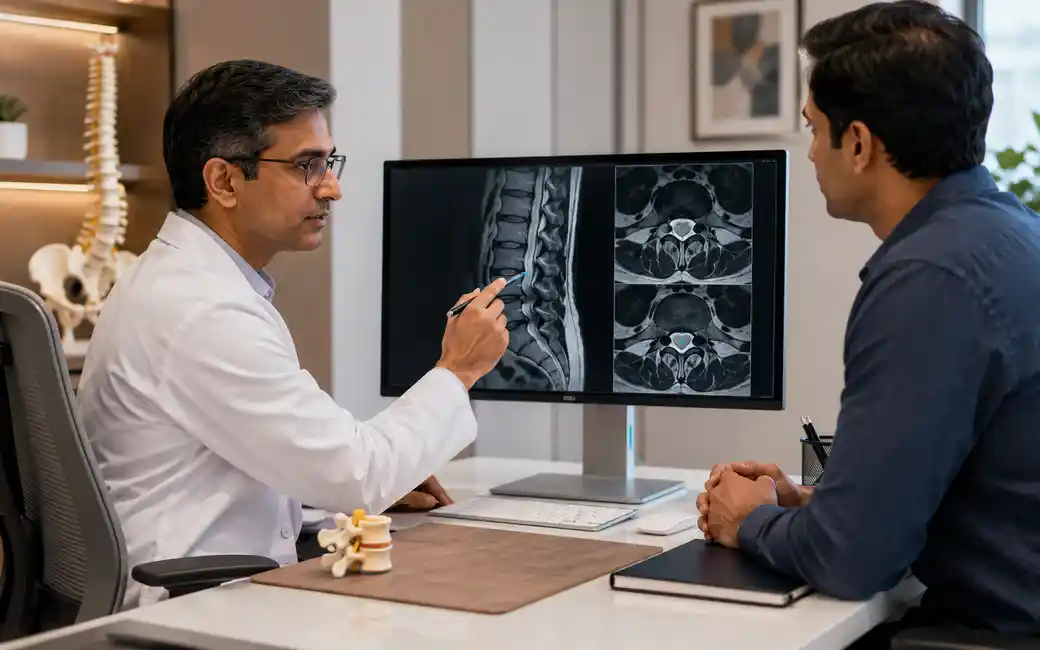
Standing X-rays grade the slip; flexion-extension views assess instability; MRI shows canal and nerve compression.
Stability-Based Plan 🪜
You leave knowing whether your slip is stable, nerve-related, stenosis-related or surgical — and what to do next.
Standing X-rays and MRI answer different questions — both are interpreted with your symptoms.
Spondylolisthesis Treatment Options — Simplest First
Dr. Soma Sundar follows a stepwise approach: protect nerves, improve walking, build stability, and choose surgery only when the slip or nerve compression truly requires it. ✅

Calm Pain & Modify Load 🪑
Medicines + activity correctionShort-term pain relief, avoiding repeated back extension, correcting lifting and sitting patterns, and keeping safe movement going.
- Pain control when suitable
- Avoid painful back arching
- Walking and rest balance
Build Core Stability 🤸
Physiotherapy + home exercisesNeutral-spine core control, glute strengthening, hip mobility and posture retraining reduce repeated stress on the slip.
- Therapist-guided sessions
- Home exercise plan
- Recurrence prevention
Target Nerve Pain 💉
Image-guided injections when suitableSelective nerve root blocks, epidural injections or facet-based injections may help when pain persists despite good conservative care.
- Precise image guidance
- Day-care procedure
- Diagnostic + therapeutic value
Stabilise When Needed 🔬
Surgery for selected cases onlyDecompression with stabilisation/fusion may be advised for progressive weakness, severe stenosis, instability or disabling pain.
- Progressive neurological deficit
- Unstable or worsening slip
- Failed appropriate non-surgical care
Physiotherapy & Exercises for Spondylolisthesis
Non-surgical care is the first choice for many stable slips. The goal is not just flexibility — it is controlled, confident movement without repeatedly stressing the slipped segment. 👇
Back Pain Physiotherapy
Therapist-guided stability training, hip strengthening and safe movement retraining for lower-back control.
🏠Low Back Exercises at Home
Simple daily routines — pelvic tilts, dead bug progressions, glute work and walking guidance.
🪑Posture & Load Correction
Sitting, lifting, sleep and work modifications that reduce repeated stress on the lower back.
📥Exercise Guide Download
A printable low back exercise guide you can keep on your phone or use during physiotherapy sessions.
🩻MRI / X-ray Report Review
Confused by slip grade, pars defect or stenosis wording? Understand what matters before deciding treatment.
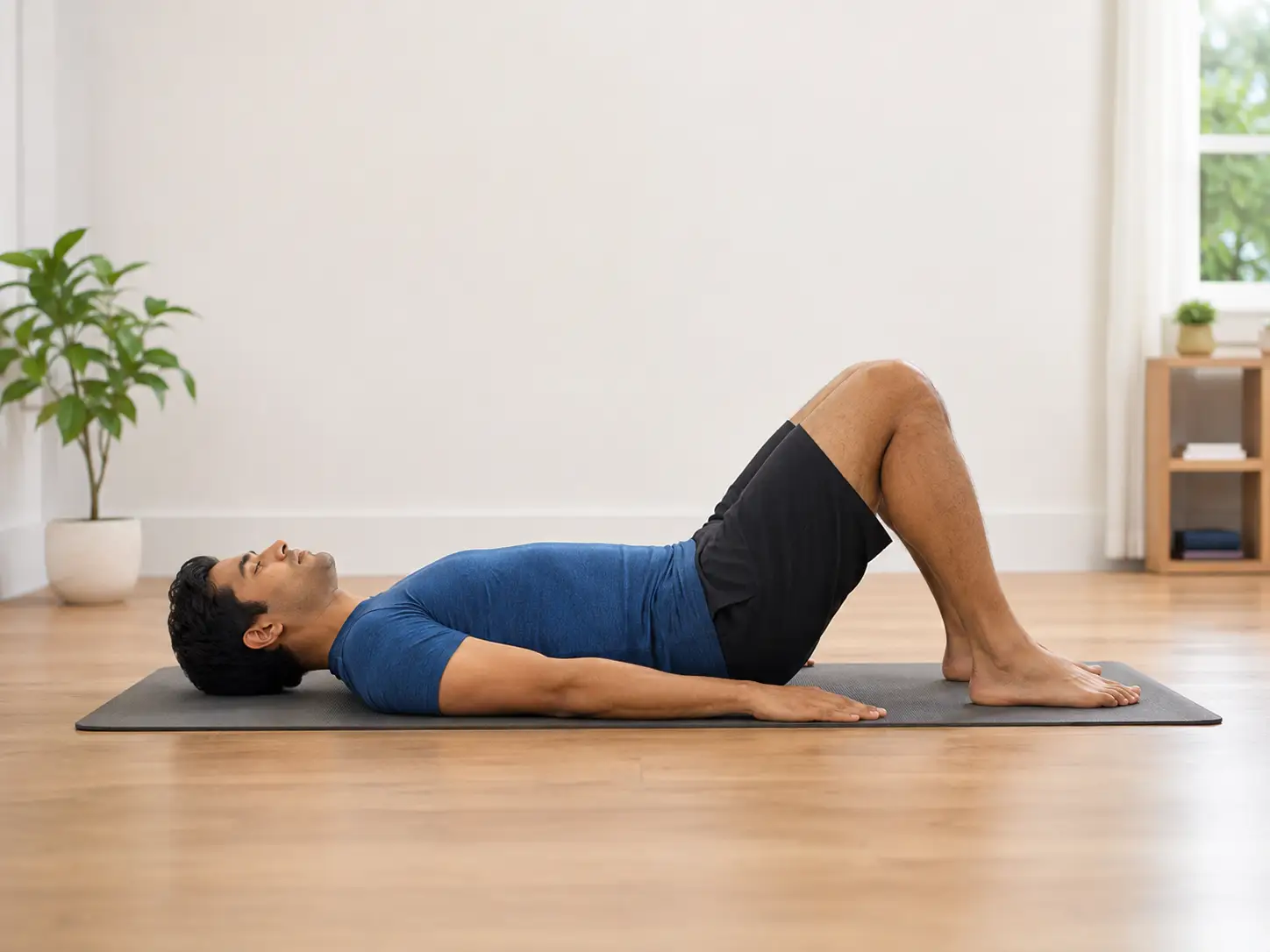 🧘 Pelvic tilts
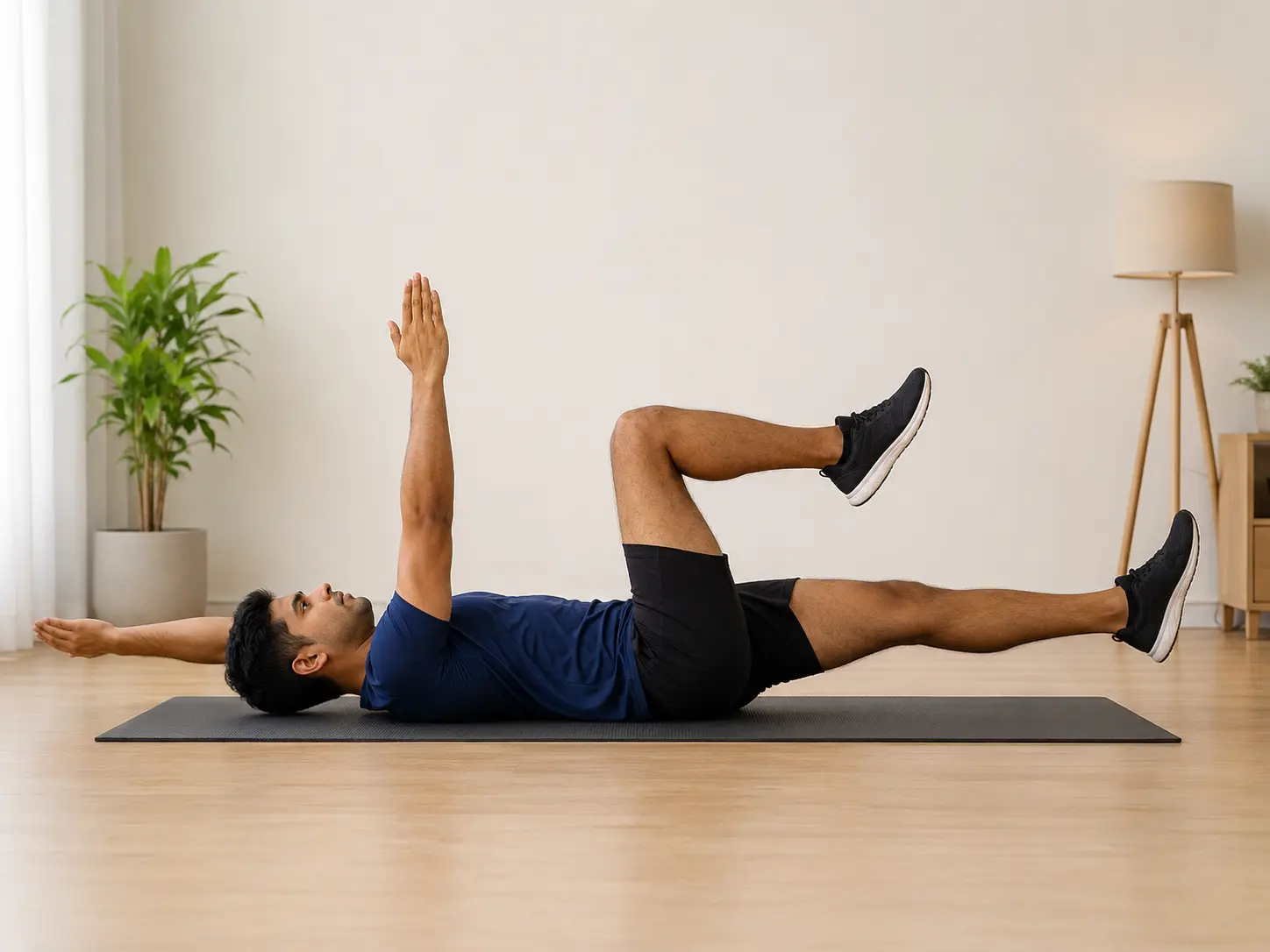 🐞 Dead bug control
 🌉 Glute bridges
 🐕 Bird dog
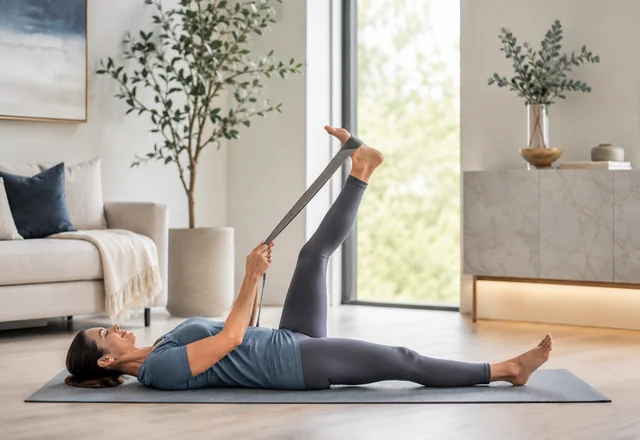 🧵 Hamstring stretch
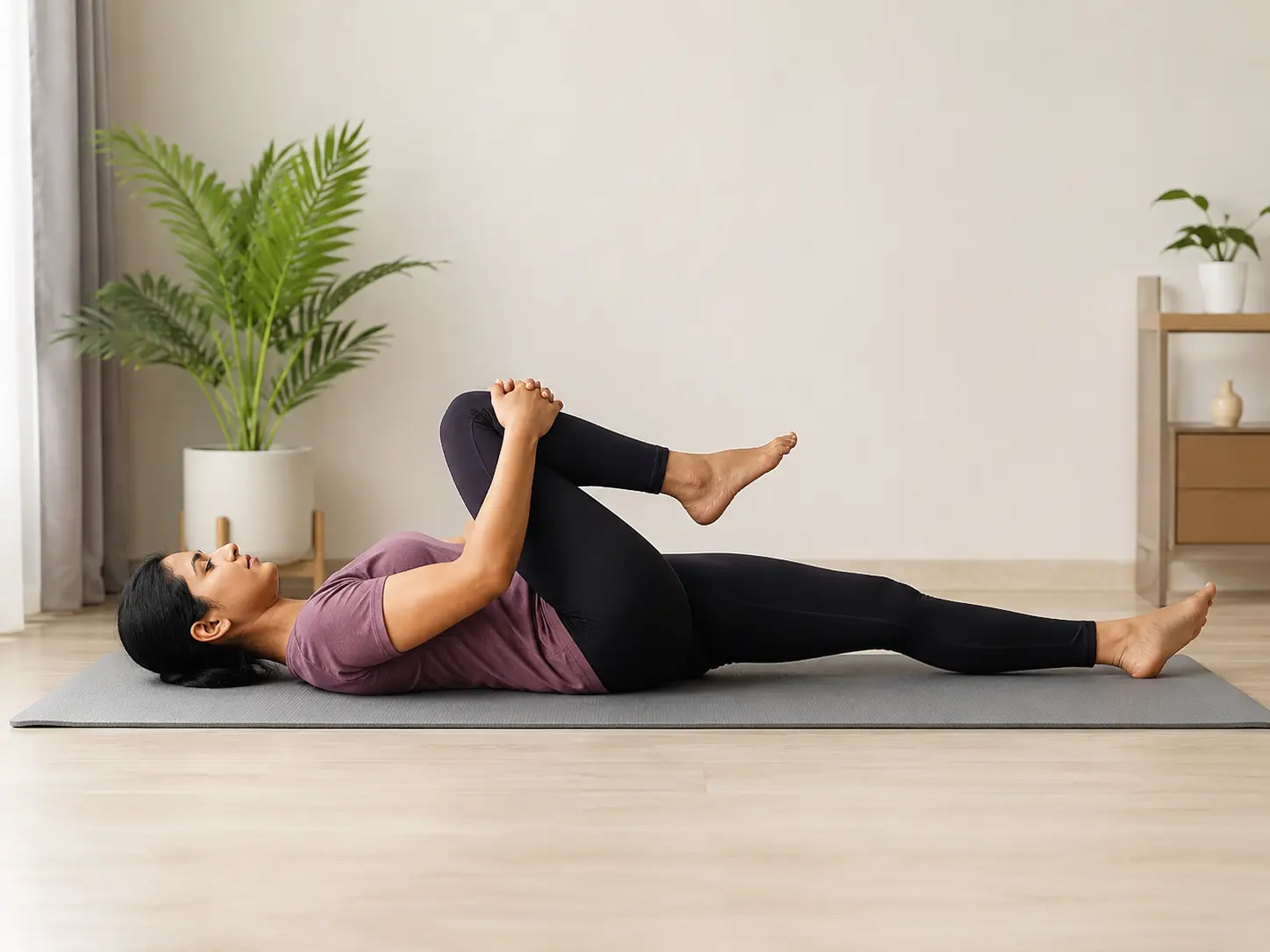 🦵 Knee-to-chest
🏠 Can’t travel for physiotherapy? Home-visit physiotherapy is available across Chennai. Guided sessions at your home for back pain, sciatica and spine rehabilitation.
📞 Physio Home Visits · +91 98403 45335Injection Treatment for Spondylolisthesis
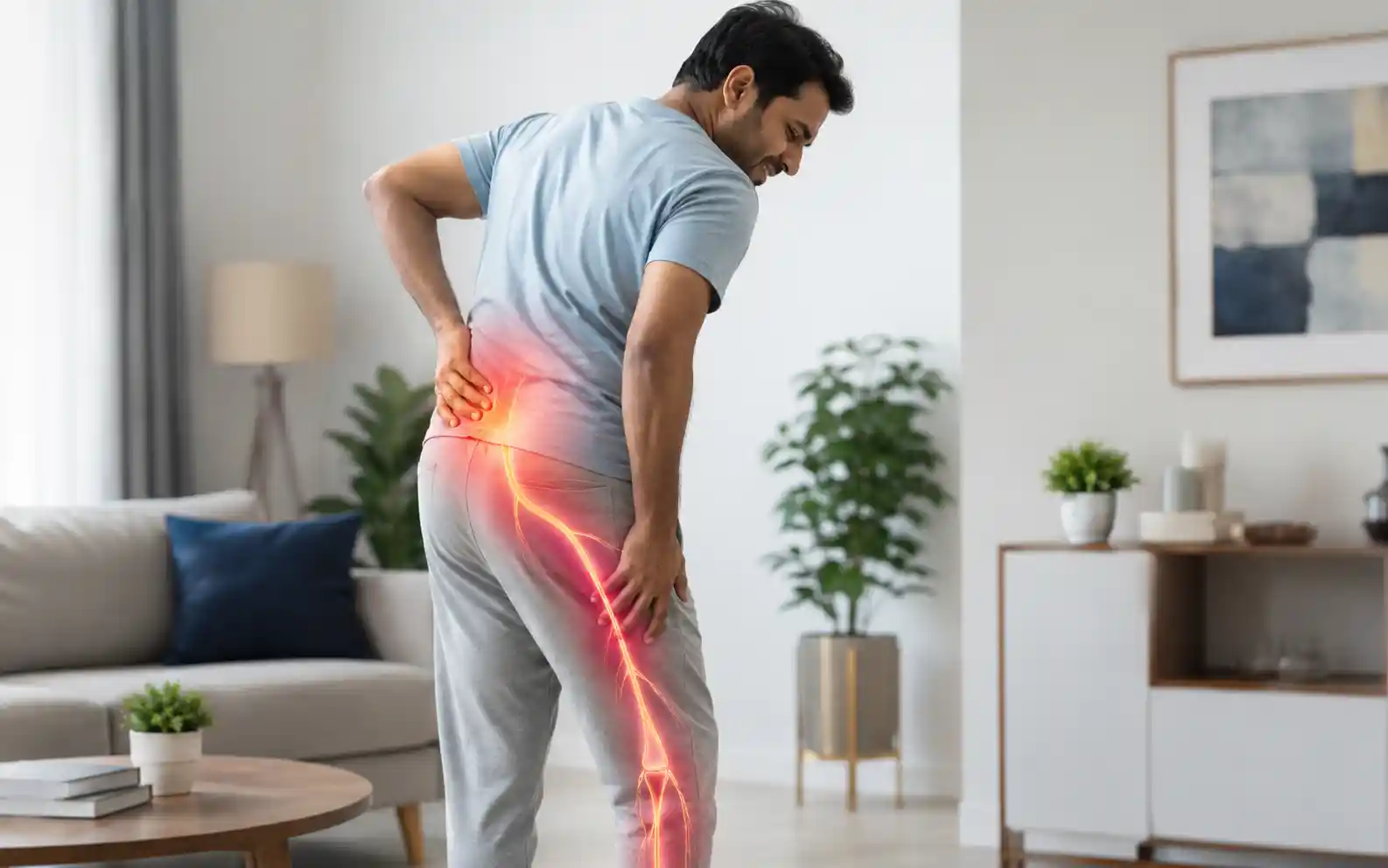
Injections work best when the pain generator is clear — nerve, canal or facet joint.
When spondylolisthesis causes persistent leg pain or back-joint pain despite medicines and physiotherapy, a precisely placed, image-guided injection may calm inflammation and help you walk and exercise better. 🎯
The choice depends on the pain pattern: a selective nerve root block for sciatica-like leg pain, an epidural injection for selected stenosis patterns, or facet-based procedures when the painful joints are the main source. Injections do not “push the bone back”, but they can reduce pain and clarify the next step.
When Is Surgery Needed for Spondylolisthesis?
Surgery is not needed for every spondylolisthesis. It is considered when there is progressive weakness, severe nerve compression, disabling walking limitation, worsening instability, or persistent pain despite a structured non-surgical plan.
The aim is to remove pressure from the nerves and stabilise the slipping segment. Depending on the slip, MRI and alignment, options may include decompression with fusion, TLIF spine surgery or minimally invasive TLIF. The plan is individualised and explained clearly before any decision. 🤝
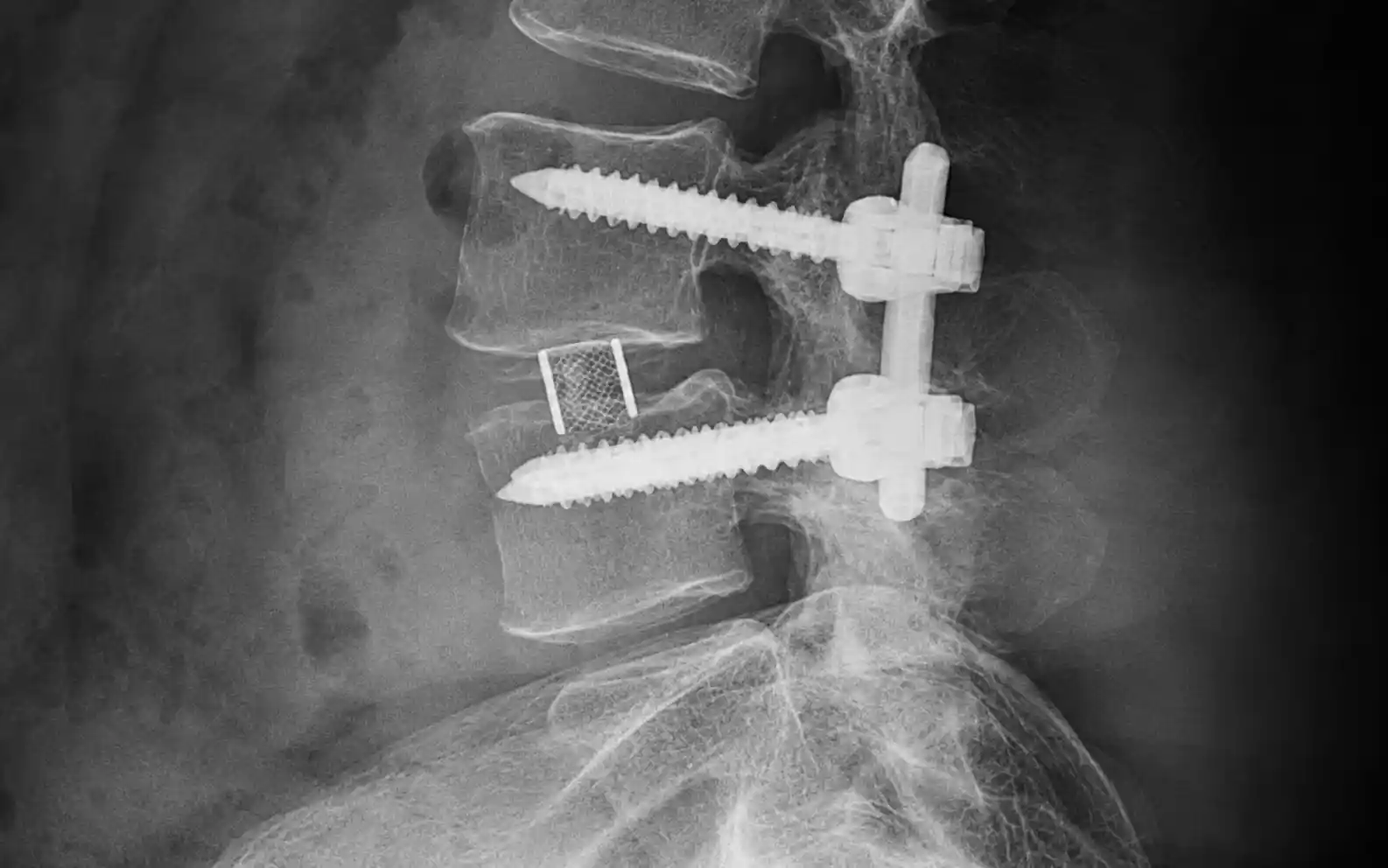
Reserved for clearly selected cases where stability and nerve protection are the priority.
⚖️ Balanced treatment principle
A slip on X-ray does not automatically mean surgery. Good spondylolisthesis care means checking stability, matching MRI with symptoms, starting conservatively when safe, and acting early when weakness, instability or severe nerve compression appears.
Spondylolisthesis — Frequently Asked Questions
What Spondylolisthesis Patients Say
My X-ray said Grade 1 slip and I was terrified. Dr. Soma explained that it was stable and started physiotherapy first. My walking and confidence improved without surgery.
★★★★★I had back pain with leg pain while standing. The doctor showed me how the slip was narrowing a nerve and gave a very clear stepwise plan — injection first, then exercises.
★★★★★The best part was the explanation. Standing X-ray, MRI, instability — everything was shown on screen. I understood why surgery was not required immediately.
★★★★★My mother could walk only a short distance because of spondylolisthesis with stenosis. Her treatment was planned very calmly and her walking improved after the procedure and rehab.
★★★★★I was advised spine fusion elsewhere and came for a second opinion. Dr. Soma explained the pros and cons and started a trial of physio. It was a very balanced consultation.
★★★★★My leg numbness and walking problem were due to a slipped vertebra. Surgery was explained honestly and the recovery plan was practical. I was walking the next day.
★★★★★The home physiotherapy team helped me follow the core exercises correctly. Earlier I was scared to move; now I know what is safe and what to avoid.
★★★★★My son had a pars defect from sports. We got a clear plan — rest from extension movements, gradual strengthening and follow-up X-rays. Very reassuring.
★★★★★I consulted online from Coimbatore with my X-ray and MRI. The doctor explained the slip grade clearly and guided me on what treatment to continue locally.
★★★★★Expert Spine Advice, From Wherever You Are
Can’t travel to Chennai, or want a specialist opinion before deciding your next step? Consult Dr. Soma Sundar over a secure video call — and let your whole family join and ask questions.

-
Consult from anywhere
Connect from home, another city, or abroad — no travel needed for an expert opinion.
-
Reports & MRI — optional
You can share scans in advance on WhatsApp if you have them, or simply talk first. Both work.
-
Clear next steps
Leave the call knowing what your condition is, what to try first, and when a clinic visit is truly needed.
Book a Video Consultation
Message us on WhatsApp with your name and a short note about your problem — our team will confirm a convenient slot.
Especially useful for- Outstation and overseas patients — and their families
- A second opinion before agreeing to spine surgery
- Understanding an MRI or scan report in plain language
- Follow-up reviews after surgery or injections
- Elderly patients who find travelling difficult
📎 Sending scans or MRI in advance is optional — many patients simply describe their problem and share reports later if needed.
Explore SundarSpine
Everything on this site, organised the way patients think — conditions, treatments, physiotherapy, home exercises and free resources.