Cervical Myelopathy Treatment in Chennai Protect the Spinal Cord. Steady the Hands. Keep You Walking.
Cervical myelopathy is pressure on the spinal cord in the neck. It can cause hand clumsiness, buttoning difficulty, walking imbalance and weakness in the arms or legs. Because it involves the spinal cord — not just a nerve — timely, careful assessment matters. Dr. Soma Sundar S offers diagnosis-first care and decompression surgery only when it is clearly needed.

 15+ Years of Experience
Dr. Soma Sundar S
Spine & Orthopaedic Surgeon, Chennai
Kauvery Hospital, Alwarpet
Mon–Sat · 8:30 AM – 5:30 PM Get DirectionsShens Hospital, Ashok Nagar
Mon–Sat · 6:00 PM – 8:30 PM Get DirectionsWhat Is Cervical Myelopathy?
Cervical myelopathy is compression of the spinal cord in the neck. Unlike cervical radiculopathy — which affects a single nerve root — myelopathy affects the cord itself, so symptoms can appear in both hands and both legs.
Early signs are often subtle: fumbling with buttons or coins, dropping objects, clumsy handwriting, or a feeling of unsteadiness while walking. These are easy to dismiss but important to recognise.
The key question is simple: is the spinal cord being pressed, and is it getting worse? Answering that decides whether careful monitoring or timely decompression is the safer path.

Difficulty with buttons, coins or handwriting can be an early sign of spinal cord compression in the neck.
Common Causes of Cervical Myelopathy
Cervical myelopathy usually develops when age-related changes gradually narrow the space around the spinal cord. Tap any cause to learn more.
Cervical Spondylosis
Age-related disc, bone and ligament changes are the most common cause of cord narrowing in the neck.
💿Cervical Disc Bulge
A large or central disc bulge can press directly on the spinal cord, not just a nerve root.
🎯Spinal Nerve Compression
Narrowing of the spinal canal can compress the cord and the nerves passing through it.
⚡Cervical Radiculopathy Overlap
Some patients have both nerve-root and cord symptoms together and need careful separation of the two.
🧠Neck Pain With Warning Signs
Neck stiffness with hand clumsiness or imbalance should always be assessed for cord involvement.
🪑Posture & Long-Term Load
Years of poor posture and screen load can accelerate the wear that narrows the canal.
🦵Foot Drop or Leg Weakness
Cord compression can affect the legs, causing weakness, stiffness or a change in walking.
🩻MRI–Clinical Correlation
MRI confirms cord compression, but examination decides how urgent treatment really is.
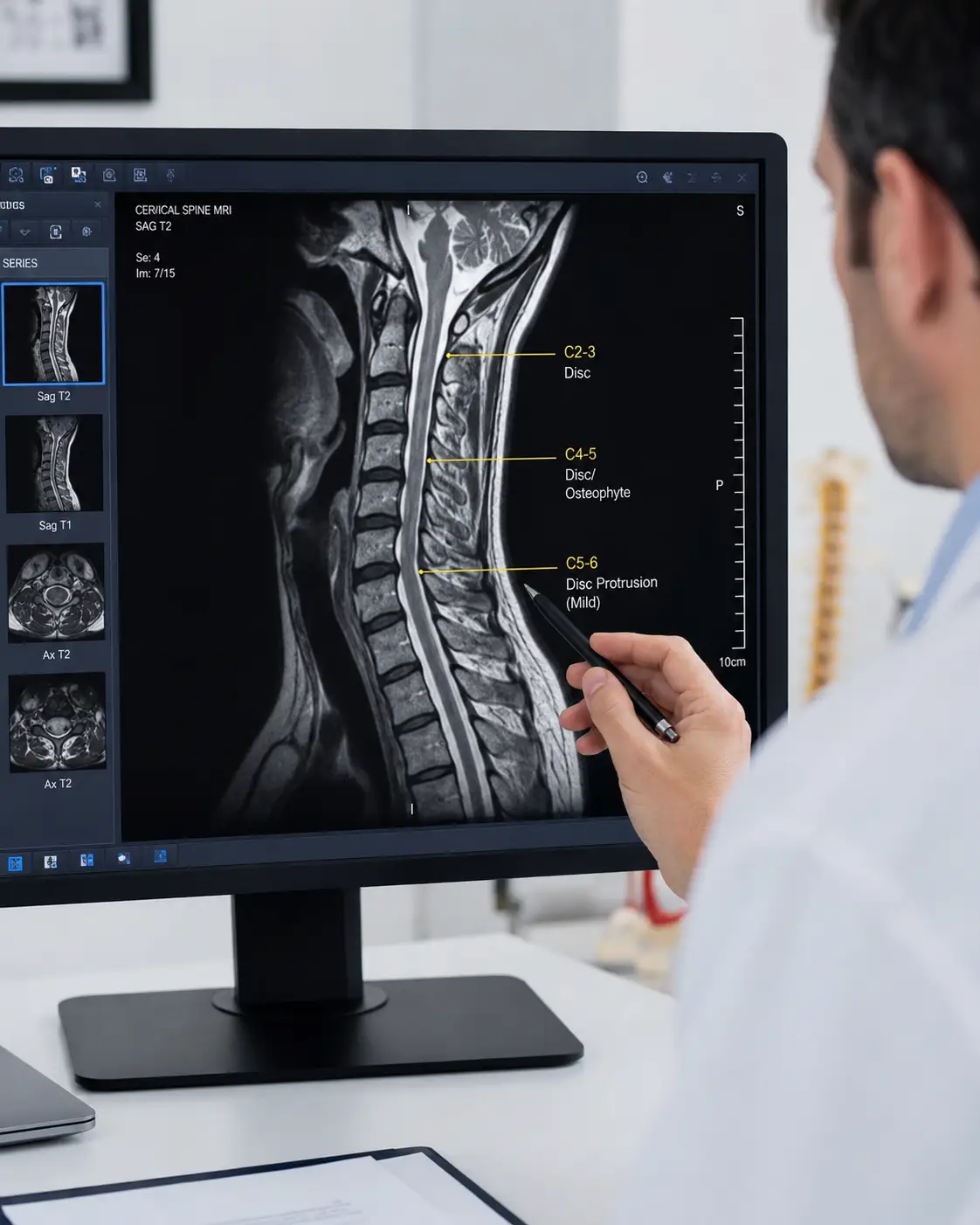
MRI cord compression
MRI shows where and how severely the spinal cord is compressed in the neck.
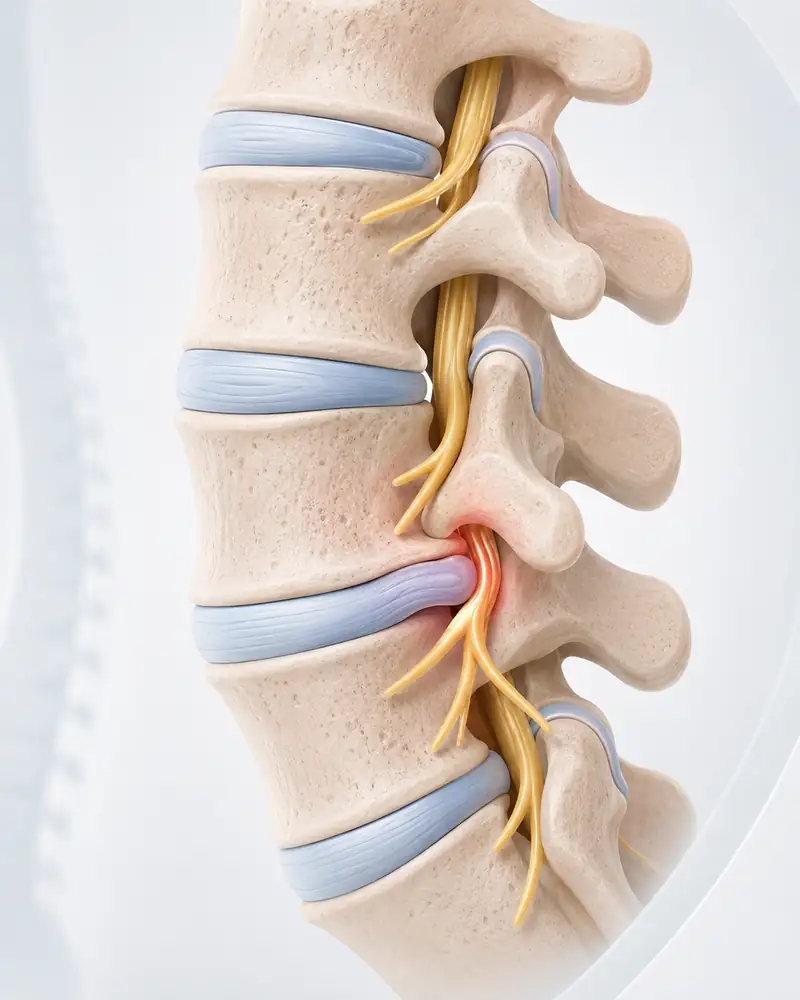
Cord vs nerve
Myelopathy affects the spinal cord itself — a step more serious than single-nerve radiculopathy.

Walking changes
Subtle changes in balance or walking can be an early clue to cord compression.
Symptoms of Cervical Myelopathy
Cervical myelopathy often shows up as loss of fine control rather than severe pain. See which patterns match yours.
Clumsy Hands
Trouble with buttons, coins, keys or handwriting is a classic early sign.
Fine-motor lossWalking Imbalance
Feeling unsteady, wide-based walking or needing support should be assessed early.
Gait changeBoth Hands Affected
Numbness or weakness in both hands together points more to the cord than a single nerve.
Cord patternLeg Stiffness or Weakness
Heaviness, stiffness or weakness in the legs can occur when the cord is involved.
Priority reviewElectric Shock on Bending
A shock-like feeling down the spine when bending the neck forward needs evaluation.
Warning signBladder Changes
New urinary urgency or hesitancy with the above signs needs urgent assessment.
Urgent flagWhen to See a Spine Specialist for Cervical Myelopathy
Because cervical myelopathy involves the spinal cord, early clarity protects long-term hand and walking function. See a specialist if any of these apply:
Dropping objects or clumsy hands
Unsteady walking or loss of balance
Numbness or weakness in both hands
Leg stiffness, heaviness or weakness
Shock-like sensation when bending the neck
New bladder urgency with the above signs
Cord symptoms deserve early review
Hand clumsiness, imbalance or progressive weakness suggest the spinal cord may be under pressure. Early assessment protects function. 📞 Call +91 90809 68066 for a priority appointment.
Why Chennai Trusts Dr. Soma Sundar
Experienced hands, international training, and a philosophy that always starts with the least invasive treatment that can genuinely help you. View doctor profile.

15+ Years of Experience
Over fifteen years dedicated to spine and orthopaedic care, from everyday back pain to complex spinal conditions.
Internationally Trained
Fellowship training in Germany, Switzerland and the UK — FESS, FMISS, FAOS and the AO Spine Fellowship.
4.9 · 500+ Google Reviews
Consistently rated 4.9 by more than five hundred patients across both Chennai clinics.
FRCS & Gold Medallist
FRCS (Glasgow, UK) certified, MS Orthopaedics Gold Medallist, DNB and MNAMS qualified.
Non-Surgical First
Advanced pain management, injections and physiotherapy are always explored before surgery is considered.
Two Chennai Locations
Kauvery Hospital, Alwarpet (mornings) and Shens Hospital, Ashok Nagar (evenings) — six days a week.
How Cervical Myelopathy Is Diagnosed
Diagnosis combines your symptoms, a careful neurological examination and an MRI — because the examination decides urgency, not the scan alone.
Symptom & Function Review
How your hands, balance and walking have changed over weeks or months is more telling than pain alone.
Neurological Examination
Reflexes, coordination, hand function, walking and special cord signs help judge how much the cord is affected.
MRI of the Cervical Spine
MRI shows cord compression, canal narrowing and any signal change within the spinal cord itself.
Clear, Honest Plan
You leave knowing whether careful monitoring, physiotherapy or timely decompression surgery is the safest route.

MRI confirms cord compression, but the examination decides how quickly treatment is needed.
Cervical Myelopathy Treatment Options
Treatment depends on how much the cord is compressed and whether symptoms are progressing. Mild, stable cases can be watched closely; progressive cord compression is usually treated with timely decompression.
Watch Closely & Protect
Monitoring for mild, stable casesMild, non-progressive myelopathy can be monitored with regular review, activity advice and neck protection.
- Track hand function and balance
- Avoid high-risk neck strain
- Review promptly if symptoms change

Support Strength & Balance
Guided physiotherapy + safetyPhysiotherapy focuses on safe strengthening, balance training and fall prevention while the cord is monitored.
- Balance and gait training
- Safe hand and grip work
- Home safety and fall prevention

Decompress the Cord
Surgery for progressive casesWhen cord compression is significant or worsening, timely decompression aims to stop progression and protect function.
- Progressive hand or walking difficulty
- Significant cord compression on MRI
- Clear cord signs on examination
Non-Surgical Treatment for Cervical Myelopathy
Non-surgical care has an important role for mild, stable myelopathy and for supporting patients before or after surgery. It is chosen carefully based on how much the cord is affected.
Close Monitoring
Regular review of hand function, balance and MRI to catch any progression early.
🤸Physiotherapy
Balance training, safe strengthening and fall prevention guided by a therapist.
🏠Home Safety
Simple changes at home reduce fall risk while balance is affected.
🪑Posture & Neck Care
Protecting the neck from high-risk strain while the canal is narrowed.
🩻Report Review
MRI and examination findings are matched before deciding on surgery.
🏠 Can’t travel for physiotherapy? Home-visit physiotherapy is available across Chennai. Guided sessions at your home for neck, back and joint rehabilitation.
📞 Physio Home Visits · +91 98403 45335Why Injections Are Not the Main Answer in Myelopathy

In true cord compression, the priority is relieving pressure on the cord — not masking symptoms.
In cervical radiculopathy, targeted injections can calm an irritated nerve root. In cervical myelopathy, the problem is pressure on the spinal cord itself — so injections play little role in changing the natural course.
If the cord is significantly compressed and symptoms are progressing, the safer priority is decompression, not a temporary injection. Where nerve-root pain coexists, injections may still help that specific component after careful assessment.
When Surgery Is Needed for Cervical Myelopathy
Surgery is recommended when the spinal cord is significantly compressed and symptoms — hand clumsiness, imbalance or weakness — are progressing. The aim is to decompress the cord and stop further decline.
Timing matters more here than in most spine conditions: decompressing before major damage occurs gives the best chance of keeping hand and walking function. The approach is chosen from the MRI, the level involved and your examination.
For progressive cord compression, timely decompression offers the best chance of protecting function.
Balanced treatment principle
Not every myelopathy needs surgery, and not every case can safely wait. Good care means watching the mild ones closely and acting in good time for the progressive ones.
Frequently Asked Questions
What Patients Say
I kept dropping things and my writing had changed. It was explained clearly that this was a spinal cord issue, and we caught it in time.
★★★★★My balance while walking was slipping. The examination and MRI review helped me understand why timing mattered, without any pressure.
★★★★★I was scared about neck surgery. The honest discussion about monitoring versus decompression gave me real confidence in the plan.
★★★★★The video consultation let my son abroad understand my MRI and the decision together with us. Very practical.
★★★★★Expert Spine Advice, From Wherever You Are
Can’t travel to Chennai, or want a specialist opinion before deciding your next step? Consult Dr. Soma Sundar over a secure video call — and let your whole family join and ask questions.

-
Consult from anywhere
Connect from home, another city, or abroad — no travel needed for an expert opinion.
-
Reports & MRI — optional
You can share scans in advance on WhatsApp if you have them, or simply talk first. Both work.
-
Clear next steps
Leave the call knowing what your condition is, what to try first, and when a clinic visit is truly needed.
Book a Video Consultation
Message us on WhatsApp with your name and a short note about your problem — our team will confirm a convenient slot.
Especially useful for- Outstation and overseas patients — and their families
- A second opinion before agreeing to spine surgery
- Understanding an MRI or scan report in plain language
- Follow-up reviews after surgery or injections
- Elderly patients who find travelling difficult
📎 Sending scans or MRI in advance is optional — many patients simply describe their problem and share reports later if needed.
Explore SundarSpine
Everything on this site, organised the way patients think — conditions, treatments, physiotherapy, home exercises and free resources.