Vertigo Exercises You Can Do Safely at Home
If the room spins when you turn in bed, look up, bend down or change position, you may have positional vertigo such as BPPV. This guide explains safe vertigo exercises, Epley maneuver positions, gaze stabilization and balance drills — with clear safety warnings from Dr. Soma Sundar S, Chennai.

Vertigo exercises should be gentle, guided and safe — especially when dizziness affects balance or walking confidence.
The Right Head Movement Can Help Positional Vertigo
BPPV, or benign paroxysmal positional vertigo, often causes brief spinning dizziness with head position changes. Repositioning maneuvers such as the Epley maneuver may help move the inner-ear particles that trigger symptoms.
But not all dizziness is BPPV. Dizziness can also come from blood pressure changes, migraine, medication side effects, inner-ear inflammation, neurological problems, neck stiffness or balance disorders. Use this page as a safe starter guide — and get assessed if symptoms are severe, unusual or persistent.
Identify the pattern
Brief spinning with turning in bed or looking up often suggests positional vertigo, but assessment is important if symptoms are unclear.
Use safe positions
Do maneuvers on a bed or mat, move slowly, and keep someone nearby if dizziness is strong.
Progress to balance
Once spinning settles, gaze and balance exercises can help restore confidence in daily movement.

A personalised vertigo plan depends on the cause — BPPV, vestibular imbalance, neck-related dizziness or another medical condition.
Six Safety Rules for Vertigo Exercises
Vertigo exercises can trigger dizziness temporarily. That is why your setup, support and warning-sign awareness matter.
Use a safe surface
Do lying maneuvers on a bed or mat. Keep the floor area clear and avoid sharp furniture nearby.
Have support nearby
For the first few sessions, ask someone to stay nearby, especially if spinning is intense.
Move slowly
Change positions gently. Pause after each step and allow symptoms to settle before moving again.
Avoid driving immediately
If exercises provoke dizziness, avoid driving, climbing ladders or risky activity until fully steady.
Watch for neurological symptoms
Weakness, double vision, slurred speech, severe headache or difficulty walking is not routine BPPV.
Get assessed if unsure
Do not keep repeating maneuvers if the diagnosis, affected side or cause of dizziness is unclear.
8 Vertigo Exercises, Step by Step
Start with BPPV repositioning positions only if symptoms are typical and safe. Then progress to gaze and balance drills once spinning improves.
BPPV Repositioning & Habituation
These movements may provoke vertigo briefly. Pause until symptoms settle before moving to the next step.
Epley Maneuver — Starting Seated Position

The affected side is usually the side that triggers spinning during testing or turning in bed.
If you do not know the affected side, get assessed before repeatedly doing maneuvers on both sides.
Epley Maneuver — Head-Turned Lying Position
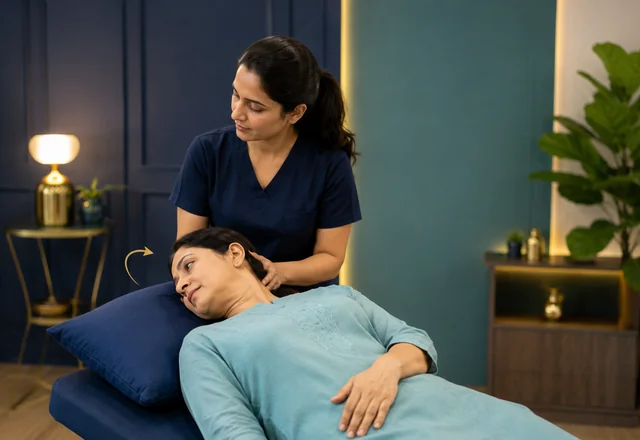
Temporary spinning is expected in BPPV, but it should settle within a short time.
Avoid this if neck extension is painful, unsafe or restricted. Ask for supervised guidance.
Epley Maneuver — Side Roll Position
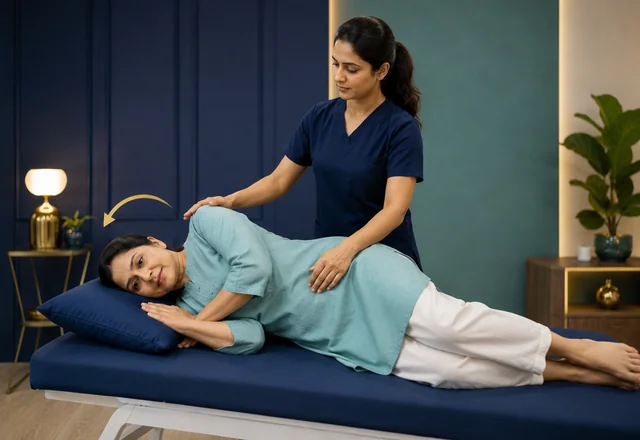
Sitting up slowly reduces the chance of feeling suddenly unsteady.
Do not stand immediately after the maneuver. Wait until you feel steady.
Brandt-Daroff Exercise
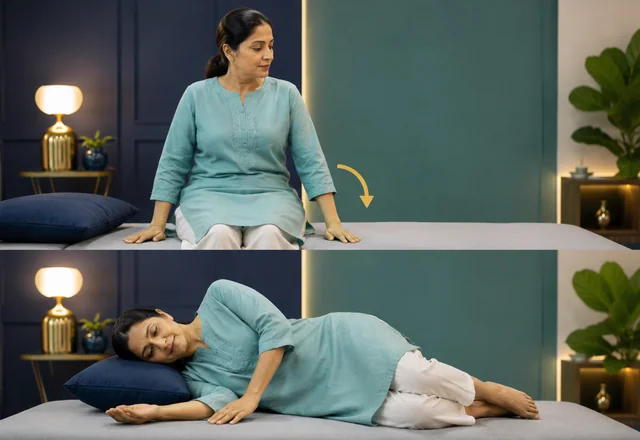
This may be used when repeated positional dizziness persists or when advised as vestibular habituation.
Stop if vomiting, severe spinning, faintness or neurological symptoms occur.
Gaze Stabilization & Balance Confidence
Use these after severe spinning settles, or when guided as part of vestibular rehabilitation.
Gaze Stabilization with Target Card
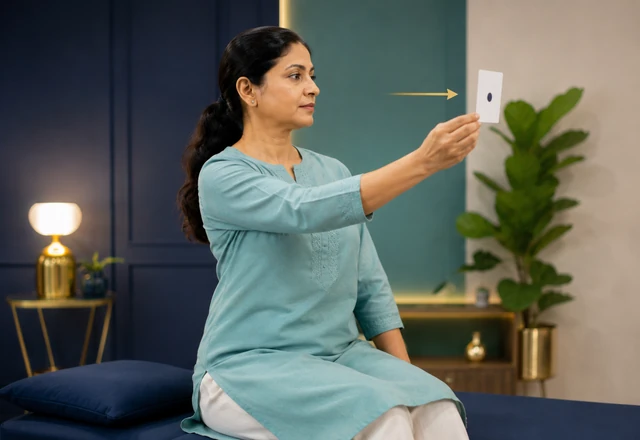
This helps train the eye and balance system to work together.
Mild dizziness is acceptable; strong dizziness means reduce speed or stop.
Slow Seated Head Turns

This is a gentle way to rebuild tolerance to normal head movement.
Do not do this while standing if you feel unsteady.
Supported Balance Standing
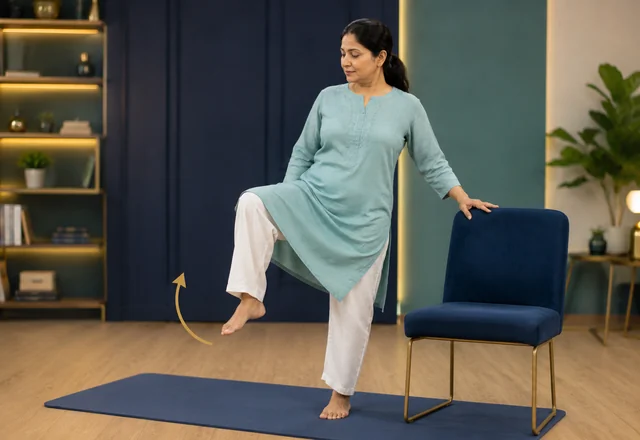
Balance training should build confidence, not create fear.
Do not close your eyes. Avoid wet floors, stairs and loose carpets.
Safe Walking Balance Drill
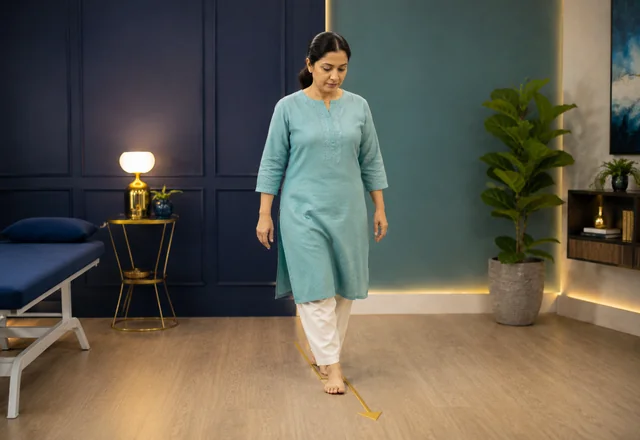
This is a progression drill after seated and supported standing exercises feel safe.
Avoid this if you have frequent falls, severe spinning or poor balance unless supervised.
Vertigo Safety Rule
After any vertigo exercise, sit quietly until you feel fully steady. Do not rush to stand, walk, drive or climb stairs immediately after a maneuver.
Your Vertigo Exercise Flow
Use this as a simple structure. The exact plan depends on whether your dizziness is BPPV, vestibular imbalance, neck-related dizziness or another cause.
How Often Should You Practise?
Avoid aggressive repetition. Vertigo exercises work best when matched to the diagnosis and progressed safely.
For BPPV Episodes
Epley maneuver may be used when the affected side is known and symptoms are typical. Get assessed if unsure.
Daily Short Practice
Gaze stabilization and seated head turns can be done gently for short periods if tolerated.
2–3× a Week
Balance and walking drills should be done near support, only when severe spinning has settled.
What Can Cause Vertigo or Dizziness?
Vertigo is a symptom, not a diagnosis. BPPV is common, but dizziness can also come from neck, vestibular, neurological, blood pressure or medication-related causes.
Neck Pain
Some patients feel dizziness along with neck stiffness, poor posture or muscle spasm.
Learn more →Cervical Spondylosis
Neck degeneration can coexist with dizziness, though true spinning vertigo often needs vestibular assessment.
Learn more →Neck Exercises
Gentle neck mobility and posture work may help selected patients with neck-related discomfort.
Learn more →Physiotherapy
Structured vestibular and balance rehabilitation can help persistent dizziness and unsteadiness.
Learn more →Cervical Myelopathy
Walking imbalance, hand clumsiness and neurological signs need careful specialist assessment.
Learn more →Doctor Consultation
Useful if dizziness is recurrent, unusual, severe, associated with falls or not improving.
Book appointment →When to Stop and See a Doctor Urgently
Most BPPV is not dangerous, but some dizziness symptoms can signal a serious medical problem. Do not self-treat these with home exercises.
Neurological symptoms
Weakness, numbness, facial droop, double vision, slurred speech or confusion needs urgent care.
New severe headache
A sudden, severe or unusual headache with dizziness should not be treated as simple vertigo.
Unable to walk straight
Severe imbalance, repeated falls or inability to stand safely needs assessment.
Chest pain or fainting
Dizziness with chest pain, palpitations, breathlessness or fainting may be cardiovascular.
Seek urgent medical care if you have:
New severe headache, double vision, slurred speech, facial droop, limb weakness, numbness, confusion, fainting, chest pain, fever, recent head injury, inability to walk, or rapidly worsening dizziness. These are not routine home-exercise situations.
If your dizziness is associated with neck pain, spine symptoms, falls or walking imbalance, a specialist review can help decide whether you need vestibular rehabilitation, neck care, imaging, ENT review or neurological evaluation.
Why Choose Dr. Soma Sundar S?
Dizziness and vertigo can overlap with neck pain, balance difficulty, falls and neurological symptoms. Dr. Soma Sundar S helps patients understand whether symptoms are likely vestibular, neck-related, spine-related or need referral for ENT or neurology care.
Internationally Trained Orthopaedic Specialist
MBBS, MS (Ortho), FRCS (Tr & Orth) UK, FISS, FESS (Germany) and FMISS (Switzerland).
Neck, Spine and Balance Assessment
Useful when dizziness occurs with neck pain, walking imbalance, falls or neurological concerns.
Conservative and Rehab-Focused Care
Clear guidance on exercises, physiotherapy, safety precautions and when specialist referral is needed.
Trusted Across Chennai
A 4.9★ rating from 410+ verified Google reviews, built on consistent, honest results over 14+ years.

Vertigo Exercises — Your Questions Answered
Are vertigo exercises safe to do at home?
What is the best exercise for BPPV?
Can vertigo exercises make dizziness worse?
Should I do Epley maneuver on both sides?
Can I do vertigo exercises alone?
When should I avoid home vertigo exercises?
Can neck problems cause dizziness?
How long does BPPV take to improve?
Can vertigo exercises help balance?
Do I need a scan for vertigo?
Who can guide vertigo exercises in Chennai?
When should I book a consultation?
How Guided Exercises Helped Our Patients
I used to feel the room spinning when turning in bed. The explanation and safe step-by-step approach helped me understand what was happening.
★★★★★I was worried because dizziness made me afraid to walk. The balance exercises were gentle and the warning signs were clearly explained.
★★★★★My dizziness was happening along with neck pain. The consultation helped me know what exercises were safe and when to get further evaluation.
★★★★★Vertigo Home Exercise Guide
Download the complete Vertigo Home Exercise Guide as a printable PDF — Epley positions, Brandt-Daroff exercise, gaze stabilization, balance drills and warning signs in one simple page. No sign-up required.
Video Consultation Available
Not sure whether your dizziness is BPPV, neck-related dizziness, balance weakness or something more serious? Dr. Soma Sundar S offers video consultations to review your symptoms, movement triggers and safety concerns.
You can share previous reports in advance and receive a clear plan — including safe exercises, whether you need physiotherapy, and when ENT or neurology referral is appropriate.

Vertigo & Balance Learning Hub
Related exercise guides and condition pages that can help patients understand dizziness, balance difficulty and neck-related symptoms better.