ACL Injury Treatment in ChennaiACL tear, knee instability, sports injury and return-to-sport care
An ACL injury can make the knee feel unstable, swollen and unreliable — especially during running, turning, stairs, gym or sports. The right plan depends on whether the ACL is stretched, partially torn or completely torn, and whether there is a meniscus or cartilage injury too.
📞 Call Us Now
💬 WhatsApp
🩺 Treatment Options
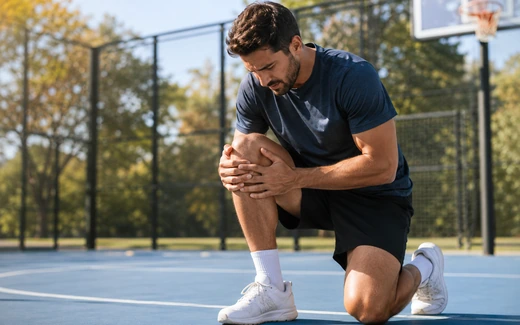
Create image: acl-tear-sports-injury.webpActive adult with pivot knee injury, premium and non-scary.
ACL injuries are common after twisting, pivoting or sudden direction-change movements.
Dr. Soma Sundar S
MBBS, MS (Ortho), DNB (Ortho), FRCS (UK), FISS (Spine Surgery), FESS (Germany), FMISS (Switzerland), FAOS (Nottingham, UK)
🎓 AO Spine Fellowship (Nottingham, UK)
🏅 Gold Medalist
💉 Advanced Pain Management Specialist
🔬 Minimally Invasive Specialist
Dr. Soma Sundar treats ACL injuries with a stability-first approach — identifying whether the knee can recover with bracing and rehabilitation, or whether ACL reconstruction is needed for safe return to work, gym and sport.
📞 Call Clinic
💬 WhatsApp

4.9★Google Rating
🏥Kauvery Hospital, Alwarpet🕗 Mon – Sat | 8:30 AM – 5:00 PM📍 Get Directions
🏥Shens Hospital, Ashok Nagar🕔 Mon – Sat | 5:30 PM – 8:00 PM📍 Get Directions
💡 Quick Answer: What Is an ACL Injury?
An ACL injury is damage to the anterior cruciate ligament — the main ligament that controls forward movement and rotational stability of the knee. It usually happens during sudden twisting, pivoting, landing awkwardly or sports injuries. Treatment may include bracing, physiotherapy or ACL reconstruction depending on the tear severity, instability and activity goals.
🦵 ACL Injury Is Mainly a Knee Stability Problem
The ACL is one of the key stabilising ligaments inside the knee. It prevents the shin bone from sliding forward and controls twisting movements during running, jumping and sudden direction changes.
When the ACL is torn, the knee may not simply be “painful” — it may feel unreliable. Patients often describe the knee giving way during stairs, turning, uneven ground, gym workouts or sports. This is why ACL treatment focuses on restoring stability and confidence, not only reducing pain.
ACL injuries may occur alone, but they commonly come with meniscus tears, knee swelling, cartilage bruising or other knee ligament injuries.
🦵 Knee Pain🔗 Knee Ligament Injury🧩 Meniscus Tear
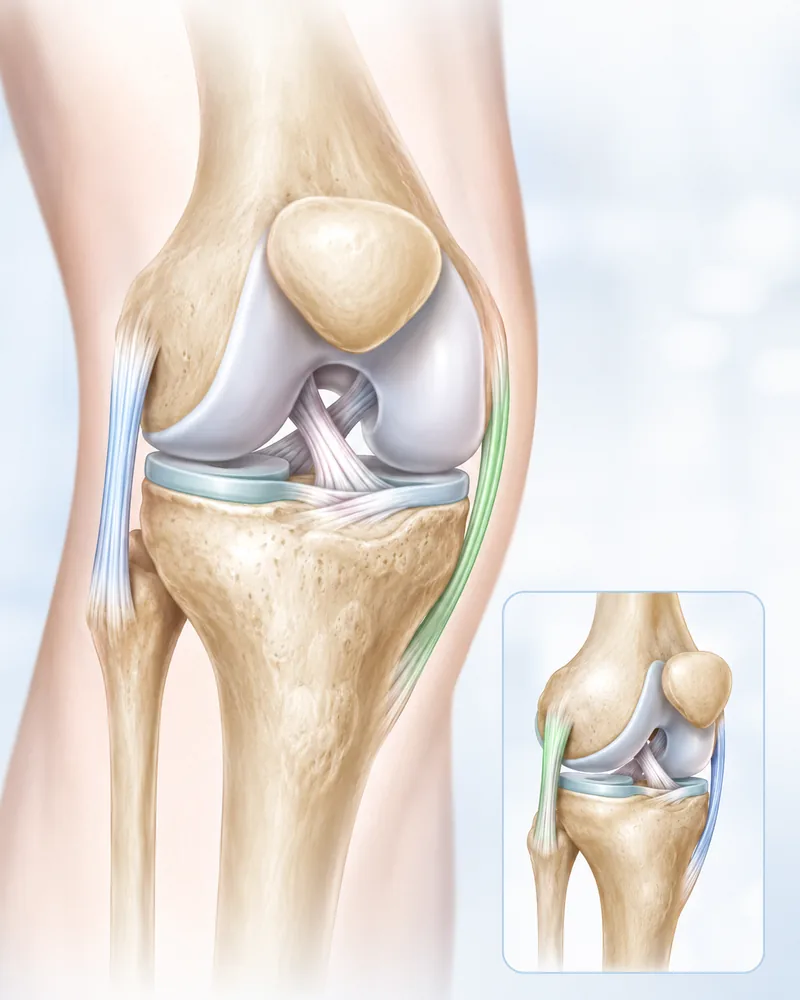
Create image: mcl-pcl-ligament-diagram.webpClean knee ligament diagram showing ACL, PCL, MCL and LCL.
The ACL is a central ligament that protects the knee during twisting and pivoting.
👀 ACL Injury Symptoms and Patterns
The classic story is a twisting injury with a pop, swelling and inability to continue sport. But some patients present later with repeated giving way rather than severe pain.
💥 Pop or snap during injury
Many patients feel or hear a pop during a pivot, jump landing or sudden twist.
💧 Rapid knee swelling
Swelling within a few hours suggests bleeding inside the knee and should be evaluated.
🔁 Giving way
The knee may buckle during turning, uneven ground, stairs, running or sports.
🏃 Unable to continue sport
Many ACL injuries stop the player immediately or make them unable to return safely.
🔒 Locking or catching
Mechanical locking can suggest an associated meniscus tear that may need urgent review.
😟 Loss of confidence
Patients may avoid sports, gym, running or even fast walking because the knee feels unsafe.
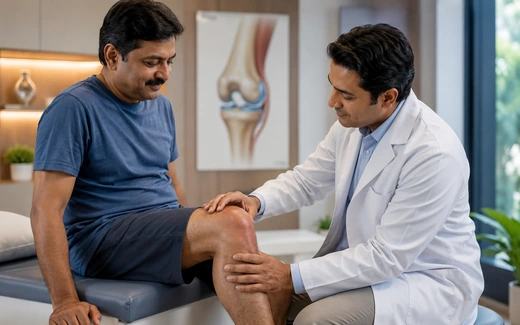 Create image: knee-swelling-examination.webpDoctor gently examining swollen knee.
Swelling after injury
Rapid swelling after a twist or pivot injury is a key reason to check for ACL tear and associated injuries.
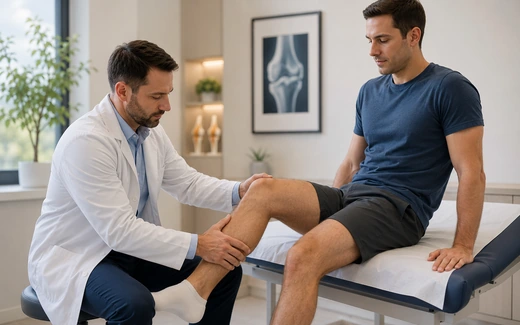 Create image: knee-ligament-clinical-test.webpDoctor performing gentle ligament stability test.
Instability testing
Clinical tests help assess ACL laxity and whether the knee is functionally unstable.
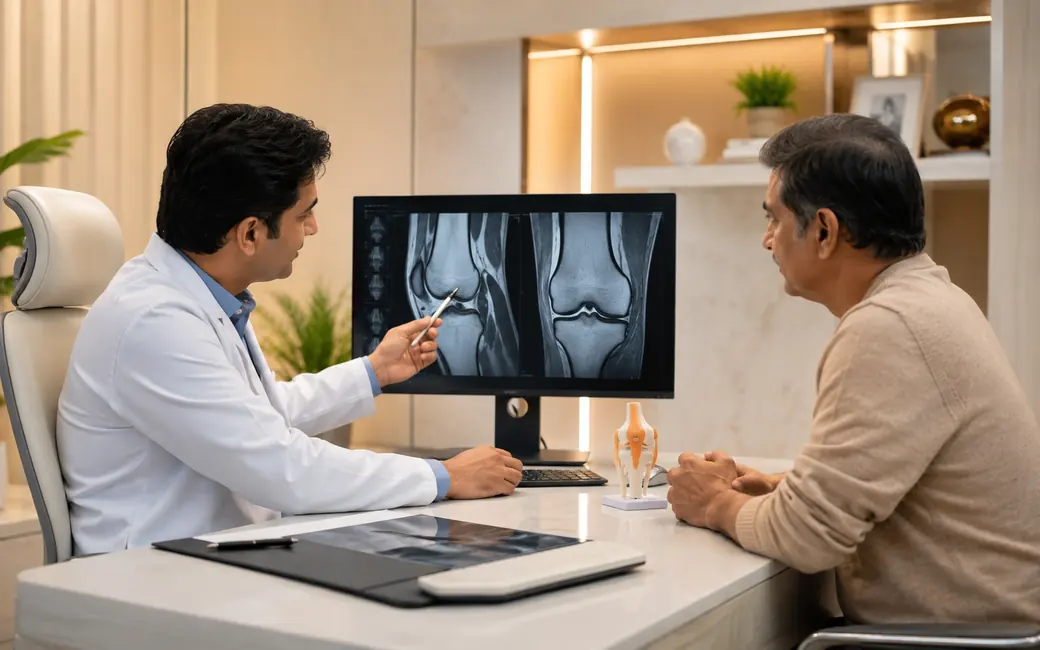 Create image: knee-xray-mri-review.webpSpecialist reviewing knee X-ray/MRI with patient.
MRI review
MRI confirms ACL tear severity and checks for meniscus, cartilage and bone bruise injuries.
🏃 Common Causes of ACL Injury
ACL injuries are common in sports and fitness activities, but they can also happen from a simple awkward twist. The mechanism gives clues about associated injuries.
🔁 Sudden direction change
Football, badminton, basketball and tennis movements can stress the ACL during fast cutting or pivoting.
🦘 Awkward landing
Landing from a jump with the knee collapsing inward can cause non-contact ACL tears.
🌀 Twisting with foot planted
The foot stays fixed while the body rotates, producing high rotational stress inside the knee.
💥 Sports collision
Direct impact to the knee or body can injure the ACL along with MCL, meniscus or cartilage.
🏋️ Gym and squat injury
Poor landing mechanics, heavy loaded twisting or fatigue can trigger knee instability injuries.
⏳ Untreated earlier injury
Repeated giving way after an old ACL tear can damage the meniscus and cartilage over time.
🚩 ACL Injury Red Flags: Get Checked Early
Some knee injuries should not be ignored or treated with only rest and painkillers.
⚠️
Large swelling within hours after injury, especially after a pop or twist.
⚠️
Knee repeatedly giving way during walking, stairs, running or turning.
⚠️
Locked knee, inability to fully straighten, severe pain or inability to bear weight.
📌 Important
Repeated instability after ACL injury can increase the risk of meniscus and cartilage damage. Early assessment helps decide whether rehabilitation is enough or reconstruction should be considered.
🩻 How ACL Injury Is Diagnosed
MRI is useful, but the decision is not based on MRI alone. The key question is whether your knee is stable enough for your life, work and sport goals.
1
👂 Injury story
Twist, pop, swelling, ability to continue sport, and later giving-way episodes are noted.
2
🩺 Ligament examination
Lachman, pivot-shift and other stability tests assess ACL laxity and functional instability.
3
🩻 X-ray and MRI
X-ray checks fractures and alignment. MRI confirms ACL tear and detects meniscus, cartilage or bone bruise injuries.
4
🎯 Activity-based plan
Treatment is matched to your age, sport level, instability, work needs and associated injuries.
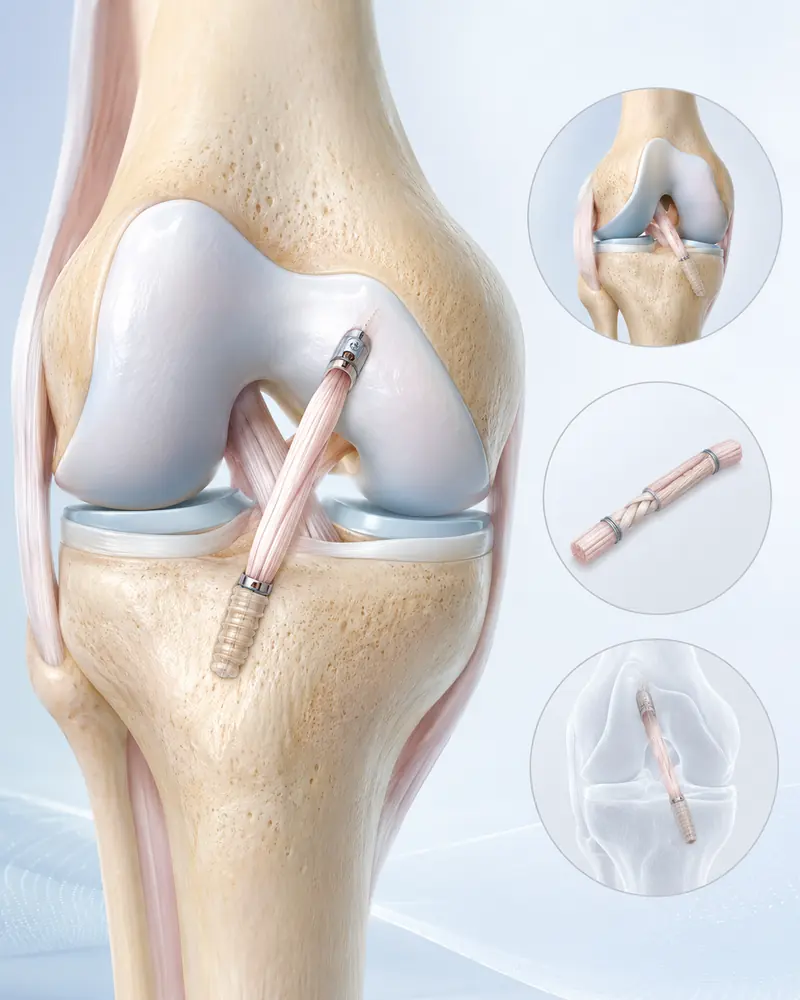
Create image: acl-reconstruction-diagram.webpACL graft reconstruction anatomy diagram.
ACL reconstruction creates a new stabilising ligament when the torn ACL cannot provide stability.

Why choose Dr. Soma Sundar?
👨⚕️ A stability-first ACL plan, not one-size-fits-all surgery
🩺
Accurate knee stability assessment: ACL tear, meniscus tear, MCL injury, cartilage injury and swelling are assessed together.
🌿
Rehab-first where appropriate: partial injuries and selected low-demand patients may improve with brace support and physiotherapy.
🔬
Modern reconstruction planning: ACL reconstruction is discussed when instability threatens sport, work or meniscus/cartilage health.
🏃
Return-to-sport thinking: treatment is planned around your goal — walking, gym, running, football, badminton, tennis or active work.
💬
Clear communication: you understand what is torn, what can heal, what needs protection, and when surgery is truly useful.
14+Years Experience
4.9★Google Rating
FRCS(UK) Certified
SportsKnee Injury Care
🩺 ACL Injury Treatment Options in Chennai
Not every ACL injury needs immediate surgery. But an unstable complete ACL tear in an active patient often needs reconstruction to prevent repeated giving way and further knee damage.
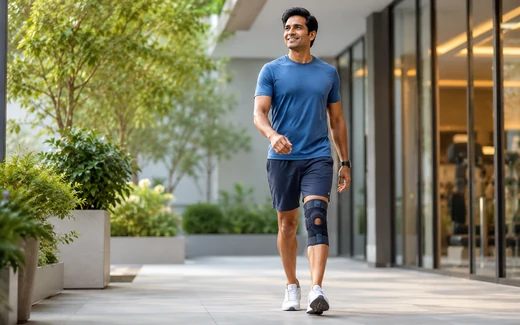 Create image: knee-brace-support-walking.webpPatient walking with supportive knee brace.
🛡️ Step 1
Protection, swelling control and bracing
Early care focuses on pain, swelling, safe walking and protecting the knee.
- Rest, ice, compression and elevation
- Brace support when unstable
- Safe walking and activity modification
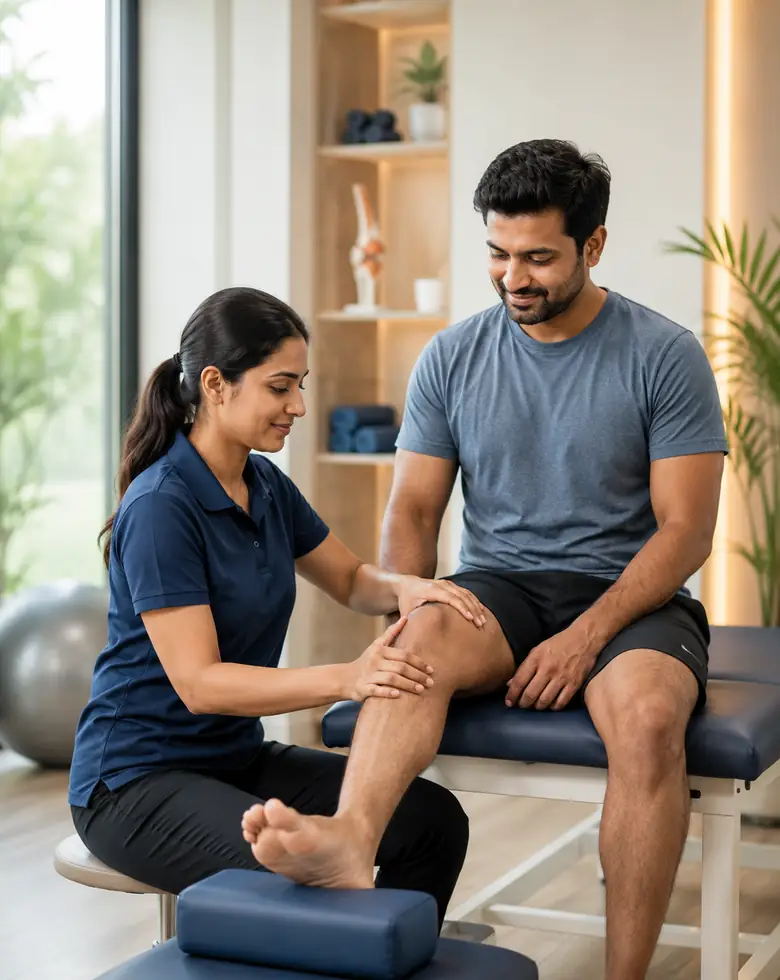 Create image: physiotherapy-for-knee-pain.webpPhysiotherapist guiding knee rehab.
🌿 Step 2
ACL physiotherapy
Rehab restores motion, quadriceps control, balance and confidence.
- Range of motion restoration
- Quadriceps strengthening
- Balance and neuromuscular control
 Create image: acl-reconstruction-surgery.webpACL reconstruction OT scene, premium non-graphic.
🔬 Step 3
ACL reconstruction
Considered when the knee remains unstable or return to pivoting sport is planned.
- Arthroscopic / keyhole technique
- Graft-based ligament reconstruction
- Structured return-to-sport rehab
🔎 Treatment decision depends on stability, not MRI words alone
A “complete ACL tear” on MRI does not automatically mean emergency surgery, and a “partial tear” does not always mean it is harmless. The best decision comes from matching MRI findings with examination, instability episodes and your activity goals.
🔬 ACL Reconstruction: When the Knee Needs Stability Restored
ACL reconstruction does not simply stitch the torn ACL back. It creates a new ligament using a graft, placed arthroscopically to restore knee stability.
It may be recommended for active patients, athletes, people with repeated giving way, physically demanding jobs, or ACL tears with meniscus injury. The goal is to reduce instability and protect the knee from repeated twisting episodes.
Reconstruction works best when followed by structured rehabilitation. Surgery is only one part of the recovery — muscle strength, balance, movement control and return-to-sport testing are equally important.
🔬 ACL Reconstruction🧵 Meniscus Surgery🏥 Knee Arthroscopy
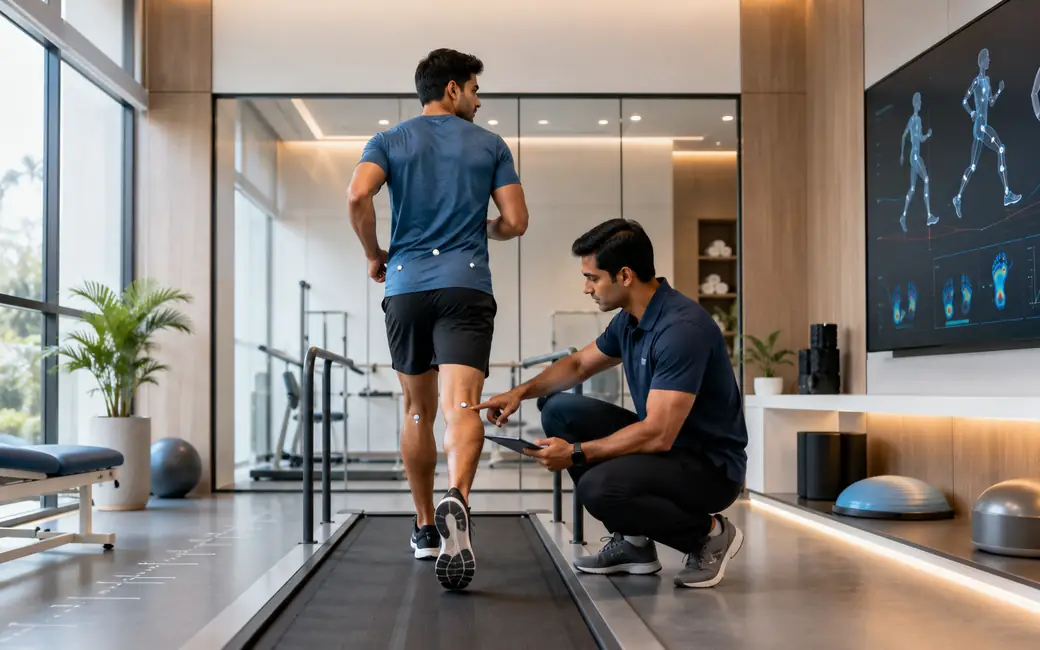
Create image: knee-pain-in-runners-gait.webpRunner gait assessment with physiotherapist.
Return to running and sport should be gradual, tested and guided — not rushed.
❓ ACL Injury Treatment in Chennai: FAQs
An ACL injury is damage to the anterior cruciate ligament, a key stabilising ligament inside the knee. It commonly occurs during twisting, pivoting, sudden direction change or awkward landing.
Common symptoms include a pop at injury, rapid swelling, pain, difficulty continuing sport, knee instability, giving way and loss of confidence while turning or running.
Some patients can walk after the initial pain settles, but the knee may still be unstable during pivoting or uneven ground. Walking ability does not rule out an ACL tear.
No. Partial tears and selected low-demand patients may do well with bracing and physiotherapy. Active patients with repeated instability or return-to-sport goals often need ACL reconstruction.
ACL reconstruction may be advised when the knee gives way repeatedly, the patient wants to return to pivoting sports, instability persists despite rehab, or there are associated meniscus/cartilage injuries.
Diagnosis is based on the injury story, clinical ligament tests and MRI. MRI helps confirm the tear and identify meniscus, cartilage, bone bruise or other ligament injuries.
Yes. Physiotherapy is essential for both non-surgical and surgical ACL treatment. It restores motion, strength, balance, control and confidence.
Repeated giving way can increase the risk of meniscus and cartilage damage. Some patients also develop long-term confidence loss and activity limitation.
Some low-grade sprains and partial injuries may improve, but a complete ACL tear often does not regain normal stability on its own. Functional recovery depends on tear type, knee stability and activity goals.
Recovery varies. Non-surgical recovery may take weeks to months. After ACL reconstruction, return to sport is usually gradual and based on strength, control and functional testing rather than time alone.
Many patients return to sports after ACL reconstruction and structured rehab, but return should be guided by strength, balance, hopping, agility and confidence testing.
Yes. You can share MRI, X-rays and injury details before the video consultation. Dr. Soma Sundar can guide whether urgent in-person assessment, physiotherapy, bracing or surgery planning is needed.
⭐ Patient Stories from ACL and Knee Injury Care
I injured my knee during football and was worried I would never play again. The MRI and options were explained clearly. Rehab and surgery planning felt structured and reassuring.
★★★★★5 Star ratedMr. Aravind R., 27Football player, ChennaiACL injury care
My knee kept giving way after a badminton injury. Dr. Soma Sundar identified the ACL issue and explained when surgery is needed and when rehab can work. Very practical advice.
★★★★★5 Star ratedMs. Kavya S., 31Badminton player, Anna NagarKnee instability assessment
I had ACL tear with meniscus injury. The treatment plan was explained in simple language, including recovery time and physiotherapy. It helped me make a confident decision.
★★★★★5 Star ratedMr. Naveen K., 35IT professional, OMRACL + meniscus injury
I was afraid of surgery, but I liked that it was not pushed immediately. The focus was on stability, goals and long-term knee health. Very honest counselling.
★★★★★5 Star ratedMr. Hari P., 42Runner, VelacheryACL counselling
💻 Video Consultation for ACL Injury
Outside Chennai or unsure whether you need surgery? A video consultation can help review your MRI, injury details and next step.
📄Share MRI and reports
Upload MRI, X-ray, prescription history and injury story before the consultation.
🎯Understand stability and options
Discuss whether bracing, physiotherapy, in-person exam or reconstruction planning is suitable.
🏃Return-to-activity planning
Get practical guidance on work, gym, running and sports after ACL injury.
💬 Video Consultation📞 Call Clinic
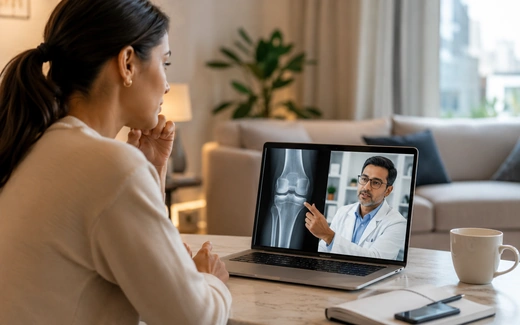
Dr. Soma Sundar SOrthopaedic, Spine & Pain Specialist Online consultation available
1
Send MRI, X-ray and injury details
2
Discuss ACL tear severity and stability
3
Receive a clear rehab or surgery plan
For locked knee, severe swelling, inability to walk or major trauma, in-person evaluation is safer.